PRESS
PRESS 

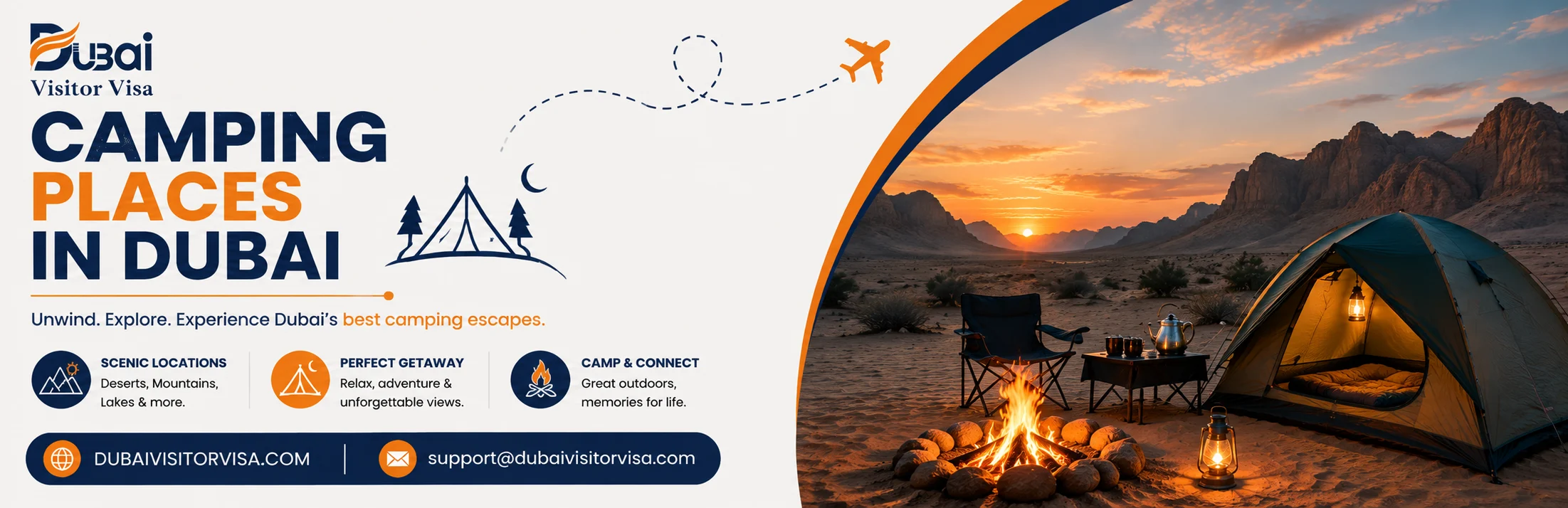
The best camping spots in Dubai are not all the same. Some are bookable campsites, some are glamping stays, and some are desert leisure areas where you must check overnight rules before pitching a tent. Hatta lively has the clearest official camping options, while Al Qudra is better treated as a desert leisure destination unless you have checked the rules for your exact overnight spot.
This 2026 guide separates formal campsites from open desert, protected reserves and caravan camping. It also explains Hatta's summer closure and the Jebel Ali caravan NOC. You will also find fire, family and packing tips. Public access to desert land does not automatically mean unrestricted overnight camping is allowed.
Current status — 27 August 2026: Hatta Resorts, including its campsite, domes and campers, is closed for the summer season and plans to welcome guests back next season. Hatta Wadi Hub still has summer activities.
Permit note: Dubai Municipality lively lists the Jebel Ali caravan-camping NOC for citizens and residents, while its Temporary Winter Camp Permit is listed for citizens for personal family use.
Best camping spots in Dubai at a Glance
| Place / Type | Best For | Live Position |
|---|---|---|
| Hatta Camp Site | Bring-your-own-tent camping with facilities. | Official campsite; lively closed for summer and expected back next season. |
| Domes at Hatta Resorts | Couples and families who want glamping comfort. | Lively closed for summer. |
| Campers at Hatta Resorts | Caravan-style glamping without bringing your own RV. | Lively closed for summer. |
| Al Qudra / Al Marmoom | Desert scenery, picnics, lakes and self-drive leisure. | Public leisure area; check overnight, fire and vehicle rules for your exact spot. |
| Dubai Desert Conservation Reserve | Guided nature and premium desert trips. | Protected reserve; use approved tourism operators rather than independent entry. |
| Jebel Ali caravan camping | Citizens or residents with their own caravan/trailer. | Live Dubai Municipality NOC allows up to 30 days at the official public-beach area. |
camping spots in Dubai: Hatta Camp Site
Hatta has Dubai's clearest formal camping setup. The official Hatta Camp Site has 18 camping slots, with a max of five people per slot. Each pitch is listed at about 11 by 9 metres and includes space for one car, outdoor seating, a BBQ area and a fire-pit area.
Campers bring their own tent and gear. The current Hatta page also mentions personal caravans, so anyone planning to arrive with one should check the booking options when the new season opens. Basic Wi-Fi is available in parts of the site, although the operator warns that service can be disrupted because of the spot.
Hatta Camp Site is not open right now. The operator says Season 8 has ended and the campsite will return next season. Do not rely on an old article that simply says Hatta camping is open from November to April every year; exact reopening and closing dates can change.
Why Hatta Works Well for First-Time Campers
Hatta is easier to plan than an unmanaged desert stop because the pitch, parking, fire area and site contact are clear. Nearby Hatta Wadi Hub also gives visitors access to food and outdoor activities. That makes the campsite a practical choice for families or tourists who want nature without remote dune driving.
It is still camping rather than a hotel stay. Bring bedding, lighting, food or cooking gear, water and the items you need for a comfortable night. Do not assume that a campsite booking includes a tent or full camping gear.
camping spots in Dubai for Glamping: Hatta Domes
Travellers who like the idea of a mountain night but do not want to pitch a tent can choose the Domes at Hatta Resorts when the season is open. The current operator page describes family-friendly geodomes with a private plunge pool, outdoor seating, a fire pit and a BBQ station.
The domes are designed for up to two adults and two children under 12. They are lively closed for the summer season. Hatta Resorts says bookings for the next glamping season are opening or available through its live booking system.
This is glamping, not basic camping. You pay for a prepared stay unit with a bed, bathroom and resort-style comfort. Choose the domes if comfort matters more than setting up your own camp.
Campers at Hatta Resorts
Hatta Resorts also operates fixed caravan-style stay called Campers. The live range includes several layouts for couples and families, with a covered porch, BBQ station and fire pit.
Some live camper categories are pet-friendly under exact rules. The Deluxe option, for example, allows one dog up to the stated weight limit with prior notice, vaccination proof and the live pet fee. Check the current unit policy instead of assuming every caravan accepts pets.
These fixed resort caravans are different from bringing your own caravan to a public area. A Hatta camper booking does not create camping approval elsewhere in Dubai.
Planning a desert day but not sure about overnight camping?
A licensed desert safari can be easier for first-time visitors because transport and the camp setup are managed for you.
Compare Dubai Desert Safari OptionsAl Qudra and Al Marmoom: Desert Leisure, Not a Formal Campsite
Al Qudra Lakes sit within the wider Al Marmoom Desert Conservation Reserve. Dubai Municipality describes Al Marmoom as an unfenced protected area that is open to the public for sustainable leisure, and the lakes are a popular choice for picnics, birdwatching, cycling and sunset drives.
What the live official material does not give you is a blanket right to put a tent anywhere around the lakes overnight. That distinction matters. Many social posts call Al Qudra a free campsite, but public leisure and unrestricted overnight camping are not the same thing.
If you want to stay after dark, check the current rules for the exact area you plan to use. Keep away from wildlife, do not drive across protected ground, take all rubbish away and follow any posted rules for fires or BBQs.
Love Lake is part of the same wider desert landscape and works well as a daytime or sunset stop. See the Love Lake Dubai guide before combining it with an Al Qudra trip.
camping spots in Dubai Inside Protected Desert Areas
The Dubai Desert Conservation Reserve is not an open self-camping zone. Its live management plan separates the reserve into controlled zones and limits tourism driving and camp activity to approved operators and planned areas.
For visitors, that means a licensed overnight desert trip is the safer way to spend the night inside the reserve. Operators can provide transport, sleeping arrangements, meals and guided activities while using the areas where tourism activity is allowed.
Do not drive into a protected reserve and create your own campsite. If a wilderness-style stay is your goal, book an approved operator that clearly states the reserve or permitted spot used.
Jebel Ali Caravan Camping: What the Live Permit Says
Dubai Municipality still lists an NOC for caravan camping on the official public beach in Jebel Ali. The current service summary says the NOC is for citizens and residents, is issued instantly and allows caravan camping for up to 30 days.
This is an important correction to older guidance. A 2020 Municipality announcement mentioned a passport copy for visitors, but the current 2026 service page now describes the eligible users as citizens and residents. Use the current service eligibility rather than an old press release.
The NOC is for caravan camping. It should not be rewritten as approval for unrestricted tent camping on Jebel Ali Beach or other Dubai beaches.
Can You Camp on Dubai Beaches?
Do not assume a public beach is an overnight campsite. Popular beaches such as JBR, Kite Beach and Sunset Beach are visitor beaches, not listed tent-camping grounds.
The current municipal camping service we can verify is the Jebel Ali caravan NOC described above. That does not create a citywide beach-camping rule.
If you see people using tents or shade shelters during the day, that is not proof that sleeping there overnight is allowed. Check the posted rules and any Dubai Dubai Municipality service that applies before planning an overnight stay.
Do You Need a Dubai Camping Permit?
There is no single permit that covers every type of camping. The correct route depends on who you are, where you want to stay and whether you are using a tent, caravan, resort pitch or licensed tour operator.
| Camping Type | Permit / Booking Position |
|---|---|
| Hatta Camp Site | Book the designated site when it is open. Guest does not use the long-stay winter-camp permit. |
| Hatta glamping | Book the stay through Hatta Resorts. |
| Jebel Ali caravan | Live Municipality NOC is listed for citizens and residents, up to 30 days. |
| Temporary winter family camp | Live Dubai Dubai Municipality service is listed for citizens during the approved season. |
| DDCR trip | Use an approved operator; do not self-runly set up camp in the reserve. |
| Open desert leisure | Check the exact land status and local rules before an overnight stay. |
Temporary Winter Camp Permit
Dubai Municipality lively lists its Temporary Winter Camp Permit for citizens and personal family use during the approved camping season. This is a long-stay seasonal camp system, not a simple tourist permit for one night in the desert.
Older Municipality news releases listed past-season dates and per-square-metre fees. Those figures should not be carried forward as a guaranteed 2026–27 price before the new season terms are listed. Use the current service page when the next winter season opens.
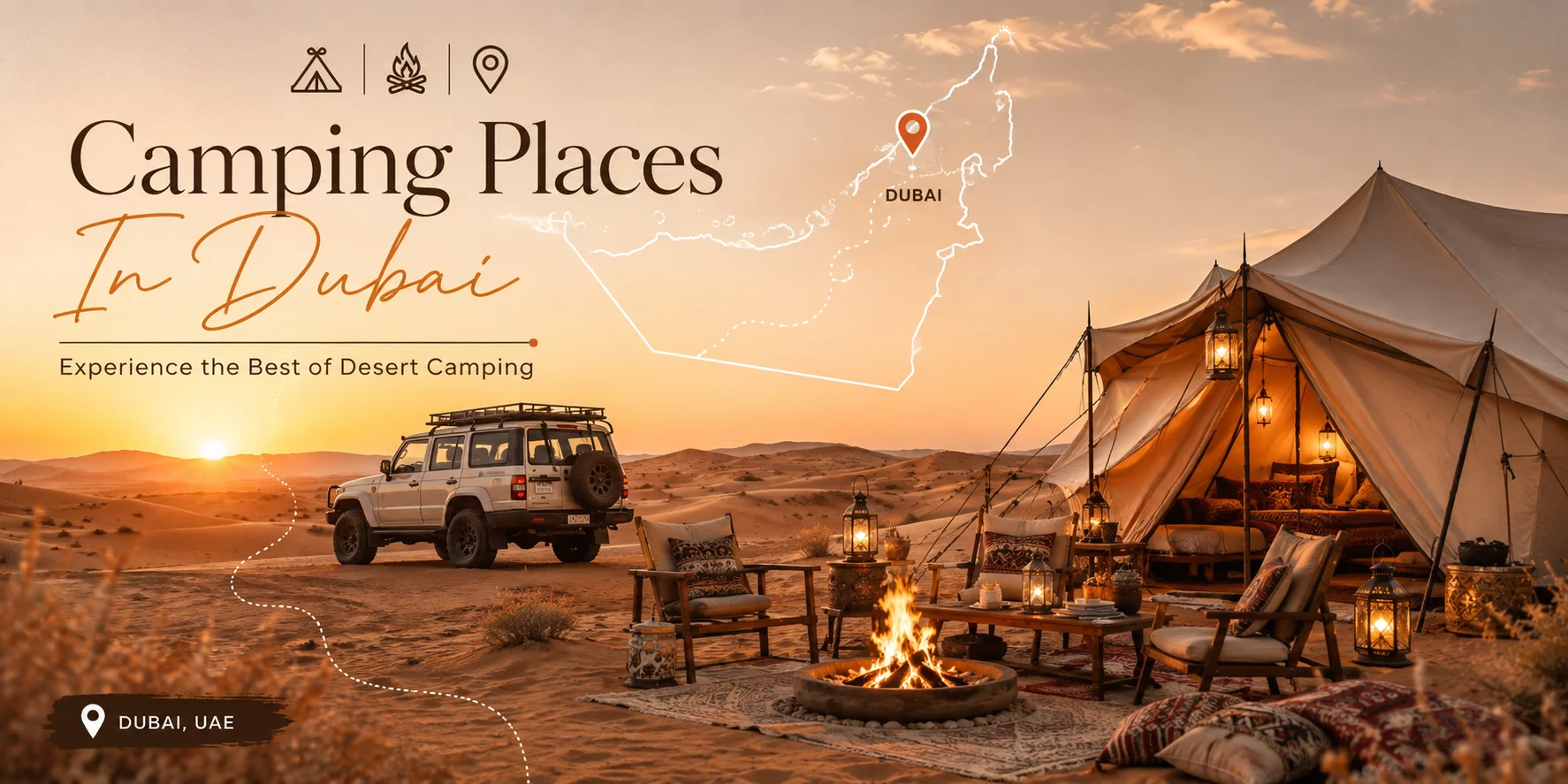
Independent Camping vs Guided Desert Camping
Self-run camping gives you more freedom, but you are responsible for the site rules, transport, gear, food, water, fire safety and getting yourself out again. It makes sense for tripd campers who already understand desert driving and have checked where they can stay.
Guided camps are easier for tourists. A licensed operator may include hotel transfers, a camp, meals, toilets, entertainment or guided nature activities. Not every safari includes sleeping overnight, so read the product description before booking.
| Factor | Independent Camping | Organised Camp |
|---|---|---|
| Gear | Bring your own. | Package dependent. |
| Transport | Self-drive. | Often included. |
| Toilets | May be unavailable. | Usually available at established camps. |
| Food | Self-arranged. | Often included or offered. |
| Best for | Tripd campers. | First-time tourists and families. |
Night Camping in Dubai
Night camping needs more planning than a sunset picnic. Weathers can fall quickly after dark in winter, while the warmer months can remain uncomfortable through the night.
Bring a torch or headlamp, spare power, enough drinking water and a warm layer in winter. Tell someone where you plan to be and when you expect to return. Park where you can leave safely without crossing soft sand you cannot manage.
If weather changes, do not treat a camping plan as fixed. Rain can create dangerous rules in low areas and wadis. Move to a safer spot rather than trying to protect a campsite in bad weather.
Best camping spots in Dubai for Families
Families should place toilets, lighting, easy parking and access to help above great scenery. On that basis, Hatta's formal campsite and glamping options are easier to manage than a remote desert camp when they are open.
An organised overnight desert camp can also work well if the operator clearly lists family facilities, transfer arrangements and sleeping setup. Ask about age rules before booking activities such as dune driving.
For very young children, a staffed campsite or glamping unit is usually easier than an isolated self-drive camp. During peak summer heat, postpone an outdoor overnight stay or choose suitable indoor stay.
Best camping spots in Dubai for Couples
Couples who want privacy and comfort are likely to prefer Hatta's domes when the resort season is open. A private or small-group desert trip can be another option if you want a managed overnight stay closer to the main city.
Al Qudra and Love Lake work well for sunset and photography, but that does not mean an overnight tent is automatically permitted. If your goal is simply a romantic desert evening, a day visit can be easier than managing camping rules and gear.
For broader premium-trip ideas, see the Dubai luxury trip guide.
Camping vs Glamping in Dubai
Basic camping means bringing and setting up your own shelter. Glamping gives you a prepared stay unit with more comfort and fewer planning.
| Factor | Camping | Glamping |
|---|---|---|
| Sleeping setup | Own tent and bedding. | Prepared dome, camper or lodge. |
| Bathroom | Site dependent. | Usually private or clearly provided. |
| Gear | Mostly self-provided. | Much less gear needed. |
| Cost | Often lower if you own gear. | Higher and date dependent. |
| Best for | Outdoor independence. | Comfort and simple planning. |
Do not compare camping and glamping only by price. Toilets, air-ruleing, bedding, transport and meals can change the value of a stay more than the base nightly rate.
BBQ and Campfire Rules
Fire rules are spot exact. Hatta's campsite and glamping stay provide official BBQ and fire-pit areas. That does not mean an open fire is acceptable in every desert or beach spot.
Where fire is allowed, use the provided or approved area. Keep flames away from tents, dry plants and vehicles. Fully put out charcoal and embers before sleeping or leaving.
Never leave charcoal, disposable grills or ash in the desert. If the site has no clear fire rule, check before lighting anything.
Best Time to Use camping spots in Dubai
Cooler months are the practical season for outdoor nights. November through February usually gives the most comfortable rules, while March and April can still work with warmer days.
The live Hatta Resorts summer closure is a useful real-world signal: the stay season pauses during the hottest period. However, some Hatta Wadi Hub activities continue through summer, so do not say “Hatta is closed” as a whole.
From roughly May through September, self-camping can be difficult because of heat. Check the forecast for wind, heat and rain before every desert trip, even in the normal camping season.
How Much Does Camping in Dubai Cost?
There is no useful single average. Self-camping mainly costs whatever you spend on gear, food, water and transport. A formal campsite has a pitch price. Glamping is priced like stay, while an guided overnight camp is priced as a tour package.
The old article quoted broad AED ranges for safari camps and historical Hatta prices. Those numbers can become stale quickly and are not necessary to answer the search intent. Use the current booking price for the date, unit and group size you actually need.
The same rule applies to seasonal Municipality permits. Do not reuse an older season's fee as though it automatically applies to the next one.
What to Carry for Desert Camping
- Tent and suitable bedding unless your stay supplies them.
- More drinking water than you expect to use.
- Food, cooler and cooking gear where permitted.
- A warm layer for cooler evenings and winter nights.
- Sun protection for daytime.
- Torch or headlamp plus spare batteries.
- Charged phone and power bank.
- Basic first-aid kit.
- Offline map or GPS.
- Rubbish bags.
- Booking details and any permit or NOC that applies.
- Vehicle recovery gear only if you are tripd and leaving paved roads.
Pack for the spot, not for an Instagram photo. Remote desert areas can have limited shops, toilets, shade and mobile coverage.
Normal Car or 4x4?
You do not need a 4x4 simply because you are visiting a desert area. Hatta's main resort and campsite access, organised tours with transfers, and the main paved approaches to Al Qudra can be reached without driving deep into dunes.
A 4x4 becomes useful when you leave firm roads and tracks for soft sand. Driving a rented 4x4 does not replace desert-driving trip. First-time tourists should avoid deep-sand routes without a skilled guide or operator.
A Simple One-Night Dubai Camping Plan
Pick one camp type first. If you want a real pitch with clear rules, wait for Hatta Camp Site to reopen. If you want a bed and private room, choose glamping. If you want a desert tour, book a trusted operator.
For a self-drive desert visit, reach the area well before sunset. Stay on firm roads unless you know how to drive in soft sand. Park where you can leave with ease in the morning.
Set up camp while there is light. Keep water, food, a torch and your phone close to hand. Put all waste in bags as you go. This makes the final clean-up fast and helps keep the desert clean.
Before bed, put out every flame and hot coal. Check that wind has not moved loose gear. In the morning, scan the site for pegs, cans, food, ash and plastic before you leave.
Leave the spot as clean as you found it. This simple habit protects wildlife and makes desert trips better for the next group.
Before You Leave Dubai for Camp
Check your route before you drive. Save the camp pin offline and fill the fuel tank. Tell someone where you are going and when you plan to return.
Buy water and food in the city if your camp has no shop. Charge your phone and power bank. Pack a warm layer for winter nights, even when the day feels mild.
If you are using a hired car, read the rental terms before leaving paved roads. Some rental plans do not cover dune driving or damage caused off road.
Do not arrive at an unknown desert spot after dark. Reach the area while there is still light. It is much easier to see soft sand, tracks, signs and safe parking before sunset.
Plans can change fast in the desert. If wind, heat or rain gets worse, pack up and leave while it is still easy to drive. If your chosen site looks busy, blocked or unsafe, use another approved spot. Do not force the plan just because you have already driven a long way.
Dubai Camping Safety Checklist
- Check the camping status of your exact spot before travelling.
- Check the weather and postpone the trip if rules are poor.
- Carry enough water, lighting and phone power.
- Stay on safe roads and tracks.
- Keep children away from vehicles, fire and open desert at night.
- Do not disturb wildlife or plants.
- Use a designated fire or BBQ area where one exists.
- Take every item of rubbish away with you.
- Share your spot and return plan with someone.
- Use an approved operator if the route is beyond your driving or camping trip.
Good camping planning is mostly about avoiding preventable problems. The safest option is not always the most remote one.
Dubai Visitor Visa for a Camping Holiday
A campsite or glamping booking does not give you approval to enter the UAE. Visa rules depend on your passport and travel plan. Some travellers can enter without arranging a tourist visa in advance, while others need a pre-arranged visa.
If you plan to leave the UAE and return during the same trip—for example, a road trip that crosses into another country—you need to check whether your entry approval supports re-entry. Do not choose a visa only because your camping trip is short.
Review the Dubai visitor visa types and use the Dubai visa eligibility checker before making non-refundable travel plans.
Planning Dubai camping as part of a wider holiday?
Check your entry route first, then book camping or glamping that matches the season and live site rules.
Review Dubai Visitor Visa Options Ask About Your Travel Plan
camping spots in Dubai: Final Planning Advice
The best camping spots in Dubai depend on how much structure you want. Choose Hatta for a formal campsite or glamping when its stay season is open. Use an approved operator for protected reserve camping. Treat Al Qudra as a public desert leisure destination unless you have checked the overnight rules for your exact spot.
Jebel Ali caravan camping has its own current municipal NOC and is not a general tent-camping licence. Long-stay winter camps also use a separate permit system with different eligibility.
Check the site, season and permit before you leave Dubai. That simple step matters more than any generic list of “free camping places.” Updated 27 August 2026 using current Dubai Municipality, Visit Hatta, Visit Dubai and conservation-reserve details.