PRESS
PRESS 

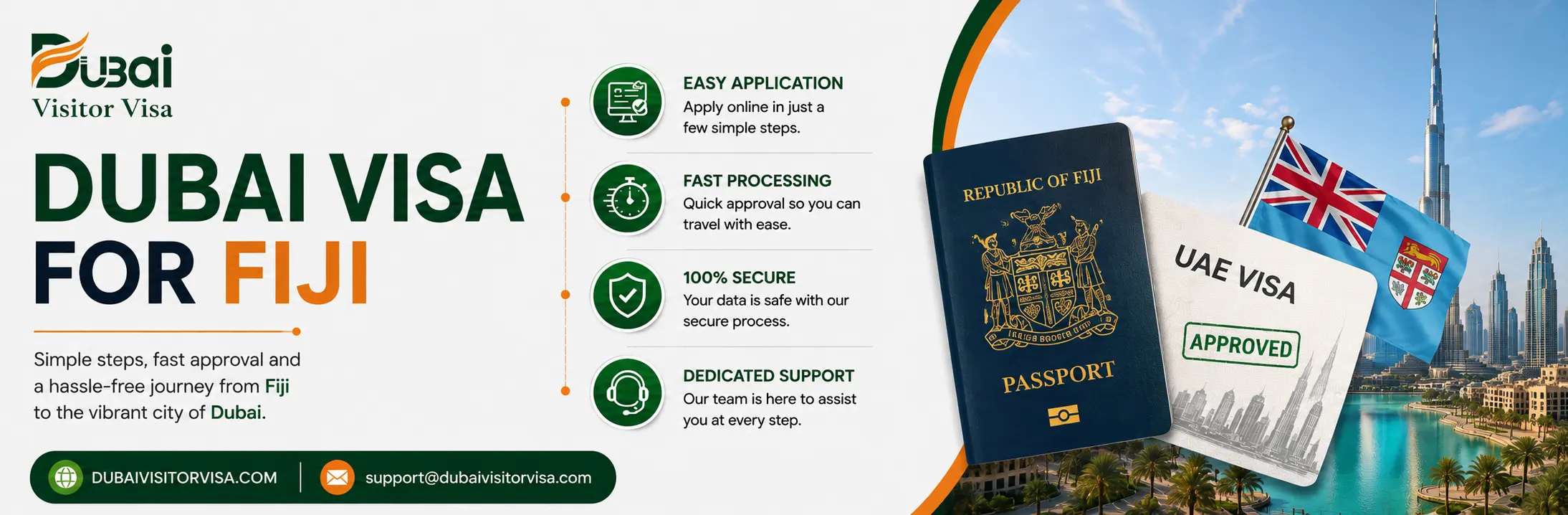
Dubai Visitor Visa for Fiji Nationals is usually straightforward in 2026 because ordinary Fiji passport holders currently qualify for the UAE’s 90-day multiple-entry visa-on-arrival route. That means you normally do not need to buy a standard 30-day or 60-day tourist visa before flying. If you want to compare this with other passport categories, start with our Dubai visa on arrival guide. The key is to understand the six-month validity window, the 90-day total stay limit, and when a different visa route is actually needed.
Fiji passport holder? Start here.
- No standard advance tourist visa is normally required for the eligible 90-day route.
- The visa on arrival is multiple entry.
- It is valid for six months from issue.
- You can stay for up to 90 days in total during that validity period.
- Leaving the UAE does not give you a fresh 90 days each time.
Dubai Visitor Visa for Fiji Nationals: How the 90-Day Entry Works
Emirates and flydubai currently list Fiji in the UAE’s 90-day visa-on-arrival group. Their published guidance describes a multiple-entry visit visa valid for six months from issue, with a maximum of 90 days of stay in total. UAE MOFA also currently lists Fiji as visa-free for UAE entry purposes.
For a normal holiday or family visit, this removes the need to prepare and pay for a standard tourist eVisa before departure. You still pass through immigration when you arrive, and admission remains subject to the normal border checks.
You can review the current airline eligibility list on the Emirates UAE visa information page.
| What to check | Current Fiji passport route |
|---|---|
| Advance tourist visa | Normally not required for an eligible ordinary Fiji passport holder |
| Entry type | Multiple entry |
| Visa validity | Six months from issue |
| Total permitted stay | Up to 90 days in total |
| Where it applies | Across the UAE, not only Dubai |
Count Days Across the Whole Permit, Not Per Trip
The most important planning point is that the 90 days are cumulative. Multiple entry lets you leave and come back while the permit remains valid, but every UAE stay uses part of the same 90-day allowance.
For example, if you spend 18 days in Dubai, travel to another country and then return for 25 days, you have used 43 days. You do not receive another full 90 days simply because you crossed the border again.
| Travel pattern | Days used | Days remaining |
|---|---|---|
| One 21-day holiday | 21 | 69 |
| 30 days + later 20-day visit | 50 | 40 |
| Three separate 30-day stays | 90 | 0 |
If you make several trips, save each entry and exit date in one place. Our Dubai visa validity guide explains the difference between a visa’s validity period and the number of days you are allowed to remain in the country.
Before Leaving Fiji, Check These Four Things
The visa-on-arrival route is simpler than an advance application, but you still need a travel-ready passport and a trip that makes sense at check-in and immigration.
- Passport validity: aim for at least six months of validity on the passport you will use for travel.
- Return or onward journey: keep your confirmed travel plan available in case the airline or immigration asks for it.
- Accommodation: have your hotel booking or host address ready.
- Trip purpose: be clear whether you are travelling for tourism, visiting relatives, attending meetings or another lawful short-stay purpose.
Because you normally do not need an advance tourist visa, your document preparation should stay proportionate. You do not need to copy a full eVisa application checklist just because another nationality does. For a broader explanation of entry documents, see our UAE visitor entry requirements guide.

When You Should Not Pay for a Standard Tourist Visa
If you hold an ordinary Fiji passport and your trip fits the current 90-day arrival rule, buying a standard 30-day or 60-day tourist visa before flying would usually add an unnecessary step.
This matters because visa websites often display products based on general UAE travel categories rather than the entitlement of one specific passport. Start with your passport rule first. Only move to a paid application when your actual circumstances require one.
The same principle applies to short Dubai stopovers. If you are eligible for the 90-day arrival route and want to enter the UAE during a connection, you would not normally need to buy a separate 48-hour or 96-hour tourist-entry product simply because your itinerary includes a stop in Dubai.
Situations Where the Normal Fiji Route May Not Fit
The simple 90-day explanation is for an ordinary Fiji passport used for a normal short visit. A different route may be relevant when your travel document or purpose is different.
You are travelling on another passport
If you are a Fiji resident but travel on a passport issued by another country, check the rule for that passport. Residence in Fiji does not transfer Fiji’s visa-on-arrival entitlement to another nationality.
You hold a non-standard travel document
Diplomatic, official, emergency and refugee travel documents can be handled differently from ordinary passports. Confirm the rule for the exact document rather than assuming the ordinary-passport list applies.
You are travelling to take up employment
A visitor entry is not a work permit. If a UAE employer is hiring you, the employment and residence process must be handled separately. Read our UAE work permit guide before treating a visitor stay as permission to work.
You are already in the UAE on a separate paid visa
Your current immigration status matters more than the passport route you could have used at the border. If you entered on a sponsored or paid visit visa, any extension or status change should be based on the visa you actually hold.
If Your Stay Plans Change After Arrival
Do not assume the Fiji 90-day arrival permit can simply be extended in the same way as every paid tourist visa. If you are approaching the end of your permitted stay, first identify the visa or entry status recorded against your passport and then choose the correct next step.
Our UAE visit visa extension guide explains the general inside-country extension system. For travellers who are already in the UAE on an eligible separate paid tourist or visit visa, the current service options include:
- 30-day inside-country extension — current regular package USD 550.
- 60-day inside-country extension — current regular package USD 670.
Those prices are for eligible extension-service cases. They are not a price for extending the standard Fiji 90-day visa-on-arrival allowance. If your status is unclear, check it before paying for an extension product.
Using the Multiple-Entry Benefit for a Regional Trip
The multiple-entry feature can be useful if your itinerary combines the UAE with another destination. For example, you might stay in Dubai, leave the UAE for part of the trip, and return before flying home.
What matters is the same six-month visa validity and 90-day cumulative stay limit. A short exit does not reset the day count, and travelling between Dubai, Abu Dhabi, Sharjah or the other emirates does not count as a new entry because you remain inside the UAE.
This is why the permit is useful for regional travel but still requires simple date tracking. Keep flight confirmations or another clear record if you expect to enter and leave the UAE several times.
Flying From Fiji: Know Where You Will Clear UAE Immigration
A trip from Fiji to Dubai can involve one or more flight connections depending on the airline and travel date. What matters for the UAE visa rule is the point where you actually enter the country. If Dubai is your first UAE arrival airport and you are leaving the international transit area, you will complete UAE immigration there.
If your booking connects through another country before Dubai, that connection does not use any part of your UAE stay allowance because you have not entered the UAE yet. If your itinerary enters the UAE through Abu Dhabi or another emirate before continuing to Dubai, your UAE entry begins at that first immigration point.
Check whether your baggage is tagged through to the final destination and whether a connection requires you to collect and recheck bags. Keeping the itinerary, first-night accommodation and onward or return booking easy to access can make a long journey simpler when you reach immigration.
Families Should Check Every Passport Separately
A family flying from Fiji may not all hold the same passport. One traveller may qualify for the Fiji 90-day route while a spouse or child follows another nationality’s rule. Check each passport individually instead of assuming the whole booking shares one immigration status.
Children should travel with their own valid travel document. If a minor is travelling with one parent, relatives or another adult, carry the relationship or consent documents appropriate to the journey if the airline requests them.
What to Check After UAE Immigration
Once you have entered, keep your arrival date and any immigration record associated with the passport. If you plan a long stay or several trips, knowing the first entry date and the days already used is more useful than trying to reconstruct the trip months later.
If you are using a separate pre-arranged visa rather than the Fiji arrival route, you can use the Dubai visa status service where applicable to follow the relevant visa record. Visa-on-arrival visitors should rely on their immigration entry record and official status information for their own case.
A Simple Decision Path for Fiji Travellers
- Ordinary Fiji passport + normal short visit: use the current 90-day multiple-entry visa-on-arrival route.
- Another nationality: check that passport’s UAE entry rule.
- Employment: use the proper work-permit and residence process.
- Already on a separate paid visit visa: check extension eligibility before expiry.
- Unusual travel document or previous immigration issue: confirm the correct route before making non-refundable travel plans.
Your case does not match the standard Fiji passport route?
If you are travelling on another passport, already hold a paid UAE visit visa, need an inside-country extension, or have a non-standard travel document, check the correct route before paying for a service.