PRESS
PRESS 


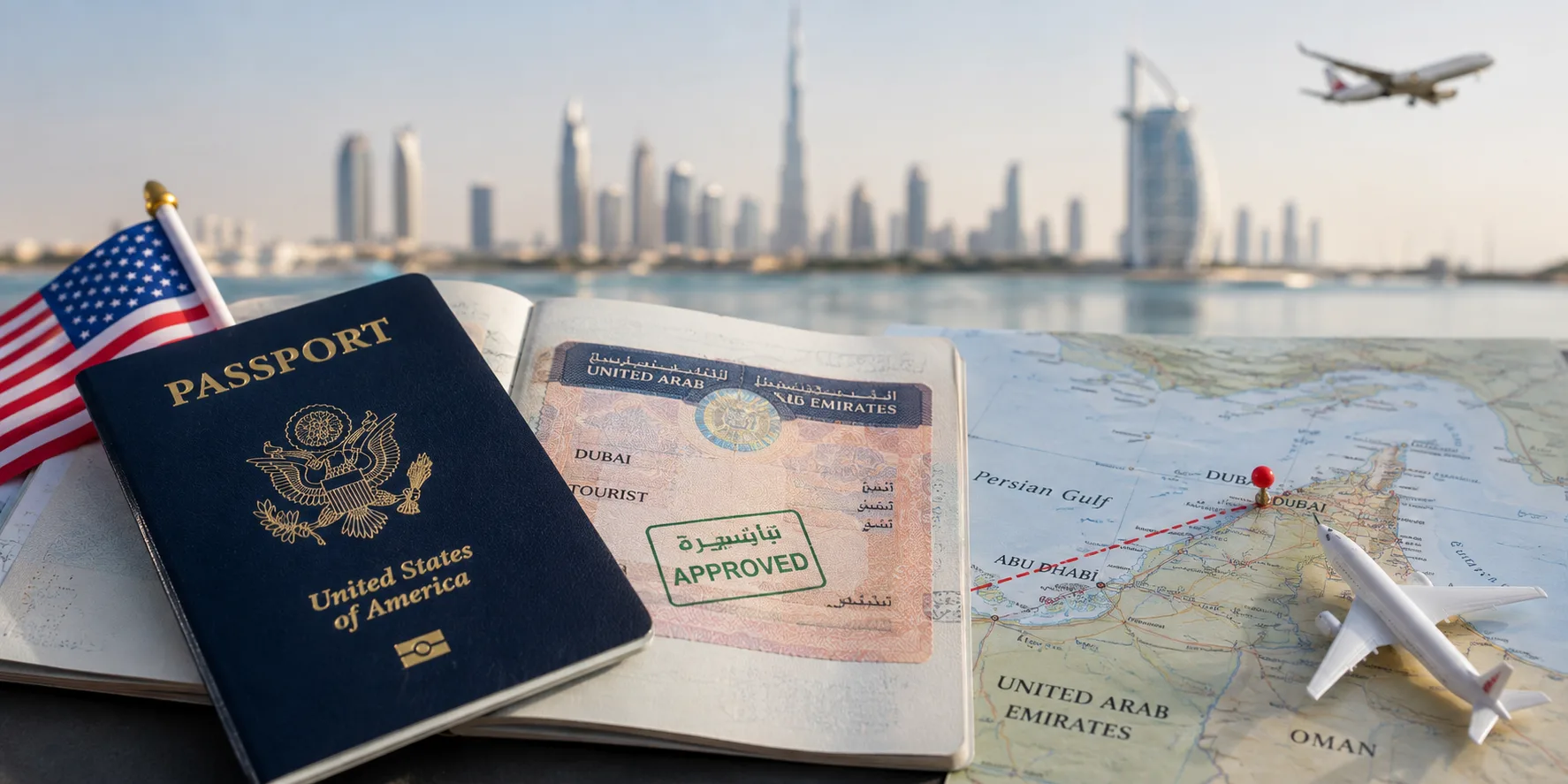
Dubai Visitor Visa for US Citizens is simple for travellers using a regular U.S. passport. You normally do not need to arrange a tourist visa before flying to the UAE. Entry is granted on arrival, with a stay of up to 90 days within 180 days. Those days can be used in one trip or across several visits.
Before you travel, check that your passport is valid for at least six months beyond your expected arrival date and keep a confirmed return or onward ticket ready. If you live in the United States but travel on a different passport, the entry rule may be different because eligibility depends on the passport and qualifying status you actually use.
Quick answer: Regular U.S. passport holders usually do not need an advance tourist visa for a normal short visit. The current allowance is up to 90 days within 180 days and is described as non-renewable.
Dubai Visitor Visa for US Citizens: 2026 Entry Rules
For an ordinary U.S. passport holder making a normal visit, the main conditions are straightforward. There is usually no need to submit a standard tourist visa application before departure, but the stay limit still needs to be tracked carefully.
| Travel point | What applies |
|---|---|
| Advance tourist visa | Normally not required for a regular U.S. passport holder using the standard short-visit route. |
| Permitted stay | Up to 90 days within 180 days. |
| Multiple visits | Allowed, but all days used within the relevant 180-day period count toward the same limit. |
| Renewal | The standard U.S.-passport entry permission is currently described as non-renewable. |
| Passport validity | At least six months beyond the expected arrival date. |
| Ticket | A confirmed return or onward ticket should be held before travel. |
For the latest official wording before departure, review the UAE entry guidance for U.S. citizens. If you want a broader explanation of nationality-based arrival rules, see our Dubai visa on arrival guide.
How the 90 Days Within 180 Days Rule Works
The 90-day allowance does not restart simply because you leave the UAE and return. The important figure is the total number of days used within the relevant 180-day period.
For example, if you spend 18 days in Dubai and return later for another 27 days, you have used 45 days in total. A later trip during the same period has to fit within the remaining allowance.
- Keep a record of each UAE entry and exit date.
- Add the days used across repeat visits.
- Check the remaining allowance before booking another long stay.
- Leave some travel buffer if your departure date could change.
Current U.S.-citizen guidance states an overstay fine of AED 50 per day beyond the permitted period. Careful date tracking is the easiest way to avoid an unnecessary overstay.
What to Prepare Before Flying to Dubai
U.S. travellers using the standard arrival route do not need the same document bundle as someone applying for a pre-arranged tourist visa. Keep the core travel documents simple and accessible.
- Regular U.S. passport: valid for at least six months beyond your expected arrival date.
- Return or onward ticket: keep a confirmed copy available at check-in and arrival.
- Accommodation details: have your hotel or host address ready with your itinerary.
- Previous UAE travel dates: useful if you have visited recently and need to check your remaining stay allowance.
Also check that the name on your flight booking matches your passport. If you recently renewed your passport, update any airline profile or booking that still contains the old passport number.
What Happens When You Arrive at Dubai Airport?
At the airport, follow the signs to passport control and present the same passport used for your booking and travel. A regular U.S. passport holder using the standard short-visit route does not normally arrive with a pre-arranged tourist eVisa.
Keep your onward or return booking easy to access. After entry, save the arrival date somewhere you can find later. If you travel to the UAE again within the same 180-day period, that record will make it much easier to calculate how many days remain.
Families should check each traveller separately. If one family member travels on a different nationality passport, that person may have a different UAE entry route.
US Green Card Holders Need to Check the Passport They Travel On
A U.S. Green Card proves permanent residence in the United States, but it does not make a foreign passport a U.S. passport. If you hold a Green Card and travel on another nationality's passport, start with the rules for that passport.
Current 2026 ICP rules provide separate entry routes for certain eligible passport holders who also hold qualifying U.S., UK, EU or other specified visa or residence status. Eligibility, permitted stay and extension conditions depend on the exact nationality and status being used.
If your passport does not use the standard U.S.-citizen arrival route, review the available Dubai visa types before choosing a paid option.
Travelling as a Family or With Different Passports
Families often assume everyone in the booking will follow the same entry rule, but that is not always the case. Each traveller should be checked using the passport they will actually present at immigration. If one parent is a U.S. citizen and another family member travels on a different nationality passport, their UAE entry conditions may not match.
Before booking, create a simple travel list with each person’s passport nationality, passport expiry date and expected UAE stay. This is especially useful for families in which some members are U.S. citizens and others are U.S. residents or Green Card holders. Checking each traveller separately helps prevent last-minute problems at airline check-in and avoids purchasing a visa product for someone who does not need it.
If one member of your group needs a pre-arranged visa while the others can enter on arrival, start that application early enough to keep the whole itinerary together.
Business Meetings, Tourism and Work Are Not the Same
A short visit for tourism, family time, events or ordinary business meetings is different from taking paid employment in the UAE. The visitor entry available to a regular U.S. passport holder does not replace an employment permit or residence process.
If your trip includes a conference, client meeting or short commercial visit, make sure the activities still fit visitor conditions. If you are moving to the UAE for a job, joining an employer or taking up residence, use the appropriate employment or residence route instead of relying on visitor status.
This distinction matters because choosing the correct route at the beginning is easier than trying to change your status after travel plans are already underway.
Can the 90-Day US Entry Be Extended?
The standard 90-day arrival permission for a regular U.S. passport is currently described as non-renewable. It should not be confused with a separate tourist or visit visa that may qualify for an inside-country extension.
An extension service becomes relevant when a traveller is already in the UAE on an eligible separate tourist or visit visa. If that applies to you, first check the visa you currently hold and then review the Dubai visa extension guide.
For eligible visa categories, Dubai Visitor Visa currently lists the following inside-country extension packages:
| Extension option | Regular | Express |
|---|---|---|
| 30-day inside-country extension | USD 550 | USD 575 |
| 60-day inside-country extension | USD 670 | USD 700 |
Standard processing is generally planned around 2–3 working days. Express handling may be available within 24 hours for eligible applications. These services apply only to qualifying visa categories and do not change the non-renewable rule attached to the standard U.S.-passport 90-day entry.
When a Different Visa Route May Be Relevant
Most regular U.S. passport holders do not need to buy a separate tourist visa for a normal short visit. A different route becomes relevant only when your actual travel situation falls outside the standard visitor conditions.
- You live in the United States but will travel on a non-U.S. passport.
- You are already in the UAE on a separate tourist or visit visa and want to check extension eligibility.
- Your travel purpose requires work, residence or another status instead of visitor entry.
- You have already used most of your 90-day allowance within the current 180-day period.
- Your nationality or residence status places you under another UAE entry route.
If you need to compare paid options, the Dubai visa cost guide explains the main visitor products and service prices. Choose the route that matches your passport, travel purpose and intended stay rather than paying for a visa you may not need.
If Your Plans Change After You Enter the UAE
Travel plans can change after arrival. A longer family visit, rescheduled flight or additional trip within the UAE can affect how close you come to your permitted stay limit. If your departure date changes, recalculate the days already used rather than relying on the original itinerary.
If you are unsure what permission you currently hold, keep your passport and entry details available and verify your status before arranging a longer stay. Travellers who already hold a separate eligible tourist or visit visa can also review the extension options above or check their Dubai visa status before making the next booking decision.
When your situation does not fit the standard U.S.-passport route, getting the correct answer early can save unnecessary application costs and give you more time to choose an appropriate service.
Before Your Flight: A Simple Final Check
- Check the passport expiry date. Confirm that the six-month validity requirement is met.
- Confirm the passenger name. It should match the passport you will use.
- Save the return or onward ticket. Keep a copy available offline as well.
- Review recent UAE trips. Add up the days already used if you have travelled within the same 180-day period.
- Keep accommodation details handy. Store the hotel or host address with the rest of your itinerary.
- Check the passport route. If you live in the U.S. but travel on another passport, make sure you are following that nationality's entry rules.
Plan the Right Next Step
For most regular U.S. passport holders, Dubai Visitor Visa for US Citizens is a straightforward arrival-based entry route. The main things to manage are passport validity, your return or onward ticket, and the 90-days-within-180 limit.
Need a different visa route?
If you are travelling on a non-U.S. passport, already hold another UAE visit visa, or need an eligible extension, review the option that matches your actual status before applying.
Check Dubai Visa Options Contact our visa team
Recheck your documents and travel dates before departure. A clear understanding of your entry route makes the trip easier to plan and helps you avoid paying for a service you do not need.