PRESS
PRESS 

A Dubai transit visa is for a traveller who passes through a UAE airport and needs to enter the country. The UAE currently offers two main transit options: 48 hours and 96 hours. Both are short-stay, single-entry permits.
You may not need a transit visa if you stay airside. You may also not need one if your passport gives visa-free entry or visa on arrival. Your airline, bags and next flight also matter.
Quick answer: GDRFA currently lists a 48-hour and a 96-hour transit visa. The 48-hour visa has no government issue fee. The 96-hour visa currently totals AED 120 in GDRFA fees. Both require an onward flight and a passport valid for at least six months.
What Is a Dubai Transit Visa?
A Dubai transit visa is a short UAE entry permit. It is for a traveller who is going on to another country. It is not a normal tourist visa.
The visa lets a transit passenger who meets the rules enter the UAE for a short stay. GDRFA currently offers two durations: 48 hours and 96 hours.
The trip must be a real transit journey. You need a flight ticket that shows you will continue your trip.
Do You Need a Transit Visa in Dubai?
Start with one question. Will you need to enter the UAE during the connection?
- You may need a visa if you plan to clear immigration and leave the airport.
- You may need a visa if you must collect bags and recheck them landside.
- You may need a visa if you change between Dubai airports and must enter the UAE.
- You may not need one if you stay airside for the full connection.
- You may not need one if your passport already gives you visa-free entry or visa on arrival.
Do not decide from layover length alone. A six-hour connection can need a visa if you enter the UAE. A longer connection may not need one if you remain airside and your airline handles the transfer.
Airside Transit vs Entering the UAE
Airside transit means you stay inside the secure transfer area. You do not enter the UAE as a visitor.
Entering the UAE means you cross immigration. You may leave the airport, collect bags, use a landside hotel or change airports.
| Situation | UAE Entry? | What to Check |
|---|---|---|
| Stay airside | Usually no. | Boarding pass and baggage transfer. |
| Leave airport | Yes. | Passport entry rule. |
| Collect bags landside | Often yes. | Self-transfer process. |
| DXB to DWC transfer | Usually yes. | Visa and ground transport. |
| Landside hotel | Yes. | UAE entry eligibility. |
Separate tickets can change the situation. If bags are not checked through, you may need to collect them and enter the UAE. Ask the airline before travel.
48-Hour Dubai Transit Visa
The 48-hour transit visa is the short option. It suits a stopover that fits inside two days.
GDRFA says there is currently no government fee for issuing the 48-hour transit visa. The airline or service channel may still add its own fee.
The visa is single entry. It cannot be extended or changed into a 96-hour visa after issue.
See our 48-Hour Dubai Transit Visa page for the service option.
96-Hour Dubai Transit Visa
The 96-hour transit visa allows up to four days. It suits a longer stopover or a short Dubai visit before the next flight.
GDRFA currently lists these government charges:
- AED 50 issue fee.
- AED 50 application fee.
- AED 20 knowledge and innovation fee.
- AED 120 total on the current GDRFA service page.
The 96-hour visa is also single entry and cannot be extended.
See our 96-Hour Dubai Transit Visa page for the longer stopover option.
48-Hour vs 96-Hour Dubai Transit Visa
| Feature | 48-Hour Visa | 96-Hour Visa |
|---|---|---|
| Maximum stay | 48 hours. | 96 hours. |
| Entry | Single. | Single. |
| Extendable | No. | No. |
| Current GDRFA fee | No issue fee. | AED 120 total. |
| Onward ticket | Required. | Required. |
| Best for | Short stopover. | Longer stopover. |
Choose from the full stopover time. Include immigration, road travel and the time needed to return for your next flight.
Dubai Transit Visa Requirements
GDRFA currently lists a simple core requirement set for the 48/96-hour transit service.
- Recent colour passport photo with a white background.
- Passport or travel-document copy, including the cover.
- At least six months of passport validity.
- Flight ticket showing onward travel.
Your sponsor or airline may ask for more information. This can include contact details, hotel details or extra identity papers for some cases.
Use the exact document list from the channel handling your visa.
Who Can Apply for the Transit Visa?
A transit traveller does not normally file this visa as a self-sponsored request.
GDRFA says approved airlines submit the request. Its service channels also name Emirates, flydubai, Dnata and airport hotels.
The available route depends on your airline and trip. Do not assume every travel agency can issue a UAE transit visa for every passenger.
How to Apply for a Dubai Transit Visa
- Check whether you need UAE entry during the connection.
- Check your passport's visa-free or visa-on-arrival rule.
- Confirm the onward flight.
- Choose 48 hours or 96 hours.
- Check whether your airline can sponsor the transit visa.
- Prepare the passport and photo.
- Upload the onward ticket.
- Check every passport detail.
- Review the fee from the issuing channel.
- Save the application reference.
- Check the issued visa before travel.
Need a Dubai stopover visa?
Choose the option that matches your full connection time and onward flight.
Dubai Transit Visa Cost
Keep the UAE fee separate from the final service price.
For the 48-hour visa, GDRFA currently says no government issue fee applies. For the 96-hour visa, the current GDRFA total is AED 120.
The airline or provider may add its own fee. So the final price can be higher than the UAE fee.
Ask for the full price before you pay. Do not treat an airline or provider package as the government fee itself.
Current Official Transit Visa Fee Table
| Fee Item | 48 Hours | 96 Hours |
|---|---|---|
| Issue fee | No issue fee. | AED 50. |
| Application fee | Not listed. | AED 50. |
| Knowledge/innovation | Not listed. | AED 20. |
| GDRFA total | No government issue fee. | AED 120. |
| Private/airline fee | May apply. | May apply. |
You can verify the current fee and document list on the official GDRFA 48/96-hour Transit Visa service.
Dubai Transit Visa Processing Time
GDRFA lists 48 hours as the expected time for the transit service.
That is an expected service time, not a guaranteed approval time. Your airline or visa channel may also have its own document-review period.
Apply early enough to fix a bad scan or wrong passport detail. Do not plan the trip around an exact approval hour.
How to Track the Visa
Use the tracking route linked to your request. If an airline filed it, use that airline's tracking or support.
If you apply through DubaiVisitorVisa.com, use the Dubai Visa Status page with the details supplied for your case.
For official Dubai-issued visa verification, use GDRFA's visa-status service.
Dubai Connect and Long Emirates Layovers
Some Emirates passengers can use Dubai Connect on a long connection. It can include a hotel, meals, transfers and, when needed, a 48-hour UAE visa.
Dubai Connect has its own airline rules. The current connection window can be from 6 to 26 hours for eligible bookings, subject to the airline's fare and routing conditions.
Dubai Connect is not the same as buying a transit visa separately. If your booking qualifies, follow the Emirates process for that booking.
Dubai Transit Visa Validity
There are two clocks. One tells you when you can enter. The other tells you how long you can stay.
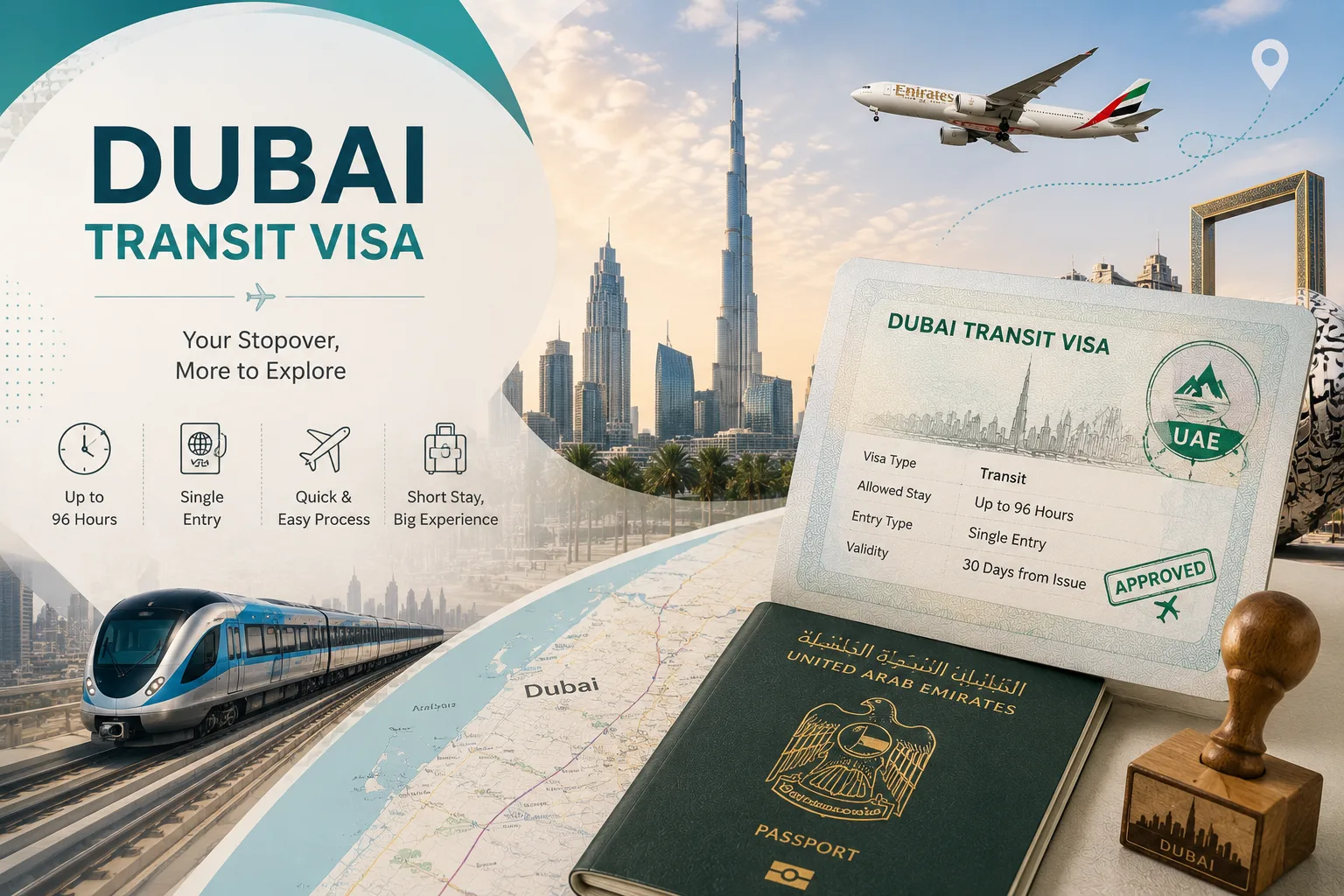
For Emirates-issued transit visas, the airline says the entry window is 30 days from issue. Your issued visa is the final record for your own case.
After you enter, the stay is limited to the visa duration: 48 hours or 96 hours.
Do not confuse entry validity with permitted stay.
Can You Extend a Dubai Transit Visa?
No. The 48-hour and 96-hour transit visas are not extendable.
A 48-hour visa also cannot simply be changed into a 96-hour visa after issue.
If your trip is longer than four days, check a normal tourist visa instead of trying to stretch a transit route.
What If Your Flight Is Delayed?
A flight delay does not add more visa time by itself.
Contact the airline as soon as the onward flight changes. Keep written proof of the disruption.
If the new flight creates a risk that you will stay past the permitted time, ask the airline and UAE immigration for guidance before the visa ends.
Do not simply remain in the UAE and assume the delay extends the visa.
What If You Have Separate Tickets?
Separate tickets can make a transit harder. Your first airline may only check bags to Dubai.
If you must collect baggage, you may need to pass immigration. You then need the correct UAE entry route.
Ask both airlines whether bags will be checked through. Also check whether you already qualify for visa-free entry or visa on arrival.
What If You Change Airports?
Dubai International (DXB) and Al Maktoum International (DWC) are different airports.
A transfer between them normally requires you to enter the UAE and travel by road. This is different from a normal airside terminal transfer inside one airport.
Check the airport code on both flight tickets. Do not assume every Dubai connection stays inside DXB.
Can You Leave the Airport on a Transit Visa?
Yes. The reason for the transit visa is to let an eligible transit passenger enter the UAE during the connection.
You can use the legal stay time for a hotel, rest or short visit. You still need to return to the airport and depart within the permitted period.
Plan conservatively. Immigration queues, road travel and airport security all use part of your stopover time.
How Much Layover Time Do You Need to See Dubai?
A long layover does not mean all of the time is free for sightseeing.
You need time to enter the UAE, reach the city, return to the airport and clear departure checks.
For a short connection, staying near the airport may be wiser. For a longer 96-hour stopover, you can plan more of the city.
Can You Work on a Transit Visa?
No. A transit visa is for a short travel connection. It is not a work permit.
Do not accept paid work or start employment while on transit status.
If work is the real purpose, use the correct UAE work route.
Transit Visa or Tourist Visa?
Use a transit visa for a real flight connection. Your trip should continue to another destination.
Use a tourist visa when Dubai is the main trip. A tourist visa is also better if you want more than four days in the UAE.
Do not force a holiday into a transit visa. Pick the visa that matches the real trip.
48-Hour Stopover Plan
A 48-hour stopover needs a simple plan. Do not try to see every part of Dubai.
After immigration, go to your hotel or one nearby area. Rest first if the flight was long.
For sightseeing, choose one main area. Downtown Dubai, Dubai Creek or a beach area can each fill several hours.
Return to the airport early. Road traffic and airport checks can use more time than expected.
96-Hour Stopover Plan
A 96-hour visa gives more room. You can spread the trip across two or three days.
Day one can be for rest and a short city visit. Day two can cover a main attraction or shopping area. Day three can stay flexible.
Keep the final part of the trip light. Your main job is still to catch the onward flight within the legal stay.
Leave a real safety buffer before the visa ends.
What If Your Bags Are Checked Through?
If your airline checks the bags to the final city, you may not need to collect them in Dubai.
This makes an airside transfer easier. You can follow the transfer signs to the next gate.
Still check your boarding pass and airline instructions. Some routes need a desk check even when the bag goes through.
What If You Must Collect Your Bags?
Bag collection can mean you need to cross immigration. This often happens on some self-transfer trips.
After you collect the bag, you may need to check in again for the next flight.
Ask the airline before travel. Do not discover the self-transfer rule after landing.
Airport Hotel: Airside or Landside?
Not every airport hotel uses the same entry route. Some facilities are inside the transit area. Others are landside.
If the hotel is airside, you may be able to stay without entering the UAE. If it is landside, you need the right UAE entry status.
Ask the hotel where it is located before you book.
Travelling With Children
Each child must have the correct passport and travel status. Do not assume one parent's visa covers a child.
Your airline or sponsor may ask for extra papers for a minor. This can include a birth certificate or parent documents.
Check the child document list before payment.
What to Keep on Your Phone
- Passport copy.
- Transit visa copy.
- Inbound flight.
- Onward flight.
- Hotel booking, if used.
- Visa reference number.
- Airline contact details.
Save the files offline. Airport Wi-Fi or mobile data may not always be ready when you need a document.
When a Transit Visa Is Not the Best Choice
Do not choose a transit visa if the stay is longer than 96 hours.
Do not choose it if Dubai is the main destination and the onward flight is only being added to fit a transit rule.
Do not choose it if your passport already gives you an easier legal entry route.
Check the passport and itinerary first.
One Last Check Before Payment
Open the passport. Read the number again. Check the expiry date.
Open the onward ticket. Check the destination and date.
Then check the visa length. Make sure the full stopover fits.
Fix a mismatch before you pay.
Common Dubai Transit Visa Mistakes
- Buying a transit visa before checking visa-on-arrival eligibility.
- Assuming every long layover needs a visa.
- Ignoring a self-transfer or baggage-collection requirement.
- Choosing 48 hours when the full stopover needs more time.
- Using an onward ticket that does not match the application.
- Uploading a blurry passport copy.
- Using a passport with too little validity.
- Applying through a channel that cannot sponsor the visa.
- Confusing provider fees with UAE government fees.
- Assuming a delayed flight extends the visa automatically.
Check the full itinerary before you pay. Most mistakes begin when the traveller chooses the visa before checking the transfer plan.
Simple Example: Stay Airside
You fly into Dubai and leave four hours later. Your bags are checked through, and you stay in the transit area.
You may not need a UAE entry visa because you are not entering the country. Confirm the transfer with your airline.
Simple Example: 24-Hour Dubai Stopover
You arrive in Dubai and want to spend one night in the city. Your passport does not qualify for visa on arrival.
A 48-hour transit visa may fit if the airline can sponsor it and your onward ticket meets the rules.
Simple Example: Three-Day Stopover
You want about three days in Dubai before your next flight.
The 96-hour transit visa is the more suitable transit option. Make sure the entire stay fits inside the permitted 96 hours.
Simple Example: Five-Day Dubai Visit
A five-day stay is longer than the 96-hour transit limit.
Do not try to use a transit visa. Check a normal tourist visa instead.
See our Dubai Tourist Visa Guide for 30-day and 60-day options.
Before You Apply
- Check whether you need UAE entry.
- Check visa-free or visa-on-arrival eligibility.
- Check the onward ticket.
- Check whether bags are through-checked.
- Check whether you change airports.
- Check the passport has six months left.
- Choose 48 or 96 hours.
- Confirm the sponsoring airline or channel.
Before You Travel
- Open the issued visa.
- Check your name.
- Check the passport number.
- Check the visa duration.
- Check the entry-validity date.
- Save the onward ticket.
- Save a copy of the visa offline.
- Check the flight again before leaving for the airport.
Final Dubai Transit Visa Checklist
Need to enter the UAE? Check your passport rule first.
Need a transit visa? Choose 48 hours or 96 hours from the full stopover time.
Before paying: separate the GDRFA fee from the airline or provider fee.
Before flying: check the visa, onward ticket and passport details again.
Choose the Right Dubai Transit Visa
A Dubai transit visa is simple when the itinerary is clear. Use 48 hours for a short legal stopover. Use 96 hours for a longer stopover that still stays within four days.
If you stay airside or already qualify for visa-free entry or visa on arrival, you may not need a transit visa at all. If the trip is longer than four days, use the right tourist route instead.
Ready to choose your Dubai stopover visa?
Check the full connection time and choose the correct transit option before you submit.
View 48-Hour Transit Visa View 96-Hour Transit Visa
Last reviewed: 25 August 2026. Transit visa fees, sponsor channels, airline rules and UAE entry rules can change.