PRESS
PRESS 

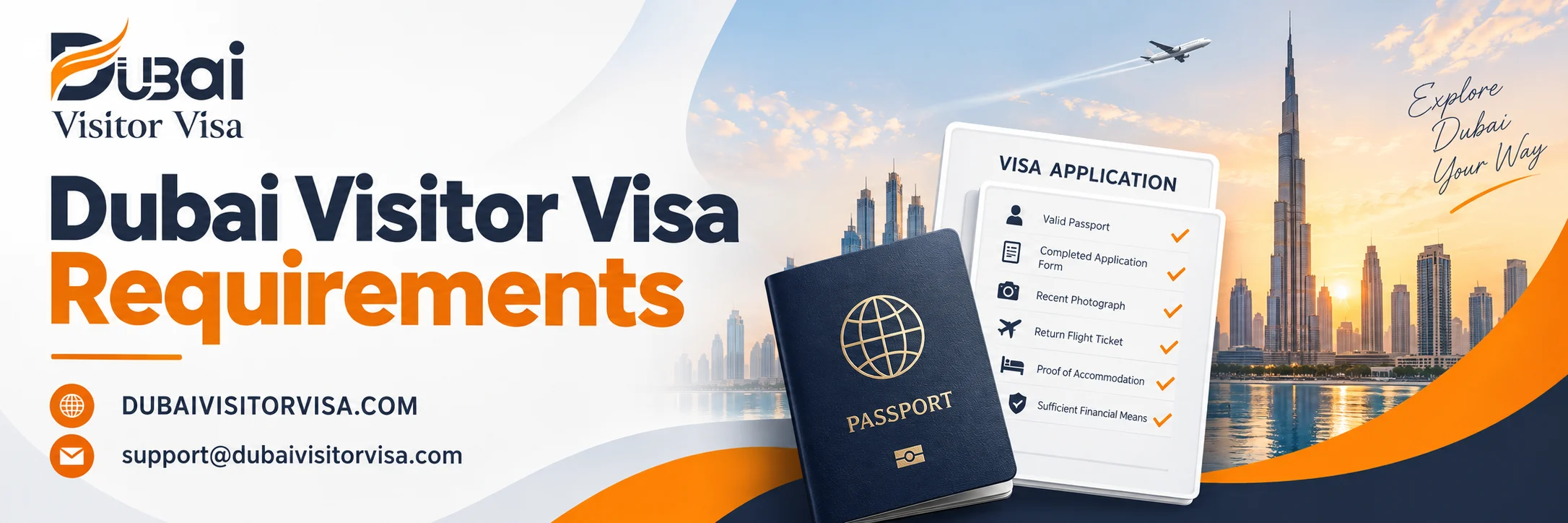
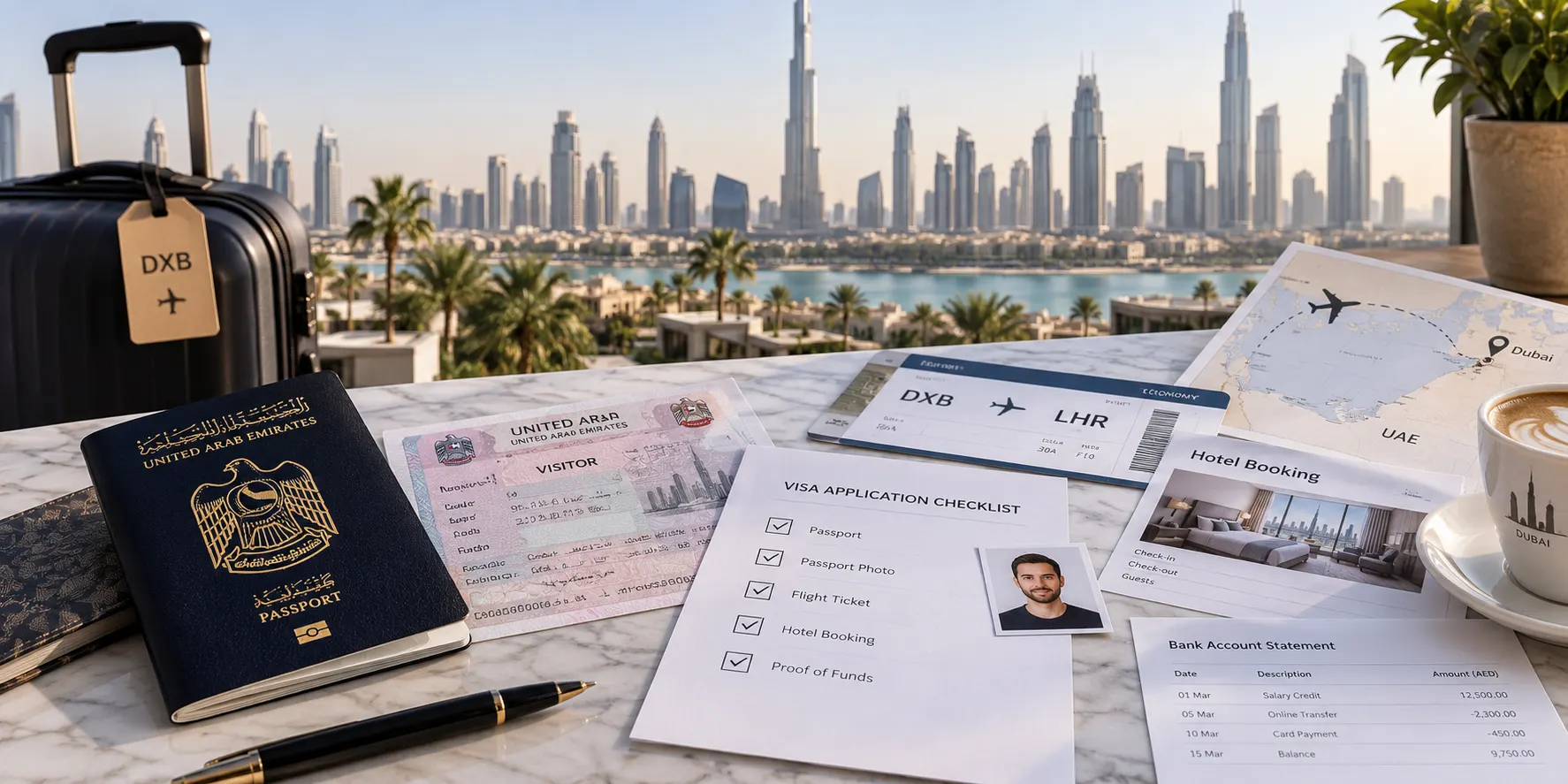
Quick answer: The current Dubai visitor visa requirements for a standard 30-day or 60-day tourist visa are more focused than many online checklists suggest. GDRFA Dubai currently publishes one personal photo, a passport copy and a national identity card only for applicants from Iraq, Pakistan, Iran and Afghanistan. The passport must normally remain valid for at least six months. The traveller also needs onward or return travel and medical insurance valid in the UAE.
The standard 30/60-day tourist service does not list previous international travel, a bank statement, hotel booking or marriage certificate as universal requirements. They can apply to another visa category, a provider's document-review process or an individual immigration case, but they should not be presented as mandatory for every tourist applicant.
Dubai Visitor Visa Requirements — 2026 Quick Guide
- Standard tourist stays: 30 or 60 days for the main GDRFA tourist route.
- Core documents: personal photo + passport copy.
- Extra national ID: currently listed for Iraq, Pakistan, Iran and Afghanistan.
- Passport validity: at least 6 months under the standard tourist terms.
- Travel proof: onward or return ticket.
- Insurance: medical insurance valid in the UAE.
- Standard tourist processing target: 48 hours after a complete request reaches the service.
- 90-day stay: not a standard 30/60-day tourism-establishment tourist product; 90-day options exist under other visit routes.
- Final approval: GDRFA/ICP immigration authority, not a private visa company.
Do You Need a Dubai Visa Before Travel?
Check your passport first. GCC citizenship, visa-on-arrival eligibility and advance tourist-visa requirements are different entry routes.
Check Dubai Visa EligibilityDubai Visitor Visa Requirements: Official 30/60-Day Checklist
The official GDRFA single-entry tourist visa service currently covers tourism stays of 30 or 60 days. The sponsor or host must be an establishment working in tourism. GDRFA says only accredited tourism offices in Dubai can issue this kind of tourist visa.
The published Dubai visitor visa documents for this standard route are:
- One personal photo.
- Copy of the passport.
- National identity card for applicants from Iraq, Pakistan, Iran and Afghanistan.
The service terms add three important travel conditions: the passport or travel document must normally have at least six months of validity, the traveller must have a ticket to continue the journey or leave the UAE, and medical insurance must be valid in the UAE.
That is the core checklist GDRFA publishes. When reviewing Dubai visitor visa documents, separate the official list from extra provider paperwork. A tourism office or immigration officer can still ask for more information in a specific case.
Who Needs a Pre-Arranged Dubai Visitor Visa?
Dubai visa eligibility starts with the passport used for travel. Do not decide from country of residence alone.
| Traveller | Entry Route to Check |
|---|---|
| GCC citizen | No UAE visa normally required for entry. |
| Visa-on-arrival passport holder | Uses the applicable arrival route if current conditions are met. |
| Foreign GCC resident | May use the separate GCC-resident eVisa route if eligible. |
| Advance-visa passport holder | Needs the correct approved UAE visa before travel. |
Citizens of Bahrain, Kuwait, Oman, Qatar and Saudi Arabia are GCC nationals and normally enter without a UAE visa. A foreign national who merely lives in one of those countries is a GCC resident, not a GCC citizen.
Visa-on-arrival rules depend mainly on passport nationality. Some conditional routes also use a qualifying foreign visa or residence document. The Dubai Visa on Arrival guide explains those passport-specific entry routes separately.
Dubai Visitor Visa Requirements for 30-Day and 60-Day Tourist Visas
The main short tourist options are 30 and 60 days. Current GDRFA services offer both single-entry and multiple-entry tourist versions.
30-Day Single-Entry Tourist Visa
This route gives one tourist entry and a stay of up to 30 days under the issued visa. Current GDRFA government fee: AED 200 + 5% VAT. GDRFA currently lists no security-deposit amount for this standard tourist service.
60-Day Single-Entry Tourist Visa
This route gives the longer standard tourist stay. Current GDRFA government fee: AED 300 + 5% VAT. The same core photo, passport and listed-national-ID requirements apply.
30-Day and 60-Day Multiple Entry
If the traveller needs to leave the UAE and return, the multiple-entry tourist route may fit better. Current GDRFA government fees are AED 300 + 5% VAT for 30 days and AED 500 + 5% VAT for 60 days. The current service also lists no security-deposit amount for these standard tourist multiple-entry visas.
For a side-by-side comparison, keep the trip purpose, stay length and number of UAE entries separate. Tourist, transit, GCC-resident, family and long-term visitor routes do not use one shared checklist.
Is There a Standard 90-Day Dubai Tourist Visa?
The source article presented 30, 60 and 90 days as one standard tourist-visa ladder. Current GDRFA services need a clearer distinction.
The normal tourism-establishment-sponsored tourist services list 30 and 60 days. Other visit categories offer 90-day options, including the relative-or-friend route. That route has different eligibility, relationship documents, insurance fees and a financial guarantee.
Do not market a 90-day relative/friend visit visa as simply the “90-day tourist visa.” The travel purpose and document basis matter.
Visitors who need family, transit, job-exploration, business-exploration or long-term tourism should use the route designed for that purpose rather than forcing the standard tourist checklist onto every trip.
Not Sure Which Visitor Visa Route Fits?
Compare tourist, multiple-entry, transit, GCC-resident, family and long-term visitor options before preparing documents.
Compare Dubai Visitor Visa TypesPassport Requirements for a Dubai Visitor Visa
For the standard GDRFA tourist route, the passport or approved travel document should normally remain valid for at least six months. The uploaded copy must clearly show the identity details in the visa application.
The source also listed “machine-readable,” “signed by the holder” and “handwritten passports not accepted” as universal GDRFA checklist items. Those points should not be stated as if they appear on the current tourist-service document list. The safer rule is to use a valid, recognised passport that satisfies the authority's current entry requirements and can be clearly verified.
If the passport is damaged, unreadable or about to expire, renew it before applying. If a passport was recently renewed, make sure the application uses the new passport details consistently.
Is Previous Travel History Required?
No published standard GDRFA tourist requirement says an applicant must have visited the UK, US, Schengen Area, Japan or any other country before applying. Previous passport stamps are not part of the current standard 30/60-day checklist.
This corrects the source's claim that stronger travel history leads to faster approval. GDRFA does not publish that as a standard eligibility rule or processing shortcut.
Travel history and immigration history are also different. An empty passport is simply a passport with no previous foreign trips. A past UAE overstay, unresolved visa record or entry restriction is an immigration-history issue and can matter to a new application.
A previous UK, US or Schengen visa can matter only in specific passport-based entry rules, such as some conditional visa-on-arrival routes. It is not a universal prerequisite for a standard pre-arranged Dubai tourist visa.
A fresh passport and empty travel history do not automatically block a standard tourist application. The Dubai Visa Without Travel History guide explains this distinction in more detail.
Are Bank Statements Required for a Dubai Tourist Visa?
Not for every standard 30-day or 60-day tourist application. GDRFA's standard tourist service does not publish a universal bank-statement requirement.
Some other routes formally require bank statements. The five-year multiple-entry tourist visa, for example, currently requires a six-month bank statement and evidence of a bank balance of at least USD 4,000 or equivalent over the six months before application.
A sponsor, tourism office or immigration officer can request extra financial evidence for an individual file. That possibility is case-specific. It should not be converted into universal Dubai tourist visa requirements for every 30-day or 60-day applicant. The same Dubai tourist visa requirements principle applies to hotel bookings and other extra provider documents.
Insurance, Ticket and Accommodation Requirements
For the standard GDRFA tourist visa, GDRFA requires onward or return travel and UAE-valid medical insurance. Treat these as real requirements, not optional supporting documents.
A hotel reservation or accommodation document is different. The current standard single-entry tourist service does not list a hotel booking among its universal core documents. A tourism office, airline or immigration officer may still ask for accommodation details in a particular case.
Keep the final travel ticket and insurance details accessible before departure because airline staff or immigration can ask for supporting travel information.
Country-Specific Requirements and GCC Residents
The standard GDRFA tourist service specifically lists a national identity card for applicants from Iraq, Pakistan, Iran and Afghanistan. Do not apply that requirement to every nationality.
GCC residents have a separate route. Current UAE guidance says an eligible foreign GCC resident can use a 30-day eVisa that is extendable once for another 30 days. The GCC residence must normally remain valid for at least one year from arrival, and the passport must have at least six months of validity.
This is not the same as visa on arrival and should not be described that way. The traveller normally uses the dedicated GCC-resident entry route before arrival unless another passport-based option applies.
Who Submits a Standard Dubai Tourist Visa Application?
For the standard GDRFA tourist service, the sponsor or host is an establishment working in tourism. GDRFA also states that only accredited tourism offices in Dubai can issue this type of tourist visa.
This is more precise than saying any “visa service provider” can sponsor the visa. A private website may collect documents or provide assistance, but the underlying immigration submission must use an authorised route.
Some airlines and tourism businesses also offer visa-related services when the traveller meets their booking and service conditions. Their document checklist can include extra commercial requirements that do not appear on the basic GDRFA government page.
Before paying, ask who the actual submitting or sponsoring entity is and what part of the quoted amount is a private service charge. This helps separate immigration requirements from a provider's own onboarding process.
Dubai Visitor Visa Fees and Security Deposits
The current Dubai visitor visa fees for standard GDRFA tourist visas are tied mainly to stay length and entry type:
| Tourist Route | Current GDRFA Visa Fee |
|---|---|
| 30-day single entry | AED 200 + 5% VAT |
| 60-day single entry | AED 300 + 5% VAT |
| 30-day multiple entry | AED 300 + 5% VAT |
| 60-day multiple entry | AED 500 + 5% VAT |
Current GDRFA pages state that there is no security-deposit amount on these standard tourist services. That corrects the source's broad warning that applicants should expect a refundable security deposit on the standard tourist route.
Private provider fees, insurance and other service charges can make the final amount higher than the government visa fee. The Dubai Visitor Visa Cost guide separates those components.
Dubai Visitor Visa Processing Time
GDRFA currently lists an expected completion time of 48 hours for the standard tourist service after the complete application reaches the service. This is an official service benchmark, not a guarantee that every application will be approved within two days.
Case review, missing information or other immigration checks can extend the timeline. A private “express” service also cannot guarantee the authority's decision.
Do not buy non-refundable travel arrangements based only on a provider's promised approval time. Use the issued visa as the final proof that the application succeeded.
Dubai Visa Application Process: Main Steps
The Dubai visa application process for a traveller who needs a pre-arranged tourist visa is straightforward:
- Check eligibility. Confirm whether the passport actually needs an advance visa.
- Choose the correct route. Match the travel purpose, stay and number of entries.
- Prepare the published documents. Photo, passport copy and national ID where specifically required.
- Confirm travel conditions. Passport validity, onward/return ticket and UAE-valid medical insurance.
- Submit through the appropriate tourism/visa channel.
- Pay the applicable fees. Separate government charges from private service fees.
- Track the application. Do not submit duplicate applications while one file remains active.
- Check the issued visa. Verify the passport number, visa type and permitted stay before travel.
The visa procedure must match the actual trip. If the traveller's real purpose is job exploration, business exploration, study or visiting relatives/friends, a dedicated visit category may be more appropriate than a standard tourism visa.
Common Requirement Mistakes That Can Delay a Visa File
- Using a passport with less than the required validity.
- Uploading a cropped or unreadable passport copy.
- Entering a passport number, name or date incorrectly.
- Applying under tourism when the real travel purpose belongs to another visit category.
- Adding invented or altered supporting documents.
- Assuming bank statements or travel history are mandatory for every short tourist visa.
- Calling a 90-day family/friend visit route a standard 90-day tourist visa.
- Using GCC residence as if it were GCC citizenship.
- Ignoring a previous UAE immigration issue or unpaid fine.
- Paying a provider before understanding what the quoted fee includes.
If a file is refused, correct the actual issue before sending a new application. The Dubai Visa Rejection Reasons guide explains how to separate a document problem, immigration-record issue and wrong-route problem.
What to Check After the Visa Is Issued
Approval does not end the document check. Open the issued visa and compare the passport number, full name, nationality, visa type and stay details with the passport and travel plan.
Check the entry window and permitted stay separately. A visa can have one deadline for entering the UAE and another rule for the permitted stay after entry.
If the itinerary changes, check whether the issued visa still matches the required entries and stay length. Do not assume a single-entry visa can be reused after leaving the UAE.
Keep a copy of the issued visa, travel insurance and onward/return booking accessible during check-in and arrival. The airline and immigration authority can ask for documents that support the legal entry route.
Dubai Visitor Visa Requirements: Final Pre-Submission Checklist
- Check passport-based eligibility first.
- Use the 30-day or 60-day tourist route only when tourism is the real purpose.
- Choose single entry or multiple entry from the actual itinerary.
- Prepare one personal photo and a clear passport copy.
- Add the national ID only when the current service lists it for your nationality.
- Keep at least six months of passport validity under the standard tourist terms.
- Arrange onward or return travel.
- Arrange medical insurance valid in the UAE.
- Do not invent a travel-history or universal bank-statement requirement.
- Check government fees separately from private service charges.
- Review every passport detail before submission.
- Wait for the issued visa before treating the trip as visa-approved.
The safest interpretation of the Dubai visitor visa requirements is to start with the published GDRFA checklist and then add only the documents that genuinely apply to the traveller's nationality, visa category or individual file. A correct Dubai visitor visa requirements checklist should not mix standard tourist documents with route-specific extras.
What to Do After You Confirm the Requirements
Once the passport route, documents, stay length and entry type are clear, prepare one clean application. Keep the data exactly consistent with the passport and avoid sending duplicate files through different agents at the same time.
Save the payment receipt and application reference. Track the existing file rather than creating a second application because the first one appears slow. Duplicate live files can make the case harder to understand.
If a provider asks for a document that does not appear on the standard GDRFA list, ask why it applies to your case. It may be a valid sponsor requirement, but you should know whether it comes from the government service, the sponsor or the provider.
A private visa-assistance company can help prepare and route an application, but it cannot guarantee approval or replace the immigration authority's decision.
Ready for a Pre-Arranged Dubai Visitor Visa?
If your passport needs advance approval, choose the visa from the actual stay length and entry plan.
Review Dubai Visitor Visa Options