Dubai eVisa 2026: Eligibility, Requirements, Prices, Visa Types & How to Apply Online

04-Aug-2026 0 Comments 1000 Views

dubai evisa 2026: requirements, cost & apply online

Priyanshu Raghav

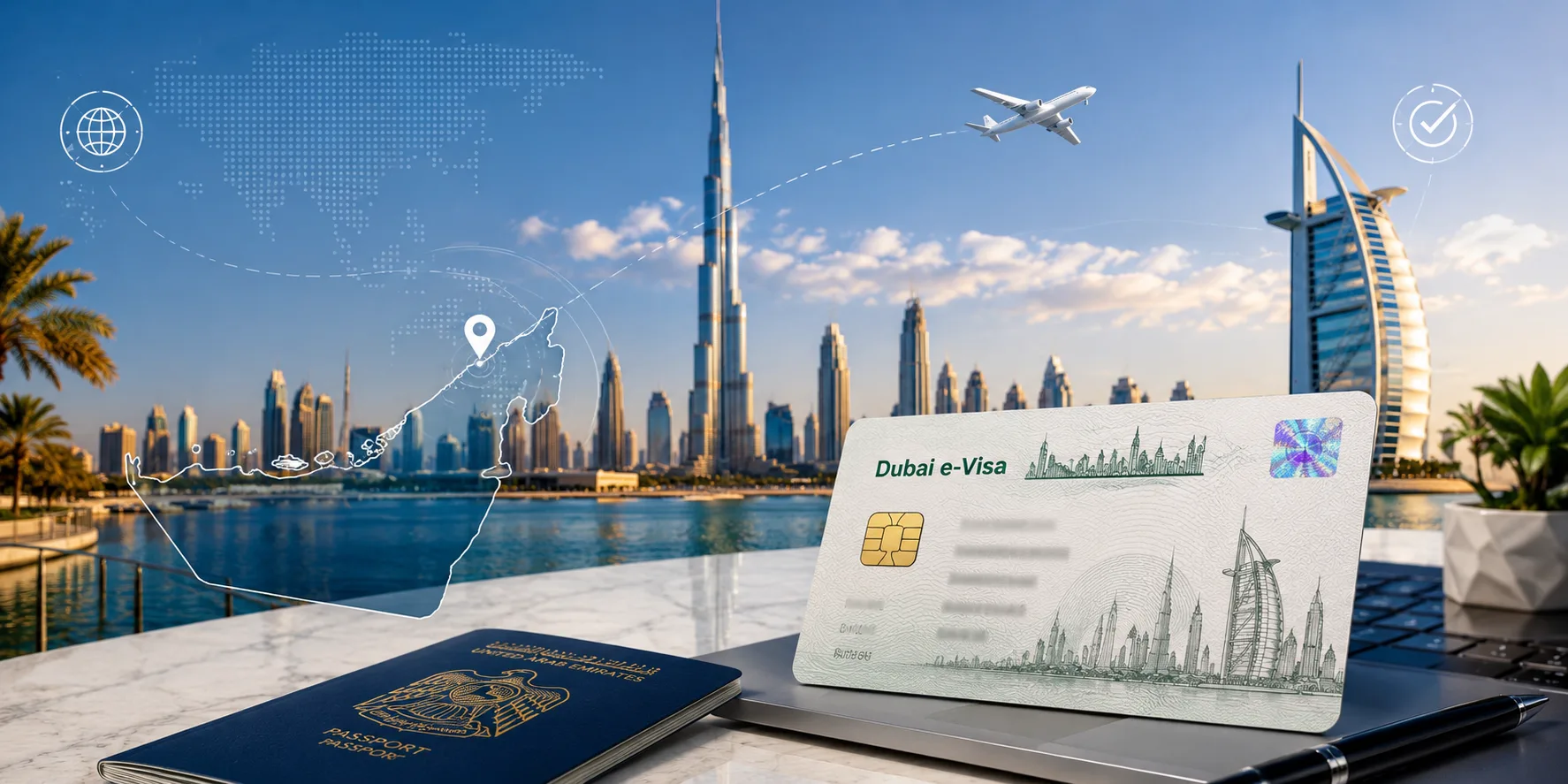
"Dubai eVisa" is one of the most searched travel terms for the UAE, but it isn't a single official visa on the government's books. In practice it describes any UAE tourist or visit visa that is applied for, processed and delivered electronically — no embassy visit, no sticker in your passport. Most standard tourists are actually applying for a 30-day or 60-day tourist visa issued by GDRFA Dubai, not a category literally named "Dubai eVisa." Some nationalities qualify for visa-free entry or visa on arrival and don't need to apply at all. GCC residents, on the other hand, use a route the UAE government does officially call an eVisa. This guide untangles all of it: who actually needs advance permission, which visa fits your trip, verified 2026 government fees, documents, processing, and how to apply.

What Is a Dubai eVisa? — Quick Answer

A Dubai eVisa generally means a UAE tourist or visit visa arranged online and issued electronically before travel. UAE authorities classify standard tourist entry by purpose, duration and entry type — tourist visa, visit visa, entry permit — rather than as one universal "Dubai eVisa" category. Travellers eligible for visa-free entry or visa on arrival usually skip this step; everyone else generally needs a pre-arranged electronic visa before boarding.

Dubai eVisa at a Glance

Quick facts — verified against GDRFA Dubai and the official UAE Government portal
Detail Current Position
Common traveller term Dubai eVisa / UAE eVisa / Dubai electronic visa
Official tourist terminology Tourist visa, visit visa, entry permit
Where "eVisa" is the official name Only the GCC-resident entry-permit route
Application Online, through a licensed tourism establishment, airline, hotel or GDRFA/ICP channel
Delivery Electronic copy by email; no physical sticker for standard tourist routes
Common stay options 30 days or 60 days (single or multiple entry); 90-day single entry also offered by some channels; 5-year multiple entry for eligible travellers
Government fee — 30-day single entry AED 252 + 5% VAT (GDRFA, verified Aug 2026)
Government fee — 60-day single entry AED 352 + 5% VAT (GDRFA, verified Aug 2026)
Passport validity Minimum 6 months from date of entry
Basic documents Passport copy + recent photograph (+ national ID for select nationalities)
Return/onward ticket Required under current GDRFA terms and conditions
Medical insurance Required under current GDRFA terms and conditions
GDRFA expected completion time 48 hours (service estimate, not a guarantee)
Approval UAE immigration decision — never guaranteed by any provider
Visa on arrival Available to many nationalities; conditional 14/60-day route expanded 25 June 2026
GCC-resident eVisa Separate official route — 30 days validity, 30 days stay, extendable once by 30 days
Last verified 4 August 2026 — GDRFA Dubai service catalog, u.ae government portal

What Is a Dubai eVisa?

In short: A Dubai eVisa is the common name for a UAE tourist or visit visa that's applied for online and issued as an electronic document rather than a passport sticker. It confirms pre-approved entry for tourism, and it's checked, not re-decided, by the immigration officer who stamps you in on arrival.

The application happens entirely on a screen — you upload a passport scan and photo, pay online, and (if approved) receive a PDF by email. For the standard 30-day and 60-day tourist categories, there's no physical visa sticker to collect and no in-person interview. That's the whole reason travellers reach for the word "eVisa": it captures the electronic, remote nature of the process better than the formal name of any single visa product does. It isn't a separate, cheaper, or faster visa than a "tourist visa" — for most applicants, it's the same product described in everyday language. Final admission at the airport is always a decision made by UAE immigration on the day, regardless of how smoothly the online step went.

Is Dubai eVisa an Official Visa Category?

Not as one universal tourist category. UAE authorities classify entry permission for ordinary tourists by purpose, duration and entry type — a 30-day single-entry tourist visa, a 60-day multiple-entry visit visa, a 5-year multiple-entry tourist visa, and so on. None of these is officially branded "Dubai eVisa." Travellers use the phrase because it describes how the visa is obtained (electronically), not what the government calls it.

There is one place the term is used formally: the UAE Government's own portal names a specific "eVisa for GCC residents" route for eligible expatriates living in Saudi Arabia, Kuwait, Oman, Qatar or Bahrain. That's a genuinely distinct product from a standard tourist visa, covered in detail further down this page. Outside that one route, treat "Dubai eVisa" as shorthand, not a product name, when you're comparing prices or reading requirements.

Dubai eVisa vs UAE Tourist Visa — What Is the Difference?

For most travellers there's no practical difference — you're describing the same application. The table below shows how the terminology actually maps.

Terminology comparison
Term Practical Meaning
Dubai eVisa Common traveller/search term for any electronically applied, electronically issued UAE tourist or visit visa
UAE tourist visa The official category most standard visitors actually apply for (30-day, 60-day, 90-day, single or multiple entry)
Entry permit Broader immigration term covering tourist, visit, medical and several other short-stay categories
Electronic visa copy The PDF document issued after approval — this is the physical artifact people mean by "eVisa"
GCC resident eVisa A distinct, officially named route — different eligibility, validity and stay rules from a tourist visa

In other words: when someone searches "Dubai eVisa," what they usually need is a standard 30-day or 60-day tourist visa. Only GCC residents are dealing with a product the government itself labels "eVisa."

Who Needs a Dubai eVisa?

Whether you need to apply in advance depends entirely on your passport, not on how you plan to travel.

Advance visa decision table
Traveller Advance Visa Position
Visa-free passport (GCC nationals, and many Western/Asia-Pacific passports) Usually no advance tourist visa needed
Visa-on-arrival passport Usually no pre-arranged tourist visa needed
Conditional visa-on-arrival traveller (added June 2026) Verify you hold a qualifying foreign residence permit before relying on VOA
Visa-required passport A pre-arranged electronic tourist visa is normally required
GCC citizen Follow GCC-citizen entry rules — no visa needed
GCC resident (non-citizen expatriate) The separate GCC-resident eVisa route may apply

Who Does Not Need to Apply for a Dubai eVisa?

Citizens of GCC countries enter the UAE freely on their national ID. A large group of other nationalities — including most EU countries, the UK, the US, Canada, Australia, New Zealand, Japan, Singapore and South Korea — currently receive visa-free entry or visa on arrival for a set number of days, without submitting any online application beforehand. If you fall into either group, buying an advance "Dubai eVisa" from any provider is unnecessary spending. Always confirm your specific nationality's current status before booking, since visa-on-arrival lists are reviewed periodically by UAE authorities.

Check Dubai eVisa Eligibility by Nationality

Eligibility is nationality-specific and, for a handful of countries, also depends on whether you hold a qualifying foreign residence permit. Use this table as a starting point, then confirm your exact route before applying.

Eligibility snapshot by passport/profile
Passport / Profile Advance Visa? Main Note Action
India Depends 14-day visa on arrival only with a valid qualifying US/UK/EU/Australia/Canada/NZ/Japan/Singapore/South Korea visa or residence permit; otherwise a pre-arranged visa is required Check India guide
Philippines Depends Conditional 14/60-day VOA added June 2026, contingent on a qualifying foreign residence permit Check VOA guide
Pakistan Usually yes — advance route National ID copy required alongside passport; narrow conditional VOA exception exists for holders of specific foreign visas Check Pakistan guide
South Africa Depends Conditional 14/60-day VOA added June 2026, contingent on a qualifying foreign residence permit Check VOA guide
Nigeria Usually yes — advance route Verify current requirement before booking Check Nigeria guide
UK Usually visa-free / VOA Verify current permitted stay before travel Check VOA guide
USA Usually visa-free / VOA Verify current permitted stay before travel Check US guide
GCC citizen No visa needed Enters on national ID
GCC expatriate resident Separate eVisa route Residence and passport validity conditions apply Review GCC eVisa section

Dubai eVisa Types

What travellers call a "Dubai eVisa" usually turns out to be one of the products below. Pick based on trip length and whether you plan to leave and re-enter the UAE.

30-Day Single-Entry Dubai Visa

Best for a single short holiday, a short family visit, or any trip that stays inside the UAE for under a month with no exit and re-entry. See the 30-day single-entry visa page for full documents and the current price.

60-Day Single-Entry Dubai Visa

Suits a longer holiday, an extended family stay, or a fuller UAE itinerary that doesn't require leaving the country mid-trip. See the 60-day single-entry visa page.

30-Day Multiple-Entry Dubai Visa

Designed for travellers who plan to leave and return — for example combining Dubai with Oman — without needing a fresh application for each entry. See the 30-day multiple-entry visa page.

60-Day Multiple-Entry Dubai Visa

For longer multi-country trips or several separate UAE entries within the same validity window. See the 60-day multiple-entry visa page.

UAE 5-Year Multiple-Entry Tourist Visa

A long-term, self-sponsored option for frequent visitors: multiple entries over five years, with each visit capped at 90 days and a total of up to 180 days per calendar year. Eligibility, financial-proof and insurance conditions are stricter than the short-term visas above — see the dedicated breakdown in our Dubai visa types guide rather than assuming the 30/60-day rules apply.

Dubai eVisa for GCC Residents

This is the one part of the UAE visa system where "eVisa" is the UAE Government's own official name for the service, so it deserves a closer look. The eVisa for GCC residents lets expatriates legally residing in Bahrain, Kuwait, Oman, Qatar or Saudi Arabia — plus their companions — apply online for permission to visit the UAE, rather than going through a standard tourist-visa sponsor.

Per the UAE Government portal, the entry permit is valid for 30 days from the date of issue, and once you enter, the permitted stay is 30 days from the date of entry. It can be extended once, for a further 30 days, subject to approval. Two conditions matter most: your GCC residency must remain valid for at least one year from your arrival date, and your passport must be valid for at least six months from your arrival date.

Important distinction: GCC citizens (Saudi, Kuwaiti, Bahraini, Omani, Qatari nationals) and GCC expatriate residents are not the same category. GCC citizens enter the UAE visa-free on their national ID. This eVisa route is specifically for non-citizen residents of those countries — the domestic workers, dependants and expatriate professionals who hold a valid GCC residence permit.

Applications go through the GDRFA Dubai smart-services channel for Dubai-bound travel, or the federal ICP platform if the trip includes other emirates such as Abu Dhabi or Sharjah. The approved electronic visa is emailed to the applicant once processed. Confirm the current fee at application, since it can vary by channel and is not published as a single fixed government figure the way the standard tourist-visa fees are.

Dubai eVisa Requirements

For the standard GDRFA tourist-visa services, the officially listed requirements are deliberately short: one personal photo, a copy of your passport, and — for applicants from Iraq, Pakistan, Iran or Afghanistan — a copy of your national identity card. Terms and conditions attached to the visa additionally call for a passport valid at least six months from your entry date, a return or onward travel ticket, and medical insurance valid in the UAE. We don't add a universal bank-statement, hotel-booking, or police-clearance requirement here, because GDRFA's own published conditions for the standard tourist route don't list them as blanket requirements — those items can still be requested for specific routes, nationalities, or by your sponsor, so check the channel-specific checklist before you apply.

Documents Required for Dubai eVisa

Standard tourist-route document position
Document Standard Tourist Route Position
Passport copy Core requirement
Photograph Core requirement — recent, passport-style
Passport validity Minimum 6 months from date of entry
Return/onward ticket Required under current GDRFA terms
Medical insurance Required under current GDRFA terms — valid in the UAE
National identity card Iraq, Pakistan, Iran and Afghanistan nationals
Accommodation evidence Route/channel-dependent — not a blanket GDRFA requirement
Financial evidence Not a universal short-tourist-visa rule; commonly requested for the 5-year visa and some sponsor-led applications
Additional documents Applicant- and channel-dependent

Financial-proof questions belong on our dedicated cost breakdown at the Dubai visitor visa cost guide, and accommodation questions are covered further down this page.

Dubai eVisa Price

Two very different numbers get called "the Dubai eVisa price": the fixed GDRFA government fee, and the total you actually pay a provider once VAT, insurance and service handling are added. Both are shown below, verified against the GDRFA Dubai service catalog.

30-Day and 60-Day Government Fee (Single Entry)

Government fee only — single entry, GDRFA verified 4 August 2026
Visa AED (Govt Fee + VAT) ≈ USD ≈ INR
30-day single entry AED 264.60 ~$72 ~₹6,870
60-day single entry AED 369.60 ~$101 ~₹9,600

30-Day and 60-Day Government Fee (Multiple Entry)

Government fee only — multiple entry, GDRFA verified 4 August 2026
Visa AED (Govt Fee + VAT) ≈ USD ≈ INR
30-day multiple entry AED 315.00 ~$86 ~₹8,180
60-day multiple entry AED 525.00 ~$143 ~₹13,630

Exchange rates used: 1 USD = AED 3.6725 (fixed peg), 1 USD ≈ INR 95.35 (4 August 2026). Rates move daily — treat the USD/INR figures as reference only.

Typical Total Price Paid Through a Service Provider

Our own published cost data currently puts the total 30-day tourist visa price (government fee, 5% VAT, service charge and basic health insurance combined) in the AED 350–550 range, and the 60-day visa in the AED 580–900 range. This is a dated estimate, not a fixed rate — see the full Dubai visitor visa cost guide for the current breakdown and country-specific pricing.

5-Year Multiple-Entry Visa Cost

GDRFA's published breakdown for the self-sponsored 5-year visa totals approximately AED 3,713.50, made up of a smaller application fee, an issuance fee, and a refundable AED 3,000 security deposit returned once conditions are met — plus insurance and processing charges that scale with your chosen options. This is a materially different cost structure from the short-term visas above, so don't compare it directly to a 30-day price.

Government Fee vs Service Fee

Confusion here is one of the biggest sources of "why is one site cheaper than another" questions.

Government / Authority Fee

The amount GDRFA Dubai or ICP charges for the visa itself — fixed, published, and identical no matter who submits your application.

Service Provider Fee

Covers application assistance, document review, customer support, bundled insurance, secure payment handling, and — where offered — express-service handling. This portion varies by provider.

Total Customer Price

What you actually pay at checkout, which can differ meaningfully from the bare government fee once the items above are included.

Always compare the final checkout total, what's included (insurance, support, tracking) and the refund terms — rather than assuming a quoted government service-card fee is the full retail visa price.

How to Apply for Dubai eVisa Online

  1. Check whether you actually need an advance visa (see the eligibility sections above).
  2. Select your trip duration — 30, 60 or another available option.
  3. Choose single or multiple entry based on whether you'll leave and re-enter the UAE.
  4. Prepare your documents: passport scan, photo, and any nationality-specific ID.
  5. Enter your passport details exactly as printed — mismatches are a leading rejection cause.
  6. Upload clear, uncropped scans and a compliant photograph.
  7. Select standard or express service where offered.
  8. Review the full price shown before paying, including VAT and any service charge.
  9. Pay securely through the provider's checkout.
  10. Save your application reference number.
  11. Track progress through your provider or the relevant government portal.
  12. Respond promptly if additional documents are requested.
  13. Receive your electronic visa once approved.
  14. Check every detail on the approved copy against your passport.
  15. Travel with the required supporting documents, not just the visa PDF.

Applying through a service provider does not mean that provider controls or guarantees the outcome — approval remains a UAE immigration decision at every step.

Where Can You Apply for a Dubai Visa?

Licensed Travel Agency or Tourism Establishment

The most common pre-arranged tourist-visa route — GDRFA's own service catalog states that only accredited tourism offices can sponsor this visa category. Verify the company's legitimacy before paying; visa approval always sits with immigration, not the agency.

UAE Airlines

Airlines such as Emirates and flydubai offer visa services tied to eligibility and your booked itinerary, with airline-specific documentation requirements.

UAE Hotels

Some hotels can arrange a visa for confirmed guests under applicable conditions, usually bundled with the booking.

GDRFA or ICP Where Applicable

Direct government channels are available for certain categories and eligible applicants — GDRFA Dubai for Dubai-issued visas, ICP for the other six emirates.

UAE Embassy

Ordinary UAE tourist visas are generally not obtained through a UAE embassy in the way travellers sometimes expect from other countries' visa systems. Confirm the correct route for your specific nationality and visa category before assuming an embassy visit is required.

Dubai eVisa Processing Time

GDRFA Dubai currently publishes an expected completion time of 48 hours for the standard tourist-visa service. That's a service estimate, not a guaranteed approval deadline — applications can take longer where additional documents, corrections, or further immigration review are needed. Build in buffer time rather than booking non-refundable travel around the 48-hour figure.

Standard vs Express Dubai Visa Processing

Standard vs express service comparison
Feature Standard Express
Best for Planned travel Urgent, eligible cases
Document review Standard queue Priority queue
Submission handling Normal Expedited where available
Approval guaranteed No No
Immigration authority UAE authorities UAE authorities (same)
Availability Most visa categories Eligibility- and route-dependent

Express handling refers to the service level a provider offers — faster internal document review and priority submission — and does not mean UAE immigration guarantees approval within any fixed number of hours. If your trip is genuinely urgent, our Dubai Express Visa service explains current turnaround options.

When Should You Apply Before Travelling?

Don't leave your application to the day before departure. Factor in working days, UAE and origin-country public holidays, and time for document corrections if something gets flagged. Where practical, hold off on non-refundable flight or hotel bookings until you have visa certainty, since your specific nationality and application route can affect how long review takes. There's no single universal "apply exactly X days before travel" rule that applies to every nationality and visa type — treat any fixed number you see elsewhere as general planning guidance, not a guarantee.

How Do You Receive an Approved Dubai eVisa?

Once approved, the visa arrives as an electronic copy — typically by email or through your provider's dashboard. Download it and check every field before travel: full name, passport number, visa type, entry type, validity dates and permitted stay. Report any discrepancy to your provider or the issuing channel before you fly; correcting an error after arrival is far harder than catching it beforehand.

Do You Need to Print Your Dubai eVisa?

There's no single rule that applies to every airline and every channel. Keep an accessible digital copy on your phone or email, and follow your airline's or processing channel's current instructions. Carrying a printed backup can still be useful even where the electronic copy is officially accepted, in case of connectivity issues at check-in or immigration.

How to Check Dubai eVisa Status

Once you've applied, you can track progress using your application reference number through your provider's tracker or the relevant official status service. Status generally moves from processing, to approved (with the entry permit issued), to occasionally returned for a document correction or, less commonly, rejected. For step-by-step instructions specific to your passport number and issuing emirate, see our Dubai visa status guide — we won't duplicate the full walkthrough here.

How to Download Your UAE Visa Copy

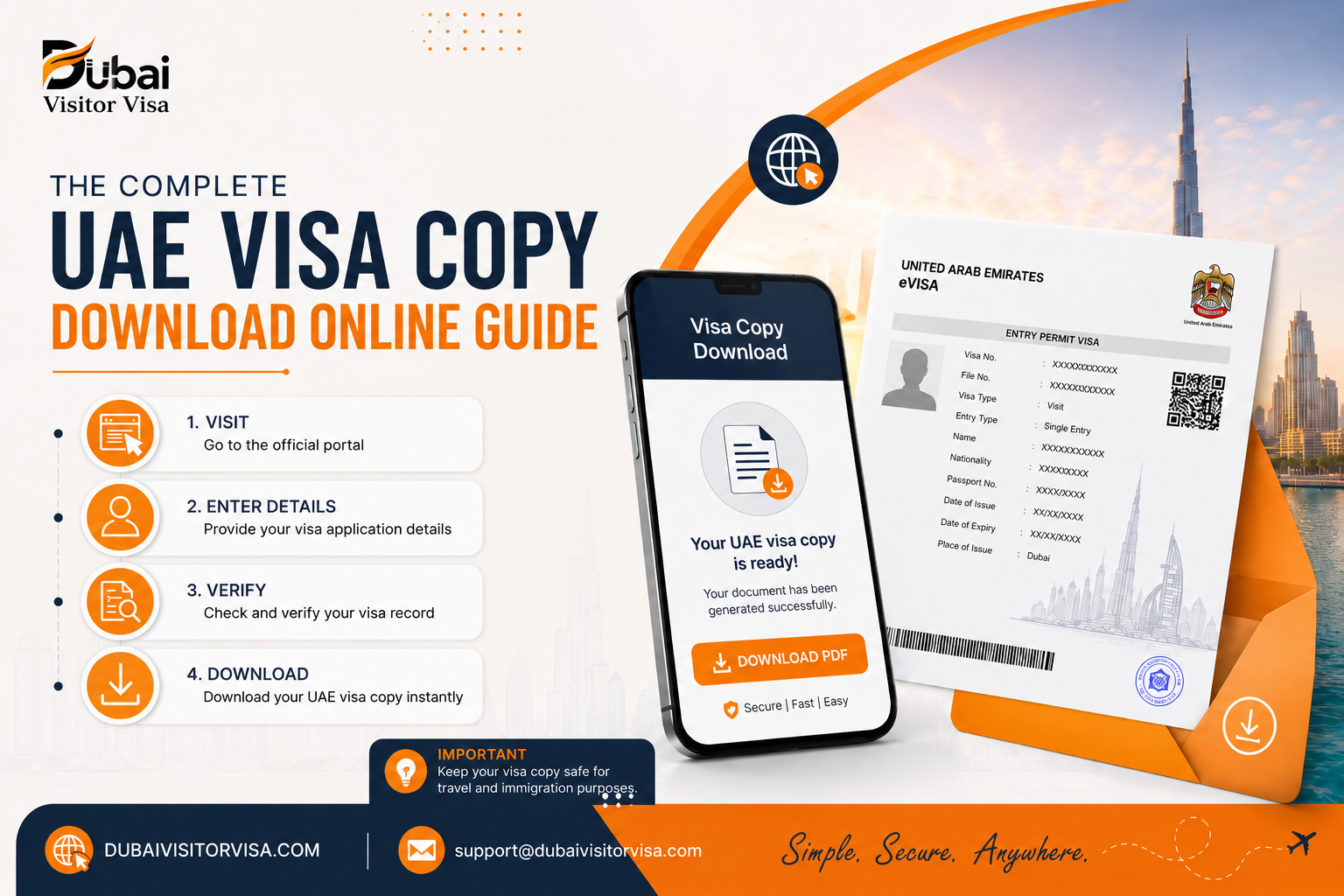
If your visa is already approved but you've misplaced the file, use the retrieval route offered by your issuing channel or provider, or request a reissued copy from whoever sponsored the application. Full step-by-step retrieval instructions live outside this page's scope — check with your original application provider or the applicable government portal for the exact recovery steps for your case.

Dubai eVisa Validity vs Stay Duration

This distinction causes more confused travellers than almost anything else on this page.

Validity vs stay duration
Term Meaning
Visa validity The window in which you must enter the UAE using this visa — commonly around 60 days from issuance for standard tourist visas
Stay duration How long you're allowed to remain in the UAE once you've actually entered — 30 or 60 days, counted from your entry date
Entry type Single (visa becomes invalid the moment you exit) or multiple (re-entry allowed within validity)
Extension Additional permitted stay, where approved — separate from the original validity window

In short: your visa can expire before you ever use it (if you don't enter within the validity window), and separately, your permitted stay is counted from the day you actually cross the border — not from the day the visa was approved.

Can a Dubai eVisa Be Extended?

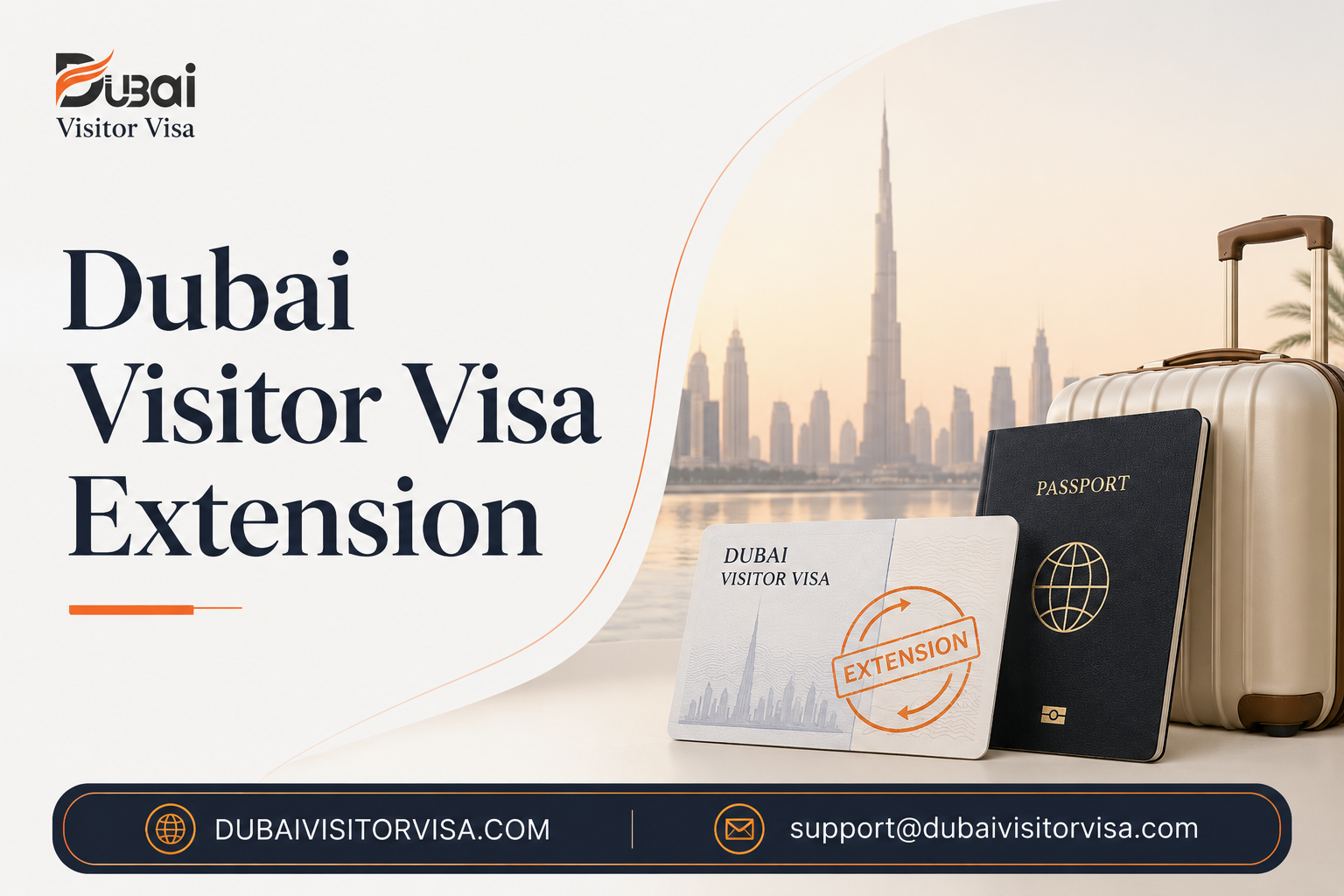
It depends on the visa category — extension isn't automatic for any visa type. Where an extension is available, it must be applied for before the current visa expires, carries its own fee, and is subject to immigration approval rather than being guaranteed. See our Dubai visa extension guide for current eligibility and the exact process.

Dubai eVisa for First-Time Travellers

If this is your first UAE trip: check your eligibility before spending anything, since you may not need a paid visa at all. Use the correct passport (the one you'll actually travel on), confirm you've selected the right visa category for your trip length, and keep your return ticket and insurance documents accessible — not just uploaded during application. Once approved, verify every detail on your eVisa matches your passport exactly. There's no special "first-time applicant" requirement beyond the standard checklist; final entry always remains an immigration decision on the day.

Dubai eVisa for Indian Passport Holders

Indian travellers split into two groups. Those holding a currently valid US, UK, EU (Schengen), Australian, Canadian, New Zealand, Japanese, Singaporean or South Korean visa or residence permit may qualify for a 14-day visa on arrival — no advance application needed, though an OCI card alone does not qualify. Everyone else needs a pre-arranged UAE tourist visa before travel. Because eligibility hinges on a specific supporting document being valid on your exact travel date, run your own details through the eligibility checker first rather than assuming either route applies. Full fees in INR, document lists and step-by-step guidance live on our dedicated Dubai visa for Indians page.

Dubai eVisa for Filipino and South African Passport Holders

From 25 June 2026, Filipino and South African nationals became conditionally eligible for a UAE visa on arrival (14 or 60 days), alongside four other newly added nationalities. This is not blanket visa-free entry — it applies only if you hold a valid, currently unexpired residence permit from one of the qualifying countries (the list includes the US, UK, EU member states, Canada, Australia, New Zealand, Japan, Singapore and South Korea). Travellers who don't hold a qualifying permit still need a standard advance tourist visa. Given how new and conditional this route is, verify your exact eligibility on our Dubai visa on arrival guide before booking non-refundable travel.

Dubai eVisa for Pakistani Passport Holders

Ordinary Pakistani passport holders generally need a pre-arranged UAE visa — there is no general visa-on-arrival category for standard Pakistani passports. A national identity card copy is officially listed as a requirement alongside the passport and photo. A narrow conditional exception exists for Pakistani nationals who separately hold a valid US, UK, EU/Schengen, Australian or Canadian visa or residence permit, reported at around 14 days — but this depends on that supporting document remaining valid on your travel date, so don't rely on it without checking first. Avoid acting on unverified rumours about blanket restrictions; confirm current status through our Dubai visa for Pakistani citizens guide or directly with UAE immigration.

Dubai eVisa for Families and Children

Every traveller needs their own passport and, in most cases, their own visa application — a child is not automatically covered by a parent's visa. Expect to provide each child's passport copy and photo, along with parent or guardian details, and a birth certificate where the specific route or nationality requires proof of relationship. Where one parent is travelling with a child alone, some channels ask for the other parent's consent documentation — confirm this for your specific nationality and airline. Insurance and the visa fee are typically required per applicant, including infants, so budget for the full family rather than assuming discounts apply by default.

Can You Apply Without Hotel Booking?

Accommodation requirements vary by visa route and application channel, so a hotel booking shouldn't be treated as universally mandatory or universally unnecessary. Some sponsors and channels ask for confirmed accommodation or host details as part of the application; others don't request it upfront but may check it at the border. Confirm the specific requirement for your chosen visa type and provider before assuming either way.

Is a Return Ticket Required?

Under current GDRFA terms and conditions, a travel ticket to continue your journey or leave the UAE is a listed requirement for the standard single- and multiple-entry tourist visas. It should realistically match your visa's permitted stay — an open-ended or clearly mismatched itinerary can raise questions during review. If you're only transiting through Dubai rather than staying, that's a separate category with its own rules, covered in our Dubai transit visa guide.

Is Travel Insurance Required?

GDRFA's published terms for the standard tourist visa list medical insurance valid in the UAE as a requirement. Coverage should reasonably match your travel period, and the insurance cost is generally separate from the government visa fee itself — it's one of the components that makes a provider's total price differ from the bare government figure discussed earlier on this page.

Common Dubai eVisa Application Mistakes

  • Entering the wrong passport number or a typo in personal details
  • Name on the application not matching the passport exactly
  • Blurry, cropped, or low-resolution passport scans
  • Non-compliant photograph (wrong background, glasses, poor lighting)
  • Applying with a passport nearing its expiry threshold
  • Selecting the wrong stay duration for the trip
  • Choosing single entry when the itinerary actually needs multiple entry
  • Missing return or onward ticket details
  • Missing or non-compliant insurance
  • Ignoring a nationality-specific ID requirement
  • Applying for a paid visa when visa-on-arrival may already apply
  • Submitting duplicate applications through more than one channel
  • Using an unverified or unlicensed provider
  • Submitting altered or fabricated documents
  • Assuming "express" means guaranteed approval

Why Dubai eVisa Applications Can Be Delayed

The most common, genuinely supportable reasons include incomplete documents, poor-quality scans, incorrect data entry, additional immigration review for specific profiles, public holidays affecting processing volume, nationality-specific checks, a sponsor or provider needing to correct something on their end, accidental duplicate applications, and periods of high application volume. There's no published "risk score" or secret flagging system travellers can game — the practical fix for most delays is a clean, accurate, well-scanned application submitted with realistic lead time.

What Happens If Your Dubai eVisa Is Rejected?

Rejection doesn't always come down to a single document — it's worth reviewing your data entry, documents, passport condition and immigration history together rather than assuming one obvious cause. Service charges are typically non-refundable once processing has started, and whether the government fee itself is refunded depends on the specific route and provider policy. Reapply only after you've identified and corrected the actual issue, since resubmitting the same application unchanged rarely produces a different outcome. Our Dubai visa rejection reasons guide breaks down each common cause in detail. We can't guarantee a reapplication will succeed — that decision sits entirely with UAE immigration.

How to Verify a Dubai Visa Provider

Before paying any provider for a "Dubai eVisa," confirm:

  • A genuine, verifiable business identity
  • A secure website (HTTPS, working contact details)
  • The exact visa type stated clearly before payment
  • A transparent total price shown before checkout, not just a teaser government fee
  • A published refund policy
  • A published privacy policy
  • Real, reachable support contact — phone, email or live chat
  • No promise of guaranteed approval
  • No claim of being a government website or official authority
  • An application reference number issued after payment
  • A secure document-upload process
  • A clear disclaimer that processing times are estimates, not guarantees

To be direct: we are a privately managed visa service provider, not the UAE Government or GDRFA. We assist with document review, application guidance and submission for a service fee; approval decisions rest solely with UAE immigration authorities.

Dubai eVisa vs Visa on Arrival

Pre-arranged eVisa vs visa on arrival
Feature Pre-arranged Dubai eVisa / Tourist Visa Visa on Arrival
Application before travel Yes Usually no
Best for Visa-required travellers Eligible travellers
Advance approval Required Entry processed on arrival
Supporting conditions Visa-route dependent Passport/status dependent (and, for conditional routes, a qualifying foreign permit)
Payment Before travel VOA-rule dependent — often no separate fee at the counter
Should an eligible VOA traveller buy an advance visa? Usually unnecessary — compare first


Which Dubai Visa Should You Choose?

Visa selector by travel plan
Travel Plan Route to Review
One short holiday 30-day single-entry visa
Longer holiday 60-day single-entry visa
Leave UAE and return Multiple-entry tourist visa
Frequent trips over several years Five-year tourist visa (see visa types guide)
Short eligible connection through Dubai 48/96-hour transit route
GCC resident GCC resident eVisa
Possibly VOA-eligible Check whether an advance visa is needed at all

Dubai eVisa Application Checklist

Eligibility

  • Visa-free / visa-on-arrival status checked for your exact nationality
  • Correct passport nationality used in the check
  • Correct residence status used, if relevant (e.g. GCC residence)

Visa Selection

  • 30-day or 60-day duration selected to match your trip
  • Single-entry or multiple-entry selected correctly

Documents

  • Passport valid 6+ months from entry
  • Passport scan clear and uncropped
  • Photo meets specifications
  • Return/onward ticket details ready
  • Insurance arranged and valid for your stay
  • Nationality-specific ID ready, if applicable
  • Accommodation requirement checked for your route

Application

  • Name matches passport exactly
  • Passport number double-checked
  • Total price reviewed before payment
  • Processing time understood as an estimate
  • Provider verified against the checklist above
  • Reference number saved

After Approval

  • Every visa detail checked against your passport
  • Digital copy saved in at least two places
  • Physical travel documents packed
  • Understood that final entry is always an immigration decision

Why Apply Through Dubai Visitor Visa

  • Document review before submission, aimed at catching the mismatches and scan-quality issues that most often cause delays
  • Transparent total pricing shown before you pay — government fee, VAT and service charge itemised, not bundled into one vague number
  • 24×7 support over WhatsApp for questions about eligibility, documents or status
  • Application reference and status tracking for every submission
  • No claim of government affiliation and no guaranteed-approval promises — we're a privately managed visa service provider assisting for a fee

Last fully verified: 4 August 2026
Sources reviewed: GDRFA Dubai official service catalog, the UAE Government portal (u.ae), and current ICP-referenced guidance on the GCC-resident eVisa route.
Visa requirements can vary by nationality, residence status and visa category. Final issuance and entry decisions remain with UAE immigration authorities.

How We Verify Dubai eVisa Information

We reviewed GDRFA Dubai's published service cards for the single- and multiple-entry tourist visa, current UAE Government (u.ae) guidance on the GCC-resident eVisa, and the officially confirmed June 2026 visa-on-arrival expansion. We keep the officially named GCC eVisa route separate from generic tourist-visa terminology, avoid pushing visa-free or visa-on-arrival-eligible travellers toward an unnecessary paid application, and separate government fees from provider service fees throughout. Processing times are labelled as estimates rather than guarantees, and outdated rules are removed once official sources update.

Dubai Visitor Visa is a privately managed travel and visa service provider. We assist applicants with document review, application guidance and visa support for a service fee. Visa approval depends solely on UAE immigration authorities. Fees, documents and processing timelines can change — confirm current requirements before applying or travelling.

  • Dubai Visa
  • UAE Visa
  • eVisa
  • Tourist Visa
  • Online Visa
  • Visa Application
  • Dubai Travel
  • UAE Travel

Frequently Ask Questions

GDRFA's published terms for the standard tourist visa list UAE-valid medical insurance as a requirement. Coverage should match your travel period, and the cost is generally separate from the base government visa fee.

It depends on your visa route and application channel — there's no single rule that applies to every applicant. Some channels request confirmed accommodation details upfront; others don't. Confirm the specific requirement for your chosen visa type before assuming either way.

It depends on the visa category — extension is never automatic. Where available, you must apply before the current visa expires, pay the applicable fee, and receive immigration approval. Check our Dubai visa extension guide for current eligibility.

The GDRFA government fee alone is AED 264.60 for a 30-day single-entry visa and AED 369.60 for 60 days (including 5% VAT), verified against the official GDRFA service catalog. The typical total price through a service provider, including insurance and support, currently runs higher — see our cost guide for the full current range.

If your visa is approved but you've lost the file, use the retrieval option offered by your original provider or the applicable government portal, or request a reissued copy from your sponsor. Retrieval steps vary by issuing channel.

Travellers whose passport isn't on a current visa-free or visa-on-arrival list generally need a pre-arranged electronic tourist visa. Visa-free nationals, eligible visa-on-arrival travellers, and GCC citizens typically don't need to apply in advance — check your specific nationality before applying.

Some providers, including our own Dubai Express Visa service, offer priority document review and expedited submission for eligible cases. This speeds up the provider's internal handling but does not change or guarantee UAE immigration's own review time.

Yes, under current GDRFA terms and conditions for the standard single- and multiple-entry tourist visas. The ticket should realistically match your visa's permitted stay period.

For the vast majority of applicants, yes — "Dubai eVisa" describes the electronic application and delivery method of a standard UAE tourist visa, not a separate product. The requirements, fees and process are the same as applying for a 30-day or 60-day tourist visa through any licensed channel.

No. The 48-hour figure published by GDRFA is a service estimate for the standard tourist-visa category, not a guarantee. No provider — including ours — can promise a fixed approval time, since final review sits with UAE immigration.

Use your application reference number through your provider's tracker or the relevant official status service, which shows whether your application is processing, approved, returned for correction, or rejected. See our full status-check guide for the exact steps by issuing emirate.

Yes — this is the one route the UAE Government officially calls an "eVisa." Eligible expatriate residents of Bahrain, Kuwait, Oman, Qatar or Saudi Arabia can apply online for a 30-day entry permit, extendable once by 30 days, subject to residency and passport validity conditions.

GDRFA Dubai currently lists an expected completion time of 48 hours for the standard tourist-visa service. This is a service estimate, not a guaranteed deadline — processing can take longer if documents need correction or additional review.

Validity and stay duration are two different things. Validity is the window in which you must enter the UAE (commonly around 60 days from issuance for standard tourist visas); stay duration is how long you can remain once you've entered — 30 or 60 days, counted from your entry date.

No. A Dubai eVisa (pre-arranged tourist visa) requires approval before you travel. Visa on arrival is granted at the airport itself, without a prior online application, and is available only to eligible nationalities — some conditionally, based on holding a qualifying foreign residence permit.

Core requirements are a passport copy and a recent photograph. Applicants from Iraq, Pakistan, Iran and Afghanistan also need a national ID copy. GDRFA's terms additionally require a passport valid 6+ months, a return or onward ticket, and UAE-valid medical insurance.

A Dubai eVisa is the common name for a UAE tourist or visit visa that is applied for online and delivered electronically, without a passport sticker or embassy visit. It isn't the government's official name for a single visa product — most applicants are actually getting a standard 30-day or 60-day tourist visa. The one exception is the officially named eVisa for GCC residents.

Yes. Standard UAE tourist visas are applied for entirely online through a licensed travel agency, an eligible airline, a hotel, or in some cases directly through GDRFA or ICP smart-services channels. No embassy visit is required for the standard tourist categories.

There's no single rule for every airline and channel. Keep an accessible digital copy and follow your specific airline's or processing channel's current instructions — a printed backup is still a sensible precaution even where digital copies are accepted.

Not as one universal tourist category. UAE authorities classify standard entry permission by purpose, duration and entry type rather than under a single "Dubai eVisa" label. The term "eVisa" is used officially only for the GCC-resident entry-permit route.

Write Your Comment
Your email address will not be published. Required fields are marked *