PRESS
PRESS 


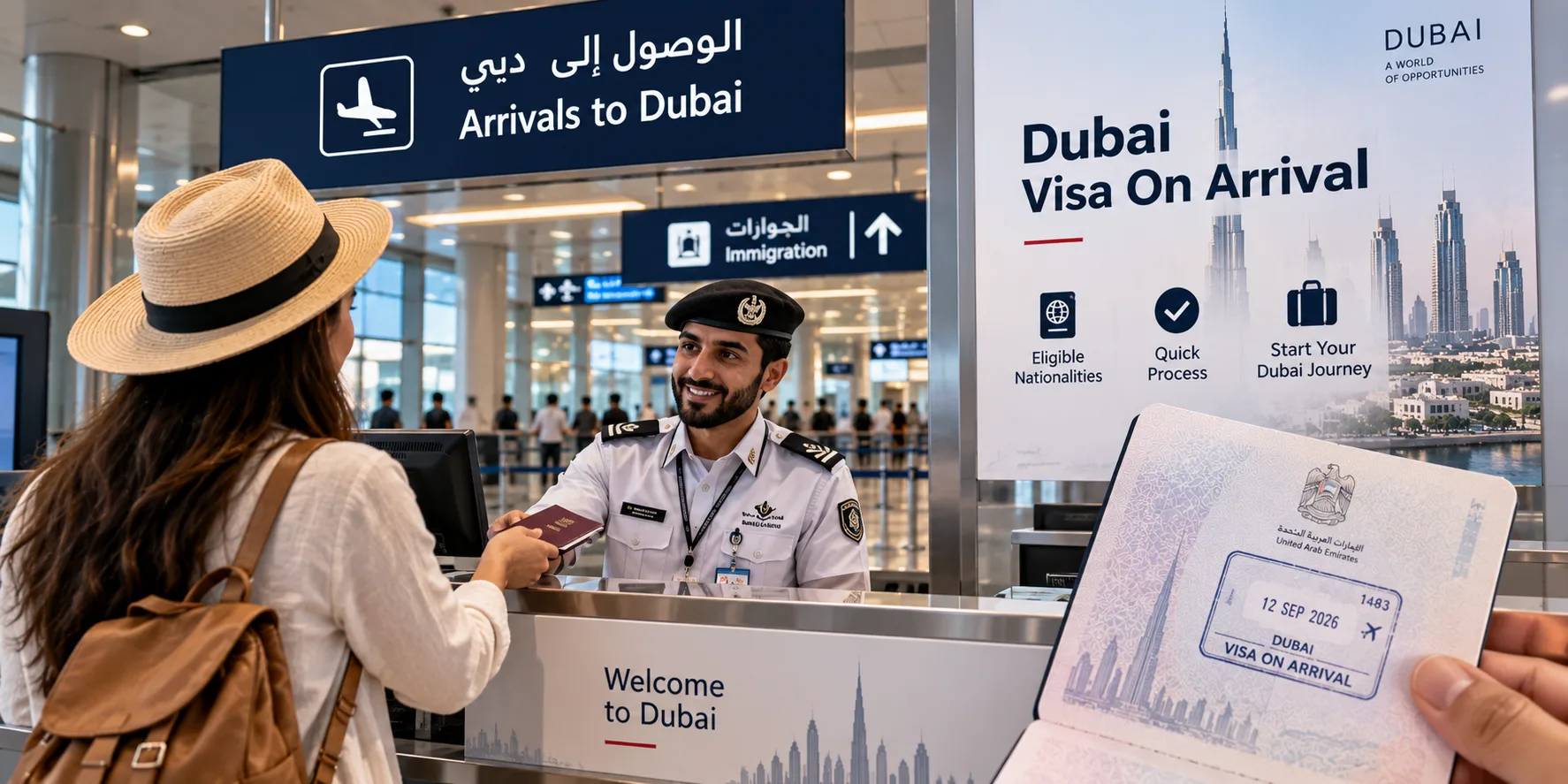
Quick answer: A Dubai visa on arrival is available only when your passport or qualifying immigration status fits a current UAE entry category. Some travellers qualify because of their nationality, while a separate 14-day or 60-day route applies to eligible ordinary passport holders from India, Indonesia, Vietnam, Thailand, the Philippines, Kenya and South Africa who hold specified visas or residence permits. If neither route applies, arrange a pre-approved UAE visa before travel.
Dubai Visa on Arrival — 2026 Quick Check
- Nationality-based entry: some passports qualify for UAE visa on arrival without a standard tourist visa arranged in advance.
- Special 14-day / 60-day route: available to eligible ordinary passport holders from seven specified countries who also hold qualifying visa or residence status.
- 14-day special visa: 30-day pre-entry validity, 14-day permitted stay, extendable once for another 14 days.
- 60-day special visa: 30-day pre-entry validity, 60-day permitted stay, non-extendable.
- Passport validity: at least six months for the special 14-day and 60-day ICP categories.
Who Can Get a Dubai Visa on Arrival in 2026?
There is no single visa-on-arrival rule for every traveller. The easiest way to understand eligibility is to separate nationality-based visa on arrival from the newer special entry route for nationals of certain countries.
1. Visa on Arrival Based on Passport Nationality
Citizens of several countries can enter the UAE on arrival without arranging a standard tourist visa beforehand. The permitted stay depends on the passport and entry category. UAE government information recognises nationality-based 30-day and 90-day arrangements, while some nationalities have different bilateral entry rules.
For example, US citizens holding regular US passports valid for more than six months do not need to obtain a UAE visa before travelling for a visit of less than one month; the UAE Ministry of Foreign Affairs states that the entry visa is available on arrival for a one-month stay.
GCC citizens are different from GCC residents: GCC citizens do not need a visa to enter the UAE, while foreign residents of GCC countries use a separate eVisa route rather than relying automatically on visa on arrival.
2. Special 14-Day or 60-Day Route for Seven Nationalities
On 25 June 2026, the UAE expanded the entry scheme for nationals of certain countries. The current eligible nationality group includes:
- India
- Indonesia
- Vietnam
- Thailand
- Philippines
- Kenya
- South Africa
For the current official update, see the ICP announcement on the expanded entry-visa scheme.
Eligibility also depends on the traveller holding the required supporting immigration status. The current ICP service conditions accept a valid visa, residence permit or US Green Card issued by the United States, EU or United Kingdom, or a qualifying residence permit issued by Japan, South Korea, Australia, Canada, Singapore or New Zealand.
The passport must be valid for at least six months. Indian passport holders who do not meet these conditions can compare the pre-arranged route in the Dubai tourist visa for Indians guide.
14-Day vs 60-Day UAE Visa on Arrival
| Special Visa | Pre-Entry Validity | Permitted Stay | Extension |
|---|---|---|---|
| 14-Day Visa | 30 days | 14 days from entry | Extendable once for another 14 days |
| 60-Day Visa | 30 days | 60 days from entry | Non-extendable |
Do not confuse these special categories with nationality-based 30-day or 90-day visa-on-arrival arrangements. The immigration basis, permitted stay and extension rules are different.
Dubai Visa on Arrival Fees in 2026
For the special certain-country route, the current ICP service pages itemise an issuance fee and a Smart Services fee. This is important because older articles often mention only the headline issuance amount.
| Category | ICP Issuance Fee | ICP Smart Services Fee |
|---|---|---|
| 14-Day Special Visa | AED 100 | AED 100 |
| 60-Day Special Visa | AED 250 | AED 100 |
The final amount shown by the official service channel is the amount to follow for the transaction. If you do not qualify for visa on arrival and need a pre-arranged visa, compare the separate pricing structure in the Dubai visitor visa cost guide.
Dubai Visa on Arrival for US Visa Holders
A US visa can support eligibility only for travellers whose passport nationality is covered by the special scheme. It is not correct to say that every foreign passport holder with a US visa automatically qualifies for UAE visa on arrival.
For the seven eligible nationalities, current ICP conditions recognise a valid US visa, US residence permit or US Green Card. The traveller must still meet the passport-validity and other service conditions.
There is no universal current ICP requirement stating that the qualifying US visa must specifically be a previously used B1/B2 visa. Check the actual supporting document and passport category instead of relying on older forum rules.
Can Indians Get Dubai Visa on Arrival?
Yes, eligible Indian ordinary passport holders can use the special 14-day or 60-day route when they hold qualifying visa or residence status. The accepted supporting countries are broader than the older US/UK/EU-only version of the policy.
Indian travellers may qualify with a valid US, EU or UK visa/residence status, a US Green Card, or a qualifying residence permit from Japan, South Korea, Australia, Canada, Singapore or New Zealand.
If you do not meet the visa-on-arrival conditions, use the appropriate pre-arranged route. Review the Dubai visitor visa requirements and the 30-day single-entry Dubai visa before applying.
Documents Required for the 14-Day or 60-Day Special Route
For these ICP categories, the listed documents are straightforward:
- passport valid for at least six months;
- personal photograph; and
- copy of the qualifying visa or residence permit.
Other nationality-based visa-on-arrival arrangements can have different travel-document rules. Do not assume that hotel bookings, bank statements or other documents are universal requirements unless your applicable authority, airline or entry category requests them.
For a broader document checklist covering pre-arranged visas, keep the detailed rules on the Dubai visa document requirements page rather than duplicating them here.
How Dubai Visa on Arrival Works
- Identify your passport category. Check whether your nationality already qualifies for an arrival-based entry arrangement.
- Check the special-route conditions if relevant. Travellers from India, Indonesia, Vietnam, Thailand, the Philippines, Kenya and South Africa should verify their qualifying visa or residence status.
- Confirm passport validity. The special 14-day and 60-day categories require at least six months.
- Prepare the supporting document. Keep a clear copy of the qualifying visa, residence permit or Green Card where applicable.
- Use the correct immigration channel. The exact process can differ by entry category and authority.
- Confirm your permitted stay. Treat the stay period and the visa's pre-entry validity as separate concepts.
If you instead need a pre-arranged electronic visa, review the Dubai eVisa guide or go directly to the Dubai visitor visa application options.
Visa on Arrival vs Pre-Arranged Dubai Visa
| Factor | Visa on Arrival | Pre-Arranged Visa |
|---|---|---|
| Eligibility | Only travellers who meet a current arrival-based category | Depends on visa type, nationality, sponsor and immigration conditions |
| Before travel | Requirements depend on the VOA category | Application and approval are completed before travel |
| Stay | Determined by passport or special VOA category | Determined by the visa issued |
Travellers who know they need a longer pre-arranged stay can compare the 60-day single-entry Dubai visa. For time-sensitive pre-arranged applications, see the separate Dubai express visa service page.
Can Dubai Visa on Arrival Be Extended?
Extension rules depend on the category. For the special seven-nationality scheme:
- 14-day visa: extendable once for another 14 days.
- 60-day visa: non-extendable.
Do not apply those rules automatically to every nationality-based visa-on-arrival category. If your authorised stay is ending, check your actual immigration record and the route available to you. The Dubai visitor visa extension guide covers broader extension options.
What Happens If You Overstay?
For the special 14-day and 60-day categories, ICP currently lists an overstay fine of AED 50 per day after the permitted stay or entry visa expires. Resolve any status issue before the deadline instead of waiting until departure.
Do US Citizens Need a Dubai Visa Before Travel?
US citizens with regular US passports valid for more than six months do not need to obtain a UAE visa before travelling for a visit of less than one month. This is a nationality-based entry rule and should not be confused with the separate rule for non-US nationals who merely hold a US visa.
For pre-arranged visas where insurance applies, see the UAE visit visa insurance guide.
Not Eligible for Dubai Visa on Arrival?
Choose the correct pre-arranged visa by stay length and entry type before you travel.
Check Dubai Visa Options