PRESS
PRESS 

Old Dubai activities are concentrated around Al Fahidi, Dubai Creek and Deira, where you can walk heritage lanes, ride an abra, browse the Gold and Spice Souks, and visit Al Shindagha Museum. A half day covers the highlights; a full day works better if you add museums, shopping and Al Seef. For wider trip planning, use our Dubai travel itinerary guide.
Old Dubai is not one official district. Travellers use the name for the historic areas around Dubai Creek, especially Al Fahidi, Bur Dubai, Al Shindagha and the older trading lanes of Deira. It is also different from The Old Town, the residential area beside Downtown Dubai.
This guide focuses on the places that fit naturally into one Creek-side route. It also corrects current transport names, abra fares, museum details and the status of Al Fahidi Fort so you can plan the day without relying on outdated visitor information.
Quick Summary
Old Dubai Activities at a Glance
| Best first-time route | Al Fahidi → Textile Souk → abra → Spice Souk → Gold Souk. |
| Time needed | 4–5 hours for the highlights; 7–8 hours for a slower full day. |
| Standard abra fare | AED 1 on the traditional Bur Dubai–Deira Old Souq crossing; some other Creek routes are AED 2. |
| Paid heritage stop | Al Shindagha Museum: 10:00 AM–8:00 PM, last entry 7:00 PM; adult ticket from AED 35. |
| Best Metro stations | Sharaf DG and Al Ghubaiba for Bur Dubai; Gold Souq and Al Ras for Deira. |
| Best season | November to March for comfortable outdoor walking. |
| Best free experiences | Al Fahidi lanes, Creek views and browsing the souks. |
What Is Old Dubai and Where Should You Start?
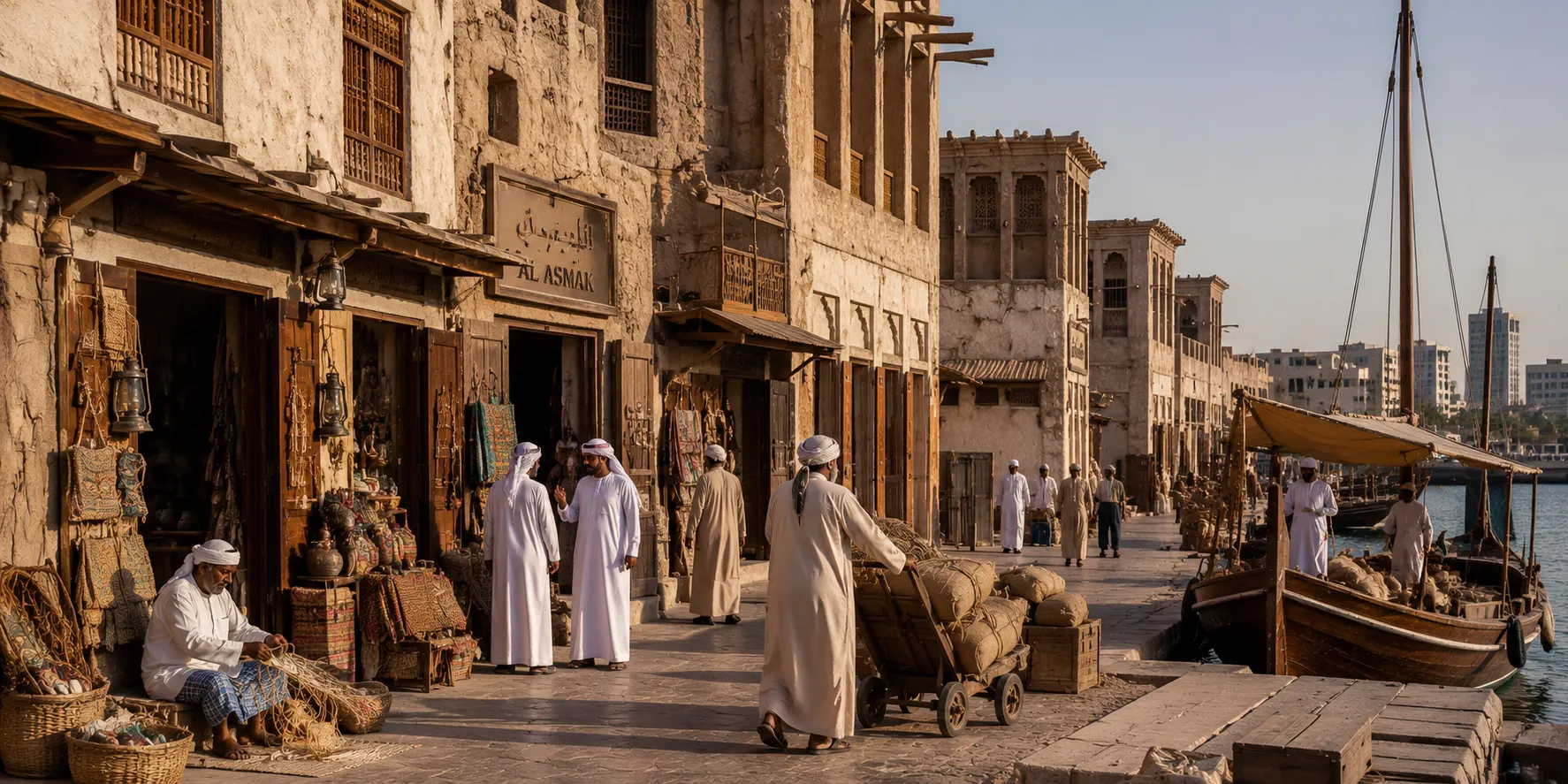
The historic core sits on both sides of Dubai Creek. On the Bur Dubai bank, Al Fahidi Historical Neighbourhood, the Textile Souk, Al Shindagha and Al Seef form the main visitor cluster. Across the Creek, Deira contains the Gold Souk, Spice Souk and older trading lanes around Al Ras.
For a first visit, start in Al Fahidi and move toward the Creek. This keeps the walking route simple and lets the abra crossing become part of the sightseeing rather than just transport. After crossing into Deira, continue through the Spice Souk and Gold Souk before finishing near Gold Souq or Al Ras Metro.
Al Seef fits best at the end of the day. It is a newer waterfront development designed in a heritage style, not an untouched historic neighbourhood. That distinction matters if you want genuine heritage first and restaurants or an easier evening promenade later.
What Are the Best Things to Do in Old Dubai?
The best things to do in Old Dubai are close enough to combine without long transfers. Focus on the heritage lanes, Creek crossing, markets and one museum rather than trying to add distant modern attractions to the same day.
Walk Al Fahidi Historical Neighbourhood
Al Fahidi is the best place to begin. Its narrow lanes, courtyard buildings and barjeel wind towers show the architecture used before modern air conditioning. The neighbourhood itself is free to walk, while galleries, cultural spaces and cafés keep their own opening hours.
Allow about 60–90 minutes if you mainly want to walk and photograph the lanes. Add more time if you plan to enter galleries or stop for Arabic coffee. Early morning gives cooler weather and quieter lanes; late afternoon gives warmer light for photography.
See Al Fahidi Fort, but Do Not Build the Day Around Museum Entry
Al Fahidi Fort dates to 1787 and later became the Dubai Museum. Dubai Culture reported in February 2026 that the fort had reached the final phase of a major rehabilitation project ahead of reopening. A firm public reopening date was not stated in that official progress update.
The exterior still works as a short heritage stop while you move through Bur Dubai. If indoor history is a priority, Al Shindagha Museum is the more dependable museum stop for the current route.
Walk Dubai Creek and Take an Abra
Dubai Creek shaped the trading districts on both banks. Dhows, market traffic and short passenger crossings still make the waterway feel active rather than staged.
A Dubai Creek abra ride is both a transport link and one of the simplest heritage experiences in the city. RTA currently lists the traditional motorised route between Bur Dubai Abra Station and Deira Old Souq Abra Station at AED 1 per passenger, paid in cash. Some other Creek routes, including Al Fahidi–Deira Old Souq, are listed at AED 2.
The crossing takes only a few minutes. Boarding involves a step down into an open boat, so it may not suit every wheelchair user or traveller with limited mobility. Keep phones and loose items secure near the water.
Browse the Gold, Spice and Textile Souks
The Old Dubai souks are split across both banks. Bur Dubai has the Textile Souk near the abra station. Deira has the Spice Souk, Gold Souk and perfume shops around Al Ras and the older commercial lanes.
At the Gold Souk, compare several shops before buying. Gold pricing normally combines the current metal rate with a making charge that varies by design and retailer. Ask for a clear receipt and check the hallmark and weight.
At the Spice Souk, expect saffron, cardamom, dried limes, teas, incense, nuts and dried fruit. Compare prices and check your home country's food-import rules before packing large quantities of spices.
Visit Al Shindagha Museum
Al Shindagha Museum is the strongest indoor heritage stop in this route. The museum spreads across restored houses near the mouth of Dubai Creek and covers the city's development, maritime life, Emirati traditions and the Al Maktoum residence.
Current visitor information shows opening hours from 10:00 AM to 8:00 PM daily, with last admission at 7:00 PM. Tickets are currently listed from AED 35 for adults, AED 20 for ages 5–24, and free for children under five. Allow about two hours for a comfortable visit.
End at Al Seef or Meena Bazaar
Choose Al Seef for an easy Creek-side evening with restaurants and a heritage-style setting. Choose Meena Bazaar if you want South Asian fabrics, jewellery, tailoring and inexpensive food in a busy commercial district. Neither needs to replace Al Fahidi or Deira; both work best as optional additions.
Best Old Dubai Walking Route for First-Time Visitors
This Old Dubai walking route keeps the main sights in a logical order and uses the Creek crossing as part of the experience. The exact walking time depends on heat, shopping stops and how long you spend inside Al Fahidi.
- Al Fahidi Historical Neighbourhood: 60–90 minutes for the lanes, courtyards and galleries.
- Al Fahidi Fort exterior: a short stop on the way toward the Creek.
- Textile Souk: 20–30 minutes if you want fabrics or souvenirs.
- Bur Dubai Abra Station: board the traditional crossing to Deira.
- Spice Souk: 30–45 minutes for browsing and shopping.
- Gold Souk: 30–45 minutes, longer if you plan to compare jewellery.
- Finish: continue to Gold Souq or Al Ras Metro, or return toward the Creek for food.
Half-Day Old Dubai Itinerary
For four to five hours, keep the plan to Al Fahidi, the Textile Souk, one abra crossing and the Deira souks. Skip Al Shindagha Museum unless history matters more to you than shopping. In summer, start early or move the route to late afternoon and evening.
One-Day Old Dubai Itinerary
For a full day, start in Al Fahidi, add Al Shindagha Museum, cross to Deira after lunch, then finish with the Gold and Spice Souks. Return to the Bur Dubai side for Al Seef at sunset if you still have energy.
Do not add Downtown, Marina and Palm Jumeirah to the same day. Old Dubai works better when you stay around the Creek and move at walking pace.
Planning Your Dubai Trip Around This Route?
Before paying for timed attractions or non-refundable transport, confirm whether your passport needs a UAE visa for the trip.
Check Dubai Visa EligibilityHow Much Do Old Dubai Activities Cost?
Many Old Dubai activities are free or low-cost. You can walk Al Fahidi, browse the souks and enjoy the Creek without an attraction ticket. Your main fixed costs are transport, the abra crossing and any museum entry.
| Experience | Typical Current Cost | Planning Note |
|---|---|---|
| Al Fahidi lanes | Free | Individual galleries and cafés may charge separately. |
| Traditional abra crossing | AED 1 on the Bur Dubai–Deira Old Souq route | Carry small cash; other Creek routes can cost AED 2 or more. |
| Al Shindagha Museum | From AED 35 adult | Allow about two hours. |
| Gold/Spice/Textile Souks | Free to browse | Shopping spend depends entirely on what you buy. |
| Al Seef | Free to walk | Food and retail are separate. |
A budget traveller can spend very little beyond Metro and abra fares. A museum visit, meal and shopping can raise the total quickly, so keep sightseeing costs separate from purchases in the souks.
How Do You Get to and Around Old Dubai?
Metro: Use the Current Station Names
The Green Line is the most useful rail link for this area. For Al Fahidi and the Textile Souk, use Sharaf DG (G25). The station was formerly called Al Fahidi, so older guides can still show the old name. Al Ghubaiba (G24) works well for Al Shindagha and the southern end of the heritage area.
On the Deira side, Gold Souq (G22) and Al Ras (G23) are the most useful stations for the Gold and Spice Souks. BurJuman connects the Green and Red Lines if you are travelling from Downtown, the airport corridor or the Marina side of the city.
Walking, Abra and Taxi
Old Dubai activities are easiest to combine on foot because the main heritage stops sit close to the Creek. Walking is best inside Al Fahidi and the souks. Use the abra to cross the Creek rather than taking a taxi around the water. Taxis are useful when heat, young children or mobility issues make a longer walk uncomfortable.
A Nol card covers the Metro and bus network, while the traditional AED 1 abra route is still listed as a cash fare. Keep a small amount of cash even if most other spending is by card. On UAE public holidays, transport schedules can use special timings, so check our UAE public holidays guide if your visit falls on a national break.
When Is the Best Time to Visit Old Dubai?
November to March is the easiest period for long outdoor walks. April, May and October are warmer, but mornings and evenings can still work well. From June to September, avoid building a route around midday walking; use early morning, indoor museum time and evening souks instead.
For photography, early morning gives quieter lanes in Al Fahidi. The final hour before sunset gives warmer light around the Creek and works well if you want to continue into an evening at Al Seef or Deira.
Opening Hours: Plan by Place, Not by One Old Dubai Schedule
Old Dubai activities do not share one opening timetable. Al Fahidi's public lanes can be walked without a museum ticket, but galleries, cultural spaces and cafés keep their own hours. Al Shindagha Museum currently runs from 10:00 AM to 8:00 PM, with last entry at 7:00 PM.
The Gold, Spice and Textile Souks are working retail areas, so individual shops can open and close at different times. Late afternoon and evening are usually better if shopping is a priority because more stores are active and the outdoor temperature is easier.
Morning: best for quiet Al Fahidi lanes. Midday: better for an indoor museum or lunch in hot months. Late afternoon: best for the souks and Creek. Evening: best for Al Seef and a relaxed meal.
Friday, Ramadan and public-holiday schedules can affect individual shops or venues. Check a specific venue's timing only when that venue is essential to your plan. You do not need to verify every open-air lane before starting the route.
Public holidays can also increase crowds around popular districts and transport. If your visit falls on a national break, compare the dates in our UAE public holidays guide before choosing your busiest sightseeing day.
Food, Shopping and Cultural Etiquette in Old Dubai
Where to Stop for Food
The area reflects Dubai's trading history, so Emirati, Arabic, Iranian, Indian and Pakistani food all fit naturally into the day. Around Bur Dubai and Deira, simple cafeterias can be more useful than destination restaurants when you only need a quick break between souks.
Try Arabic coffee and dates, shawarma, manakish, grilled meats, biryani or karak chai depending on the part of the route you are in. Al Seef is better if you want a sit-down Creek-side meal in the evening.
Shopping Without Overpaying
Compare shops before buying. Compare gold, spices, perfume or textiles across more than one seller. Ask whether a price is fixed or negotiable. For gold, check the hallmark, weight and itemised receipt. For tailoring, confirm the fabric, final price and collection time before leaving a deposit.
Dress and Photography
Wear light, modest clothing and comfortable walking shoes. Shoulders and knees covered is a useful baseline around cultural spaces, but visitors do not need traditional Emirati clothing.
Ask before photographing people. This is especially important with traders or residents. Avoid pointing a camera into private courtyards. For wider customs and dress guidance, use our Dubai culture and etiquette guide.
Are Old Dubai Activities Good for Families and Limited Mobility?
Families can enjoy the area, but a half-day route usually works better than a long summer day. Keep children close near open Creek edges and during abra boarding. Plan regular food, water and toilet breaks before entering the busiest souk lanes.
Accessibility varies. Al Seef and main waterfront roads are easier than narrow heritage lanes. Al Fahidi has uneven surfaces in places, and a traditional abra requires stepping down into an open boat. Travellers who cannot use the abra can cross by taxi and rejoin the route on the other bank.
Al Shindagha Museum lists wheelchairs and buggies for eligible visitors subject to availability, which makes it one of the easier heritage stops to plan around if mobility is a concern. For wider visitor customs and family etiquette, see our Dubai culture and etiquette guide.
Is Old Dubai Worth Visiting in 2026?
Old Dubai activities are worth adding to a first Dubai trip because the area gives visitors a side of Dubai that is very different from Downtown, the Marina and the resort districts. The strongest experiences are simple: walking Al Fahidi, watching working Creek traffic, crossing by abra and browsing markets that still function as trading areas.
Old Dubai is also one of the easier sightseeing areas to enjoy on a modest budget. You can build a meaningful half day around mostly free places, then decide whether to add the museum, shopping or a longer meal.
The trade-offs are heat, uneven lanes, market crowds and variable shop hours. Plan around those practical limits and give the area at least half a day.
Common Old Dubai Planning Mistakes
- Using “Al Fahidi Metro” in a current route: the current Green Line station name is Sharaf DG.
- Assuming every abra costs the same: the traditional Bur Dubai–Deira Old Souq crossing is AED 1, while some other Creek routes are AED 2.
- Building the day around Dubai Museum: Al Fahidi Fort has been under rehabilitation, so use Al Shindagha Museum as the dependable indoor heritage stop.
- Visiting at summer midday: most of the best experiences involve outdoor walking.
- Treating Al Seef as an original historic quarter: it is a modern heritage-style development beside the older areas.
- Trying to cover all of Dubai in one day: keep Old Dubai as one geographic block.
- Buying at the first souk shop: compare price, quality and making charges first.
- Ignoring accessibility: uneven lanes and abra boarding can be difficult for some visitors.
Ready to Plan the Rest of Your Dubai Visit?
Once your Old Dubai day is planned, match your entry permission to the passport, trip length and number of UAE entries you actually need.
View Dubai Visitor Visa OptionsOld Dubai Activities: Final Planning Summary
These Old Dubai activities fit naturally into one Creek-side day. The most efficient first-time route is Al Fahidi, the Textile Souk, a traditional abra crossing, the Spice Souk and the Gold Souk. Add Al Shindagha Museum for a full day and Al Seef for an easier evening finish.
Use Sharaf DG or Al Ghubaiba on the Bur Dubai side and Gold Souq or Al Ras on the Deira side. Carry small cash for the traditional abra, wear proper walking shoes, and avoid the hottest part of the day in summer.
If you only have four or five hours, keep the route simple. Old Dubai is most rewarding when you spend time in the Creek-side neighbourhoods instead of racing between unrelated attractions.