PRESS
PRESS 

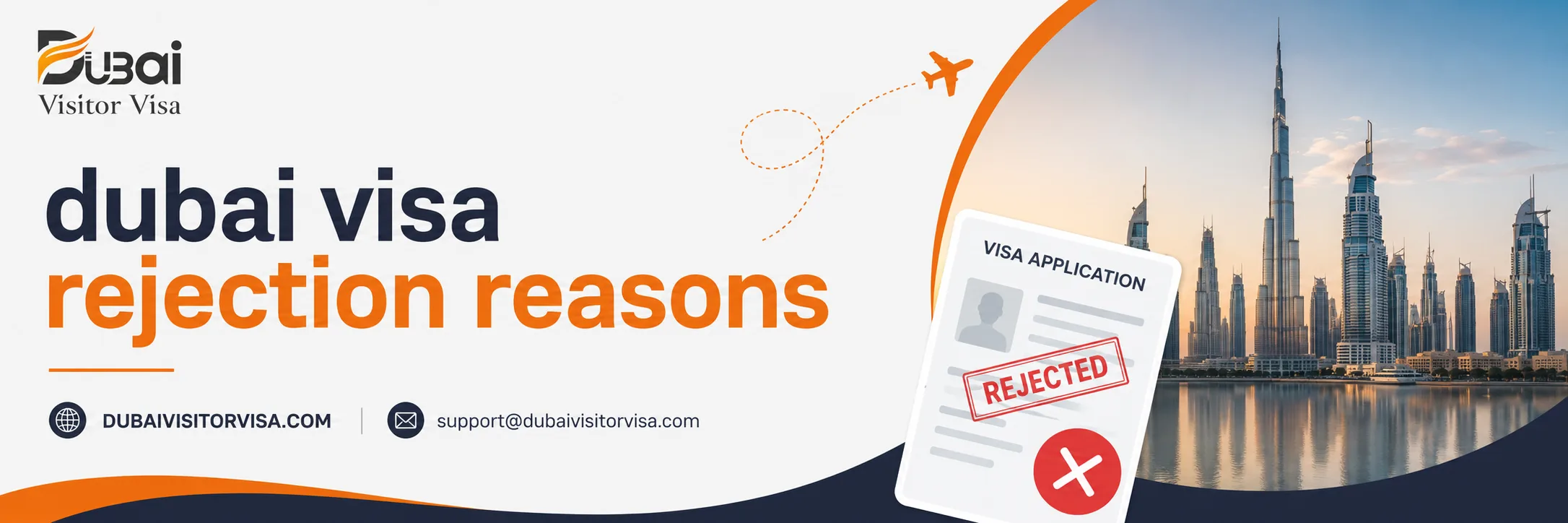
A Dubai visa rejection means a UAE visa file was reviewed and not approved. It does not automatically mean the traveller is permanently banned, and it does not tell you by itself what caused the decision.
The most useful next step is to confirm the file status and ask the issuing channel for any note, return request or reason attached to the file. Do not guess the cause and immediately submit the same files again.
This guide explains common problems that can lead to a returned, delayed or rejected file, how to separate a rejection from a pending or incomplete file, what to correct before reapplying, when a review or complaint may be right, and what to know about fees and refunds.
Quick Answer
Dubai Visa Rejection: What Should You Do First?
- Confirm the actual status. A returned or pending file is not the same as a final rejection.
- Ask the visa channel for any available note. Use the reference number linked to the file.
- Review the visa route. Rules differ between tourist, relative/friend, business, transit and long-term visas.
- Correct only what is actually wrong. Do not add unnecessary files just because they appear in a generic checklist.
- Resolve any open UAE issue first. A previous permit, fine or status problem may need attention before a fresh file.
- Submit one clean file. Do not create overlapping files through several channels at the same time.
What Does a Dubai Visa Rejection Mean?
A rejection means the visa file was not approved. A returned file is different. A pending file is different too.
It is also different from a legal or immigration restriction. A rejection should not be described as a travel ban unless the relevant office has actually confirmed a restriction.
The internal decision process is not fully public. There is no official ranked list of rejection causes. There is also no public four-layer screening model for tourists. For travellers, the practical focus should remain on the file status, the rules of the chosen service and any issue found by the issuing channel.
A rejected file is a result, not a diagnosis. The reason should be checked before the next file is built.
Rejected, Returned or Pending: Know the Difference
| Status | What It Usually Means | Best Next Step |
|---|---|---|
| Rejected / Refused | The file was not approved. | Find the issue, fix it and decide whether to apply again or seek review. |
| Returned / More details needed | The file may need a fix or another file. | Respond through the same file rather than opening a new one. |
| Pending / Under process | The decision is not complete. | Continue tracking the active file and avoid duplicate filings. |
| Approved | The visa has been issued. | Check the passport details, entry type and stay before travel. |
How to Check a Dubai Visa Rejection or Application Status
Use the office that handled the file. The UAE Government states that Dubai visa files are tracked through GDRFA Dubai, while files for Abu Dhabi, Sharjah, Ajman, Umm Al Quwain, Ras Al Khaimah and Fujairah are tracked through ICP.
The UAE visa file tracking guidance explains which office to use and lists the current contact channels for status enquiries.
If an airline, tourism company, sponsor or visa service sent the file, ask that same channel for an update. Ask for any note linked to the file. Keep the reference and passport number ready.
Do not rely on a screenshot that only says “rejected.” Ask whether there is a return note, missing-file request or other case detail attached to the file.
Check the Existing Visa File Before Reapplying
Use the same file details to confirm whether the current file is rejected, returned, pending or already fixed.
Common Dubai Visa Rejection Reasons to Check
There is no official ranked list of tourist-visa rejection causes. Check the common issues below against the visa route used for your file.
1. Passport or Form Details Do Not Match
A wrong passport number can cause a mismatch. So can a spelling error, wrong nationality or wrong date of birth. The form should use the details shown on the passport used for travel. Our field-by-field guide to the Dubai visa application form shows the exact format for each entry.
2. Passport Copy or Visa Photo Is Unclear
A blurred, cropped or unreadable passport copy can prevent the file from being assessed properly. The same applies to a poor-quality personal photo. Use clear files that show the complete required details.
3. Passport Validity Does Not Meet the Visa Rule
GDRFA's standard 30-day and 60-day tourist services require a passport or travel file with at least six months of validity. A passport that does not meet the chosen service rule should be renewed before a new file.
4. The Wrong Visa Route Was Used
Tourist, relative/friend visit, business-exploration, study/training, transit and residence routes have different purposes and rules. A generic checklist should not be applied to every visa type.
Passport and Photo Problems Before Reapplying
For the standard Dubai tourist route, GDRFA lists a personal photo and passport copy as core files. The passport must remain valid for at least six months. The service also requires onward or exit travel and UAE-valid health insurance.
Do not rely on one fixed DPI, file-size or scanner rule across every UAE visa channel. Upload limits and technical instructions can differ by portal and service.
Use a clear, recent photo and a complete passport image. For the photo-exact preparation rules used on this site, see the Dubai visa photo size guide.
Follow the current upload instructions shown by the channel handling the file.
Previous UAE Visas, Fines or Open Status Issues
A previous UAE visa or residence record can matter when a new application is sent. If an older file still appears active, unfixed or linked to an overstay or fine, deal with that issue before assuming the new rejection was caused by file quality.
An expired or previous permit does not always need the same closure step. The correct action depends on the type and current status of that earlier file.
If a previous employer, sponsor or tourism channel handled the previous permit, ask the relevant party or office how that record should be closed or fixed.
Resolve the previous file before creating a second problem with a new one.
When Are Bank Statements or Financial Proof Required?
Bank statements, salary slips, property proof and employment letters are not fixed core files for every standard Dubai tourist visa.
GDRFA's standard 30-day and 60-day tourist service does not list a bank statement as a fixed core file. By contrast, the five-year multiple-entry tourist visa has its own money rule, including evidence of a USD 4,000 bank balance or equivalent over the old six months.
This difference matters after a rejection. Adding bank statements does not automatically fix a normal tourist file. Use the files required by the visa route. Add extra evidence only when that route or visa channel asks for it.
More files are not always better; the correct files are better.
Wrong Visa Type or Travel Purpose
A visa should match the real purpose and length of the trip. A tourist trip has its own route. A family or friend visit can use another route. Study, training and business exploration also have separate services.
Do not assume that every business meeting automatically makes a tourist visa invalid, or that every family visit requires the same sponsor files. Use the service whose purpose matches the actual journey.
If the previous file used the wrong route, compare the current Dubai visitor visa types before submitting again.
Changing files without changing the wrong visa route can repeat the same problem.
How Visa Requirements Change by Route
A rejected file should be checked against the service that was actually used. The file list for one UAE visa cannot safely be copied into another route.
Standard 30-Day or 60-Day Tourist Visa
For the standard GDRFA tourist route, the core files are a personal photo and passport copy. The passport needs at least six months of validity. The traveller also needs a ticket to continue or leave the UAE and health insurance valid in the UAE.
A bank statement is not listed as a fixed core file for this standard tourist service. That is why a rejected 30-day tourist file should not automatically be rebuilt with salary slips, property papers and several months of bank records.
Five-Year Multiple-Entry Tourist Visa
The five-year tourist route has different rules. GDRFA lists a six-month bank statement and evidence of a USD 4,000 balance or equivalent during the six months before the file. This money rule belongs to that service.
If a five-year file is rejected, check the files required for that longer route. Do not use the lighter standard-tourist checklist and assume it is enough.
Relative or Friend Visit Visa
A visit to a relative or friend can require relationship, salary or employment records that are not part of the standard tourist service. The exact file list depends on the visit route being used.
The correct checklist comes from the correct visa service. This is one of the most important checks before reapplying.
Duplicate or Overlapping Applications
If one file is active, do not open another through a different sponsor or service. Two live files are harder to track. The traveller can end up with two references, two channels and conflicting instructions.
If a file is pending or returned, work through that file first. If it must be cancelled or closed before another file can be sent, complete that step through the original channel.
One active file is easier to verify, correct and follow.
What to Do After a Dubai Visa Rejection
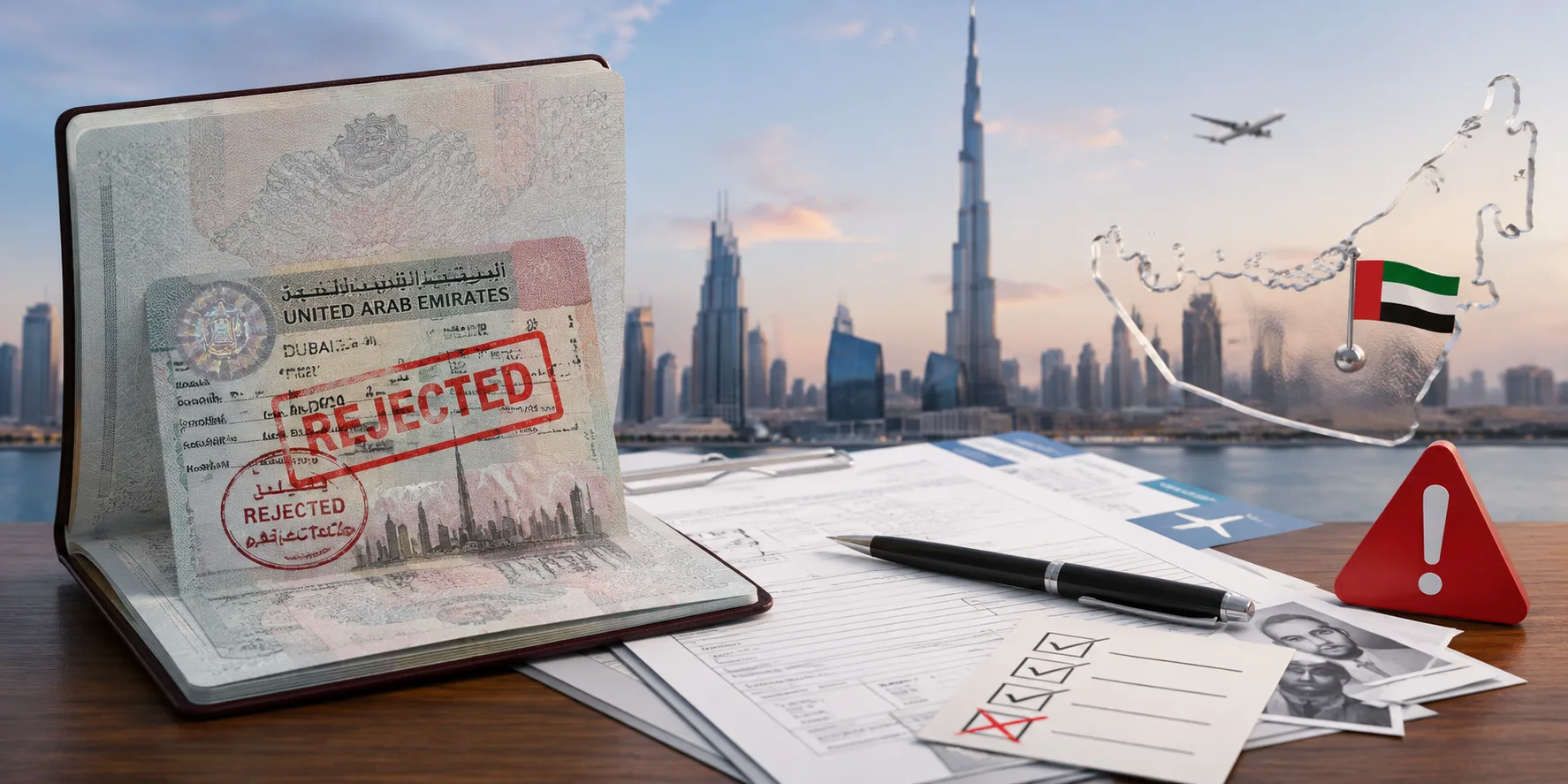
Start with the file that was rejected. Record the reference number, visa channel, visa type, passport used and date of the decision. Then compare those details with any note supplied by the visa authority or visa channel.
If the problem is a clear data or file error, correct it before creating a new file. If the issue relates to an earlier UAE record, fine or sponsor, fix that record first. If the reason is still unclear, contact the issuing channel instead of guessing.
Do not change things that are unrelated to the real problem. A wrong passport number is not fixed by adding salary slips. A visa-route problem is not fixed by uploading a higher bank balance.
Fix the cause, not the symptom you guessed.
What Not to Do After a Visa Rejection
Do not send the same file again without checking what changed. A second copy of the same passport scan or the same wrong form data is unlikely to solve the first problem.
Do not create several files with different agents at the same time. That makes it harder to know which file is active and which party is responsible for the next step.
Do not add false bookings, altered bank records or edited travel files. Incorrect evidence can create a more serious problem than a simple file mistake.
apply again only with accurate details and genuine files.
How to Reapply After Dubai Visa Rejection
Step 1: Confirm the Visa Route
Check that the new file uses the right service for the purpose, stay and entry plan. rules can change with the visa type.
Step 2: Correct Passport and Form Data
Enter the name, passport number, nationality, birth date and passport dates from the travel file used for the file. Review the details before payment.
Step 3: Replace Any Unclear File
Use a clean passport image and recent photo. If the old channel asked for a new copy, respond with the fixed file rather than recycling the poor version.
Step 4: Resolve Previous UAE Issues
Address any open permit, fine, sponsor issue or other status problem linked to the previous UAE record before the new application is sent.
Step 5: Submit One Complete File
Use one visa channel and keep the reference. If more details is requested, answer that request through the same file.
For the normal filing sequence, use the Dubai visa procedure guide.
How Long Should You Wait Before Reapplying?
There is no single waiting period that should be published for every Dubai tourist rejection. The standard GDRFA tourist service card does not state a fixed rejection cooling-off period.
The right time to apply again depends on the problem. A simple passport-data error may be quick to fix. First make sure the previous file is closed. An unfixed fine, permit or legal issue can take longer.
Do not measure the wait in days; measure it by whether the problem has actually been fixed.
What to Do After You Reapply
Keep the new reference and use one tracking channel. If the file is returned for another file, answer that request through the same file.
Do not treat a longer review time as a new rejection. A pending file is still pending until the visa authority or visa channel shows a final result.
If the visa is approved, compare the issued file with the passport before travel. Check the name, passport number, visa type, entry type and allowed stay.
Keep the old rejection reference and the new approval reference as separate records.
Can You Request a Review or Complaint After Rejection?
There is no one public appeal path that applies to every tourist or visit visa rejection. The available route depends on the office, visa channel and nature of the problem.
For Dubai matters, GDRFA publishes a complaint-handling mechanism that can receive complaints through its website, smart file, AMER channels and customer-service routes. A complaint can be reviewed. In some cases, it can also move to a grievance.
That should not be described as a guaranteed visa appeal or as a fixed 5–15 working-day review process. If the rejection came from a fixable file error, a clean new file may be more practical after the original issue is fixed.
Use a review route when you have a real basis to challenge or clarify the decision, not simply because the first answer was negative.
When the Problem Is More Than a Normal Visa Error
Some cases involve more than a photo, passport scan or wrong visa type. A deportation history, confirmed entry restriction, unfixed legal matter or other formal visa issue can require specialist help.
Do not assume repeated tourist files will remove a formal restriction. If the office confirms a legal or entry restriction, ask the relevant office what process applies.
Where legal rights, bans or court matters are involved, a qualified UAE legal paid may be more right than a normal travel or visa service.
A rejection and a confirmed legal restriction should be treated as different problems.
Dubai visa rejection does not create one automatic refund outcome for every visa service.
Will You Get a Refund After Dubai Visa Rejection?
There is no single refund rule for every UAE visa file. The amount paid can contain several parts. These can include government fees, private service fees, insurance or deposits.
The refund treatment depends on the service and the provider terms. Standard tourist visa service cards publish the visa fees, but that does not by itself prove that every rejected file's full payment is refundable or non-refundable.
If the file was made through a private visa or travel company, read that company's refund terms separately from the UAE office fee.
Check refund terms before paying, not after a rejection.
Nationality-Specific Requirements After Rejection
Nationality-specific rules should come from the visa service being used. Do not rely on broad assumptions about a passport, profession, gender or bank type.
Some UAE services do have nationality-specific document rules. Use only the rule published for the route you are applying through. For example, GDRFA's standard tourist service lists an extra national identity card for applicants from Iraq, Pakistan, Iran and Afghanistan.
That does not support adding unrelated gender, profession or bank-balance rules to every Pakistani or Indian file.
Use the nationality-specific rule that is actually published for the visa route.
A Better Document Checklist for Reapplication
Do not rebuild the file from a generic “strong file” checklist. Start with the rules of the chosen service and then add only the evidence requested for that case.
- Passport copy: complete, readable and linked to the travel file being used.
- Personal photo: recent and suitable for the active visa channel.
- Passport validity: at least six months for the standard GDRFA tourist route.
- Onward or exit travel: required under the standard tourist service terms.
- UAE-valid health insurance: required under the standard tourist service terms.
- Route-specific records: only where the selected visa service asks for them.
- Correction evidence: any record needed to explain or fix the issue found in the first file.
A shorter, accurate checklist is safer than adding documents that the visa route does not require.
Do You Need Professional Help After Rejection?
A visa service can help organise documents or explain its own process, but it cannot guarantee that UAE authorities will approve the visa.
A private visa service can organise files and explain its own process, but it cannot improve the legal fit of a traveller or promise an approval result.
Professional help can be useful when a traveller needs help understanding a route, improving file quality or working with the original visa channel. A legal or immigration issue may require qualified legal advice rather than a normal tourism visa service.
No private company can promise a visa approval.
Dubai Visa Rejection: Final Check Before Reapplying
- Is the previous file clearly rejected or closed?
- Do you know what needs to be fixed?
- Does the new visa type match the actual purpose and stay?
- Do the form details match the passport?
- Are the passport copy and photo clear?
- Does the passport meet the six-month rule for the selected tourist service?
- Have any previous UAE visa, fine or status issues been fixed?
- Are you using only the files required for this route?
- Are you submitting through one channel rather than creating duplicate files?
If one of these points is still unclear, fix it before paying for another file.
Ready to Submit a Corrected Dubai Visa File?
Use the correct visa route, accurate passport details and the files required for that service. Approval remains subject to UAE visa review.
View Dubai Visitor Visa Options
Dubai Visa Rejection: Final Summary
A rejection should be handled by confirming the file status, finding the real issue and fixing that issue before a new application is sent.
Do not rely on unsupported ranked rejection lists, fixed bank-statement rules, fixed appeal times or claims that paid filing guarantees a better result. rules depend on the visa service and the traveller's actual case.
A clean reapplication should use the right visa route, accurate passport data, clear core files and one active visa channel.