PRESS
PRESS 

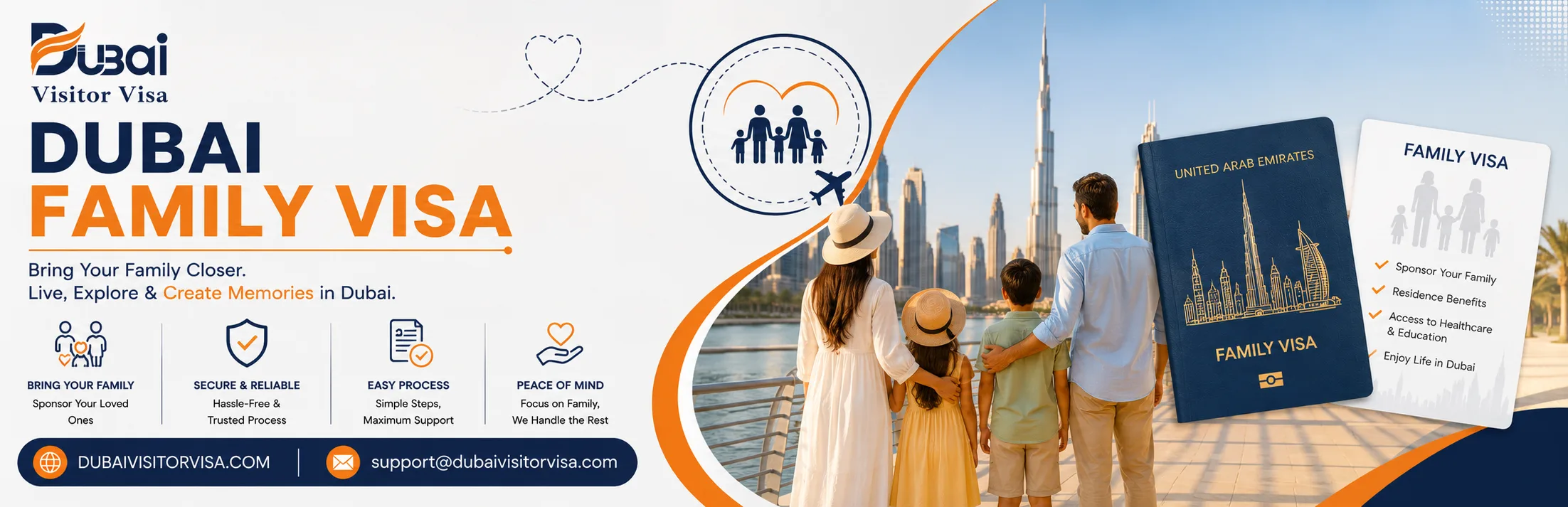
Dubai family visa requirements start with the resident sponsor, not the dependent. Before preparing a spouse, child or parent application, confirm the sponsor’s UAE residence, monthly income, housing and proof of relationship. A family residence visa is different from a short Dubai visit visa: residence allows the family member to live in the UAE and complete Emirates ID formalities, while a visit visa is for a temporary stay.
For Dubai applications, GDRFA Dubai is the main authority. The standard spouse-and-children route uses the same financial threshold for eligible male and female resident sponsors: AED 4,000 monthly, or AED 3,000 plus employer-provided accommodation.
Start With the Sponsor: Four Checks Before You Prepare the File
1. Valid residence
The sponsor must hold a valid UAE residence permit. A dependent’s residence cannot normally extend beyond the sponsor’s own permitted residence period.
2. Income
For the standard spouse-and-children route, the benchmark is AED 4,000 per month, or AED 3,000 when employer-provided accommodation is available.
3. Housing
The home should be suitable for the family size. Dubai sponsor-file registration accepts an attested Ejari lease or Dubai Land Department ownership document.
4. Family link
Use the correct attested relationship evidence, such as a marriage certificate for a spouse or birth certificate for a child.
Minimum Salary for a Dubai Family Visa in 2026
The standard family sponsorship threshold is AED 4,000 per month, or AED 3,000 plus accommodation. The rule is based on financial ability and housing rather than a separate higher salary simply because the sponsor is a woman. A female resident who meets the applicable requirements can sponsor eligible family members under the same general income framework.
The document used to prove income depends on the sponsor’s status. Government, semi-government and some free-zone employees can be asked for a salary certificate; private-sector cases may use the employment contract. Partners and investors can need partnership and company records.
Parents are not assessed under the ordinary spouse-and-children threshold. Dubai has a separate route for parents and parents-in-law, explained below.
Who Can a UAE Resident Sponsor in Dubai?
| Family member | Main 2026 rule |
|---|---|
| Spouse | A legally recognised marriage must be supported by the required certified or attested marriage document. |
| Sons | The standard family route covers sons under 25. |
| Unmarried daughters | They may be sponsored while they remain unmarried. |
| Children with special needs | They may be sponsored regardless of age, subject to the supporting records. |
| Parents / parents-in-law | A separate Dubai humanitarian residence route applies with different financial and document conditions. |
Stepchildren, children aged 25 or above, guardianship and other dependency situations can require a special or humanitarian route rather than the ordinary checklist. Do not assume that the standard child rules automatically cover every family arrangement.
Documents Required for a Dubai Family Visa
Prepare documents in two groups: sponsor records and dependent records. This makes it easier to see whether the financial, housing and family-link evidence all support the same application.
Sponsor documents
- Passport copy and valid UAE residence details.
- Emirates ID or identity record used for the sponsor file.
- Salary certificate, employment contract or relevant partner/investor records.
- Attested Ejari tenancy contract or Dubai property ownership proof.
- Relationship documents needed for the family category.
Dependent documents
- Passport with at least six months of validity for the relevant entry stage.
- Recent colour photograph with a white background.
- Attested marriage certificate for a spouse or birth certificate for a child.
- Medical fitness result for a family member aged 18 or older.
- Health insurance or health-cover evidence required for Dubai residence.
If the photograph needs checking, use the Dubai visa photo guide. Foreign marriage, birth or custody records may need attestation and, where required, an accepted Arabic translation.
Is Ejari Mandatory for Family Sponsorship in Dubai?
Housing proof is a core part of family sponsorship. For Dubai sponsor-file registration, GDRFA lists an attested Ejari lease or property ownership document from Dubai Land Department. The accommodation should also be suitable for the number of family members being sponsored.
This means a sponsor should not submit the family file assuming salary alone is enough. Check the housing record early, especially after moving home, changing tenancy details or purchasing a property.
Sponsoring a Husband or Wife: Same Core Salary Rule
A resident can sponsor an eligible spouse when the residence, income, housing and relationship conditions are met. The current general family rule does not create a separate AED 10,000 salary threshold merely because the sponsor is female.
The marriage document is central to the file. If it was issued outside the UAE, complete the required certification or attestation before submission. The spouse also needs the passport, photograph and, when aged 18 or older, an approved medical fitness result.
If the spouse is currently in the UAE on a visit status, review the visitor-to-residence guidance before starting so the existing immigration status and the new family application are handled in the correct order.
Children: Age Rules, Birth Records and Special Cases
The standard UAE family rule covers sons under 25 and unmarried daughters. Children with special needs may be sponsored regardless of age when the required evidence supports the case. A birth certificate is normally used to establish the parent-child relationship.
A dependent aged 18 or older must complete the applicable medical fitness requirement. Children younger than 18 do not use the adult residence medical step.
Stepchildren and some children aged 25 or above can fall under separate Dubai humanitarian-case requirements, which may include custody, no-objection, study or graduation documents. Treat those cases individually instead of copying the ordinary child checklist.
Sponsoring Parents in Dubai Uses a Separate Route
Parents and parents-in-law are handled differently from a spouse or child. GDRFA Dubai’s current humanitarian residence service lists a minimum salary of AED 10,000, an attested tenancy contract suitable for the family size and a bank statement for the previous three months.
The parent residence permit is issued for one year and is renewable. Applications are reviewed case by case. If approved under this service, GDRFA can require a financial guarantee of AED 5,000 per request, capped at AED 15,000 in total.
GDRFA lists an expected completion time of 14 days for the humanitarian-case service. That is different from the 48-hour expected service time shown for standard family entry and residence services, so do not use one processing estimate for every family category.
Outside the UAE vs Already in Dubai: Why the Fee Path Changes
A family member outside the UAE may first use the family residence entry visa. GDRFA currently lists a visa fee of AED 200 plus 5% VAT. The entry permission gives 60 days from entry to complete the residence requirements.
If the sponsored person is already inside the UAE, GDRFA lists additional charges of AED 10 Knowledge Dirham, AED 10 Innovation Dirham and an AED 500 inside-country fee for the entry-visa service. These amounts are conditional; they should not be added to every outside-country application.
Before changing status, check the person’s current visa record. A clean sequence between the old status and the new residence file reduces avoidable conflicts.
Dubai Family Visa Cost: Read the Fees as Separate Stages
There is no single official “two-year family visa total” that applies to every household because the final amount can include different government stages plus medical, Emirates ID, insurance, attestation, translation and service costs.
| Dubai stage | Published GDRFA amount |
|---|---|
| Open sponsor file for first sponsorship | AED 200 + 5% VAT, plus AED 10 Knowledge and AED 10 Innovation |
| Family residence entry visa | AED 200 + 5% VAT |
| Inside-country entry-visa charges | AED 10 Knowledge + AED 10 Innovation + AED 500 inside-country fee, when applicable |
| Residence permit issuance | AED 200, plus listed Dubai charges and AED 20 delivery; longer terms can add AED 100 per extra year beyond two years |
Medical fitness, Emirates ID, insurance and document attestation should be budgeted separately. Dubai sponsors are responsible for arranging health insurance for resident dependents.
How the Dubai Family Residence Process Moves From Sponsor to Emirates ID
- Confirm sponsor eligibility: valid residence, income and suitable housing.
- Prepare relationship evidence: marriage, birth or other family-link documents.
- Open or update the sponsor file when the Dubai process requires it.
- Apply for the family residence entry visa if the dependent needs that entry stage.
- Complete medical fitness for sponsored family members aged 18 or older.
- Arrange dependent health insurance for Dubai residence.
- Complete residence permit and Emirates ID steps within the applicable period.
- Check the issued record for the name, passport details and expiry date.
GDRFA lists an expected completion time of 48 hours for several individual family entry, sponsor-file and residence services when the file is complete. The full journey can take longer because medical testing, ID steps, document attestation or corrections are separate activities. Use the GDRFA family entry service for the current Dubai authority requirements.
Family Residence Visa or Family Visit Visa?
Choose the route by purpose. A family residence visa is for an eligible dependent who will live in the UAE under a resident sponsor. It involves residence formalities and an Emirates ID. A family visit visa is for a temporary visit and does not create residence status by itself.
If the relative only plans a short stay, do not begin a residence file unnecessarily. If the person is relocating to live with the sponsor, a short visitor product is not a substitute for completing the family residence process.
What Happens After the Family Member Enters Dubai?
The entry visa is not the finished residence permit. It provides the period in which the sponsored person can complete the remaining residence formalities. For an adult dependent, arrange the approved medical fitness examination, then continue the residence and Emirates ID steps with the required insurance and identity documents.
Keep the passport used for the application available throughout the process. If a passport is replaced, a name changes or a document detail is corrected after the entry stage, check how that change should be recorded before submitting the next residence step. Do not assume that a correction made in one document automatically updates every immigration record.
The 60-day residence-completion period is important for people entering under the family residence route. Use it to complete the required formalities rather than waiting until the final days. When the residence record is issued, verify the dependent’s name, passport details, sponsor information and expiry date.
Keep the final residence and Emirates ID records together with the family’s attested relationship documents. They can be needed again for renewal, status changes or future sponsorship updates. This also makes future renewal checks easier for the sponsoring family.
Renewal, Expiry and the Sponsor’s Own Residence Date
A family residence is linked to the sponsor, so check the sponsor’s expiry date before renewing dependents. The dependent’s residence cannot normally run beyond the sponsor’s permit.
GDRFA Dubai currently lists AED 200 for family residence renewal, with AED 10 Knowledge Dirham, AED 10 Innovation Dirham, AED 500 inside-country fee and AED 20 delivery on the service page. It also lists an expected 48-hour completion time for a complete renewal request.
For Dubai’s family-renewal service, GDRFA currently states a 60-day grace period after expiry or cancellation. Plan renewal before expiry rather than treating the grace period as the normal renewal window.
Prepare the Family File in the Right Order
Start with the sponsor’s residence, salary and housing. Then match the spouse, child or parent category to the correct relationship documents before paying for any application step.
Ask About Your Family Visa CaseFinal Check Before Submission
Confirm that names, passport numbers and dates match across the application and supporting records. Open every scan and make sure no edge, stamp or important detail is cut off. Check the sponsor’s residence validity, income proof and housing evidence one more time.
Use the standard spouse-and-child rules only for standard cases. Parents, stepchildren, children above the ordinary age limit, guardianship and other dependency situations can follow different Dubai requirements. Matching the family category correctly at the start is more useful than adding documents that belong to another route.