PRESS
PRESS 

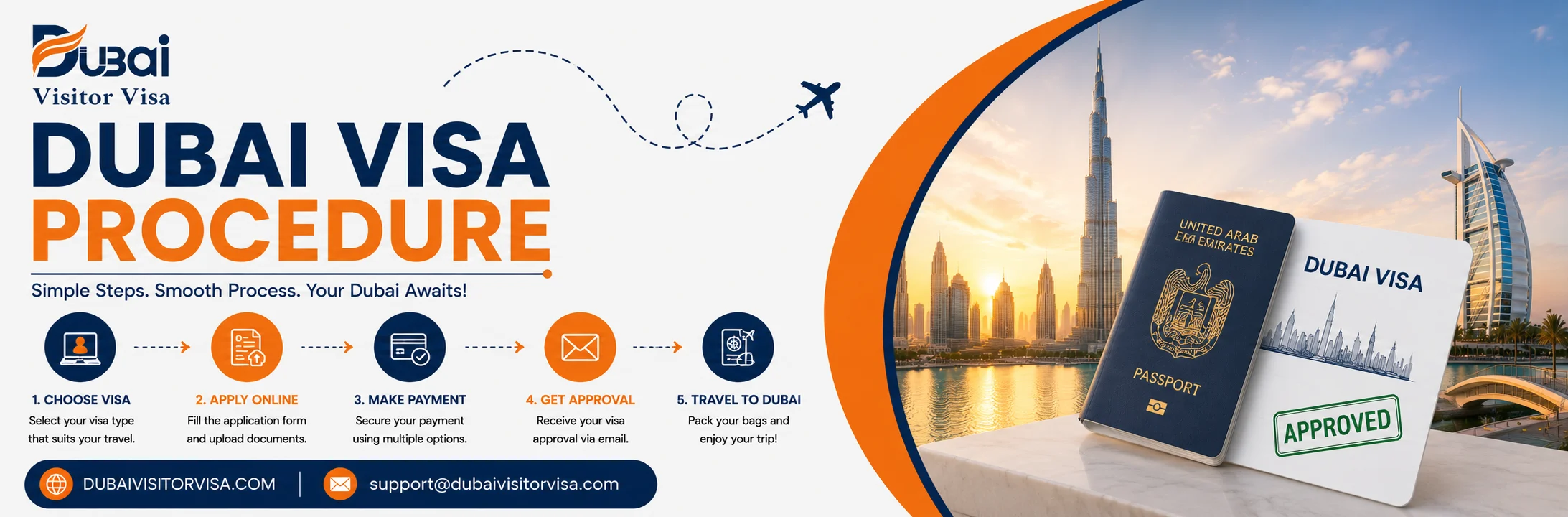
Dubai visa procedure starts with checking whether your passport needs a visa before travel. If a pre-arranged visa is required, the next steps are choosing the right visa type, preparing the required files, completing the file, paying the applicable charges, tracking the file and checking the issued visa before travel.
This guide explains the full process for short tourist and visit travel to Dubai. It covers 30-day and 60-day tourist visas, single and multiple entry, transit visas, the 5-year multiple-entry tourist visa, documents, fees, review and post-approval checks.
For travellers who only need one part of the process, our related guides cover visa on arrival, the visa form and visa costs in more detail.
Quick Answer
Dubai Visa Procedure: The Main Steps
- Check entry eligibility for your passport.
- Choose the visa type that matches your trip.
- Select the visa route available for that visa.
- Prepare the files required for your route.
- Complete the file with passport-matching details.
- Upload clear files and review every field.
- Pay the applicable charges and save the receipt.
- Keep the reference code for tracking.
- Track the file through the correct channel.
- Check the issued visa before travel.
What Is the Dubai Visa Procedure?
The Dubai visa procedure is the sequence used to obtain entry permission for a short stay when a traveller is not covered by visa-free entry or visa on arrival. For a normal tourist application, this means selecting a visa, submitting the required identity and travel information, paying the applicable charges and waiting for the visa decision.
A tourist visa and a family- or friend-sponsored visit visa are not always the same product. Tourist visas are normally linked to a tourism establishment or visa channel. A relative or friend visit can involve a UAE-based sponsor and a different set of files.
Employment, residence, family residence sponsorship and Golden Visa visa files follow other steps. This article focuses on temporary tourist and visit travel.
Who Needs to Follow the Dubai Visa Procedure?
Your passport nationality is the main starting point. Travellers generally fall into three groups: visa-free entry, visa on arrival, or a pre-arranged visa before travel. The allowed stay and rules differ between passport groups.
| Entry Route | What It Means | What You Do |
|---|---|---|
| Visa-free | Eligible passport holders enter without arranging a tourist visa in advance. | Travel with the passport and files required for that entry category. |
| Visa on arrival | Eligible travellers receive entry permission after arrival, subject to their passport category and rules. | Carry the passport and any supporting permit required for that route. |
| Pre-arranged visa | The visa must be approved before travel. | Complete the visa process before travel. |
The visa-on-arrival rules were expanded in June 2026 for several nationalities under qualifying visa or residence-permit rules. The Dubai visa on arrival guide explains that route separately.
Dubai Visa Procedure by Visa Type
Choosing the visa type is important because it affects the allowed stay, entry pattern, price and visa route. The main short-stay options are shown below.
| Visa Type | Entry | Stay / Use | Best Fit |
|---|---|---|---|
| 30-day tourist visa | Single | Up to 30 days | One short holiday or visit |
| 60-day tourist visa | Single | Up to 60 days | Longer holiday or visit |
| 30-day tourist visa | Multiple | Multiple entries within the visa rules | Trips that include leaving and returning to the UAE |
| 60-day tourist visa | Multiple | Multiple entries within the visa rules | Longer travel with planned re-entry |
| Transit visa | Single | 48 or 96 hours | A short stopover before onward travel |
| 5-year tourist visa | Multiple | Up to 90 days on a visit, with an extension route under the applicable rules | Frequent tourism and recurring personal visits |
How the 5-Year Tourist Visa Fits Into the Process
The 5-year multiple-entry tourist visa is not the same as a standard 30-day or 60-day tourist visa. It is available on a self-sponsored basis and is designed for travellers who expect to visit the UAE repeatedly.
Key proof needed include a passport with enough time left, UAE-valid health cover, a return or onward ticket and proof of funds. UAE Government guidance lists a bank balance of USD 4,000 or the equivalent during the previous six months as part of the rules.
Because the evidence is broader than a standard tourist application, prepare the proof of funds and health-cover documents before starting this route.
Where Can You Apply for a Dubai Visa?
The correct visa route depends on the visa type and sponsor. UAE entry permits can be processed through UAE visa channels and registered service centres. Tourist visas can also be arranged through tourism establishments and other permitted sponsors.
Airlines and travel businesses may provide visa help when their own eligibility and booking rules are met. A family or friend visit can use a different sponsor route from a tourism application.
Dubai Visitor Visa provides visa help for qualifying guests through its Dubai visitor visa application service.
Documents Required in the Dubai Visa Procedure
The exact documents depend on the visa route. For GDRFA's current 30-day and 60-day tourist visa services, the published core documents are a photo and passport copy. Applicants from Iraq, Pakistan, Iran and Afghanistan also have a country-of-origin identity-card rule.
| Document | How It Applies |
|---|---|
| Passport copy | Core document for a standard tourist visa. |
| Personal photo | Core document. Use a clear, recent photo that meets the visa channel's technical rules. |
| National identity card | Listed by GDRFA for applicants from Iraq, Pakistan, Iran and Afghanistan. |
| Travel ticket | GDRFA tourist visa terms require a ticket to continue the journey or leave the UAE. |
| Medical insurance | GDRFA tourist visa terms require cover valid in the UAE. |
| Sponsor documents | Needed when the selected visit route depends on a UAE-based sponsor. |
| Financial evidence | Applies to specific categories such as the 5-year multiple-entry tourist visa. |
Do not add bank statements, hotel bookings or employment letters to a universal checklist unless the selected visa route asks for them. The visa form or sponsor can require extra files for a particular case.
Passport and Photo Requirements
For GDRFA's standard tourist visa services, the passport or travel document must have at least six months left. The passport details entered on the file should match the document used for travel.
A photo is also required. Use a recent, clear colour image with a white background and an unobstructed view of the face. Technical upload dimensions can depend on the channel, so the dedicated Dubai visa photo size guide covers photo preparation separately.
If a passport is renewed after the file is sent, contact the visa channel before travel so the visa and passport details can be checked.

Dubai Visa Procedure Step by Step
The following Dubai visa procedure works as a practical sequence for travellers who need a pre-arranged tourist or visit visa.
Step 1Check Your Entry Route
Confirm whether your passport uses visa-free entry, visa on arrival or a pre-arranged visa.
Step 2Choose the Visa Type
Match the allowed stay and entry type to your actual travel plan.
Step 3Choose the Application Route
Use the immigration, tourism-establishment or sponsor route that applies to your visa.
Step 4Prepare the Documents
Collect the passport, photo and any travel, insurance, identity or sponsor files required for the route.
Step 5Complete the Application
Enter your name, passport number, dates and other personal details exactly as shown on the passport.
Step 6Upload Clear Files
Use readable, uncropped copies. Check the photo and passport preview before moving to payment.
Step 7Review Fees and Pay
Confirm the visa type, government charge, service charge and any optional service before paying.
Step 8Save the Reference Code
Keep the application or transaction code with the payment record. It is normally needed for status checks.
Step 9Track the File
Use the tracking system that matches the authority or provider that sent the file.
Step 10Check the Issued Visa
Compare the name, passport number, visa type, entries and dates with your passport and travel plan.
Ready to Start Your Dubai Visa Application?
Choose your nationality and travel plan, compare the available visa options and complete your application online.
Start Dubai Visa ApplicationHow to Complete the Dubai Visa Application Form
A standard form asks for identity, passport and travel details. The exact fields depend on the provider and visa route, but the information should be copied directly from the passport wherever the form asks for passport data.
Check these fields carefully:
- Full name and surname
- Date and place of birth
- Passport number
- Passport issue and expiry dates
- Nationality and country of residence
- Travel dates and purpose
- UAE accommodation or sponsor details when the route asks for them
- Email address and mobile number used for visa updates
The Dubai visitor visa application form guide explains the fields in more detail.
Dubai Visa Procedure: Current Tourist Visa Fees
For GDRFA Dubai's standard tourist visa services, the current published government fees are listed below. These figures are the visa-service fees and do not represent a private provider's full checkout price.
| Tourist Visa | GDRFA Fee | VAT |
|---|---|---|
| 30-day single entry | AED 200 | 5% |
| 60-day single entry | AED 300 | 5% |
| 30-day multiple entry | AED 300 | 5% |
| 60-day multiple entry | AED 500 | 5% |
If the sponsored person is already inside the UAE, additional charges can apply under the GDRFA service. A private visa service may also charge for help, document handling, insurance or optional review services.
You can view the current GDRFA tourist visa service or use our Dubai visa cost guide for a broader cost explanation.
Dubai Visa Processing Time
GDRFA currently lists an expected completion time of 48 hours for its 30-day and 60-day single- and multiple-entry tourist visa services. That service time starts from a properly sent file and is separate from the time a traveller may spend preparing documents or completing provider checks.
A request for an extra file, a passport mismatch or another case-specific review can make the total visa process longer. Apply with enough time to correct a document if needed.
Processing time and visa validity are different. Once the visa is issued, use the dates printed on that document to plan entry and stay.
How to Track a Dubai Visa Application
Tracking depends on where the visa was processed. Dubai-issued visa visa files and visa valid dates are checked through GDRFA Dubai. Applications handled for Abu Dhabi, Sharjah, Ajman, Umm Al Quwain, Ras Al Khaimah and Fujairah are checked through ICP.
If the file was sent through Dubai Visitor Visa, use the Dubai visa status page with the form details provided after filing.
Keep the reference code, passport number and registered contact information available until the visa has been issued and checked.
What Dubai Visa Status Updates Mean
| Status | Meaning | Next Step |
|---|---|---|
| Submitted | The file has been received. | Keep the reference code. |
| Under review | The file is being assessed. | Wait for the next update. |
| Documents required | More information or a clearer file is needed. | Send the requested document through the same visa channel. |
| Approved | The visa file has been approved. | Check the issued visa details. |
| Rejected | The file was not approved. | Review the available case information before deciding whether to reapply. |
What to Check After Visa Approval
When the eVisa or entry permit arrives, compare it with the passport before making final travel arrangements. Check the details while there is still time to report an error.
Identity details- Full name
- Passport number
- Nationality
- Date of birth, where shown
- Visa or permit type
- Single or multiple entry
- Issue and entry dates
- Permitted stay
Do not edit the visa PDF yourself. If a passport or visa detail is incorrect, contact the visa channel.
Common Dubai Visa Procedure Mistakes
Most preventable problems happen before filing. A careful final review can reduce errors that lead to file requests or a fresh application.
- Choosing the wrong visa type for the planned stay or number of entries.
- Entering passport details incorrectly, including one wrong digit in the passport number.
- Using unclear scans or cropped passport images.
- Uploading the wrong applicant's photo in a family application.
- Ignoring a file request sent after filing.
- Submitting a second application while the first one is still active.
- Failing to check the issued visa before travel.
Corrections and Reapplication
If you notice an error after filing, contact the channel that sent the file. Whether a correction can be made depends on the stage of the file and the field that is wrong. A passport-number or identity error can require a different correction route from a contact-detail change.
If a visa file is rejected, first review any details supplied with the decision or by the submitting channel. Correct a genuine document or data problem before filing another application. The Dubai visa rejection reasons guide covers reapplication in more detail.
A new application is assessed as a new case. Correcting a previous error can improve the accuracy of the file, but it does not create a guaranteed outcome.
Dubai Visa Procedure Before Travel Day
Before travel, keep the passport and approved visa easy to access. Carry the travel documents that apply to your route, such as the onward or return ticket and insurance used for the file.
Airline document checks take place before boarding. Entry is then completed at UAE immigration. The passport, visa and travel details should therefore remain consistent from application through arrival.
For a short visitor trip, the most useful preparation is simple: use the correct passport, keep a copy of the visa, know the allowed stay and have your accommodation and onward travel details available.
Single Entry or Multiple Entry: Which One Fits?
A single-entry visa is often enough for one trip. You enter the UAE once, stay for the time shown on the visa, then leave. This is a good fit for a holiday, a family visit or a short work-free trip where you do not plan to leave and come back during the same visit.
A multiple-entry visa is useful when you plan to leave the UAE and return while the visa is still valid. For example, you may spend part of the trip in Dubai, take a short trip to Oman, then come back to the UAE. In that case, a single-entry visa would not match the plan.
Do not pay more for multiple entry if you do not need it. Start with your travel plan. Count how many times you expect to cross the UAE border. Then choose the visa that fits that plan.
The entry type matters as much as the stay length. A 60-day single-entry visa is not the same as a 60-day multiple-entry visa.
Dubai Visa Procedure Example for a First-Time Tourist
Suppose you plan one two-week trip to Dubai. Your passport needs a visa before travel. You do not plan to leave the UAE and come back during the trip. A 30-day single-entry tourist visa may fit that plan.
You prepare a clear passport copy and a recent photo. You also keep the travel ticket and UAE-valid health cover ready because these form part of the GDRFA tourist visa terms. You fill in the form with the same name and passport number shown on the passport.
You review the form, pay the charge and save the reference code. When the visa is issued, you compare the name, passport number, visa type and dates with your passport. If all details are right, you keep the visa with your travel papers.
This simple example shows why the Dubai visa procedure is easier when each step is done in order. The visa choice comes first. The form and files come next. The final check comes before travel.
How the Process Works for Families
A family can plan the trip together, but each traveller needs the correct visa or entry right for that passport. Children and babies are not added to a parent's tourist visa as one shared traveller. Each passport is checked on its own.
When you prepare a family set, keep each person's files in a separate folder. Use the same spelling that appears on each passport. This helps prevent one child's photo or passport scan from being added to the wrong form.
If the route asks for proof of a family link, use the document that fits the case. A birth or marriage record may be used for some sponsor-based visits. A standard tourist visa may use a different set of files.
One family trip can still mean several separate visa files. Keep all reference codes until every family member has a result.
What to Check Before You Pay
The payment step should come after a full review. First check the visa type. Make sure you chose the right stay length and entry type. Then check the passport number, name and date of birth.
Open each file you plan to send. The passport scan should be clear. The photo should show the right person. Make sure the file is not cut off, dark or hard to read.
Then review the price. A government visa fee and a private service price are not the same thing. The final checkout can include a service fee, tax, insurance or an optional add-on. Read the full total before you pay.
A careful review at this stage can prevent a simple data error. It is much easier to fix a form before it is sent.
What Happens After You Submit the Application?
After payment and filing, the file moves to review. Keep the reference code and the email used on the form. These details help you track the file and reply if more details are needed.
If a new file is requested, send the correct file through the same channel that handled the file. Do not start a second form just because the first one is still under review.
When a decision is made, the status will change. If approved, the visa or entry permit is sent through the route used for the file. Save the file in more than one safe place.
The last part of the Dubai visa procedure is not the payment. It is the visa check. Read the issued document before you travel.
Match the Visa to the Trip, Not the Other Way Around
Start with the trip you want to take. Write down the planned arrival date, the number of days you expect to stay and whether you will leave the UAE during that time. These three facts help narrow the visa choice.
If the trip may last more than 30 days, a 60-day visa can be a better fit than choosing a short visa and then trying to change the plan. If you will cross the border more than once, compare multiple-entry options before you pay.
Transit visas are for short stopovers. They should not be used as a stand-in for a tourist stay. The UAE has 48-hour and 96-hour transit visas for eligible stopover plans.
The best visa is the one that matches the real trip. A simple plan at the start makes the rest of the form much easier.
How Dubai Visitor Visa Supports the Application
Dubai Visitor Visa can help qualifying guests compare visa options, review visa files, complete the online application and track a sent file. The service also provides support if a document needs to be replaced or an issued visa needs to be checked.
Dubai Visitor Visa is a private visa-help service. Visa approval is issued by the relevant UAE authority.
Complete Your Dubai Visa Procedure Online
Choose the visa that fits your trip, prepare your passport and photo, and submit your application through the online service.
Apply for Dubai Visitor VisaDubai Visa Procedure: Final Checklist
A successful Dubai visa procedure starts with the correct entry route and accurate documents. If you need a pre-arranged visa, choose the right stay and entry type, complete the form with passport-matching details, pay the correct charges and keep the reference code.
For standard GDRFA tourist visas, remember the core rules: a passport with at least six months left, a photo, a ticket to continue or leave the UAE and medical cover valid in the UAE. Some nationalities also need a country-of-origin identity card.
After approval, check the issued visa against your passport and use its dates and entry rules to plan the trip.