PRESS
PRESS 


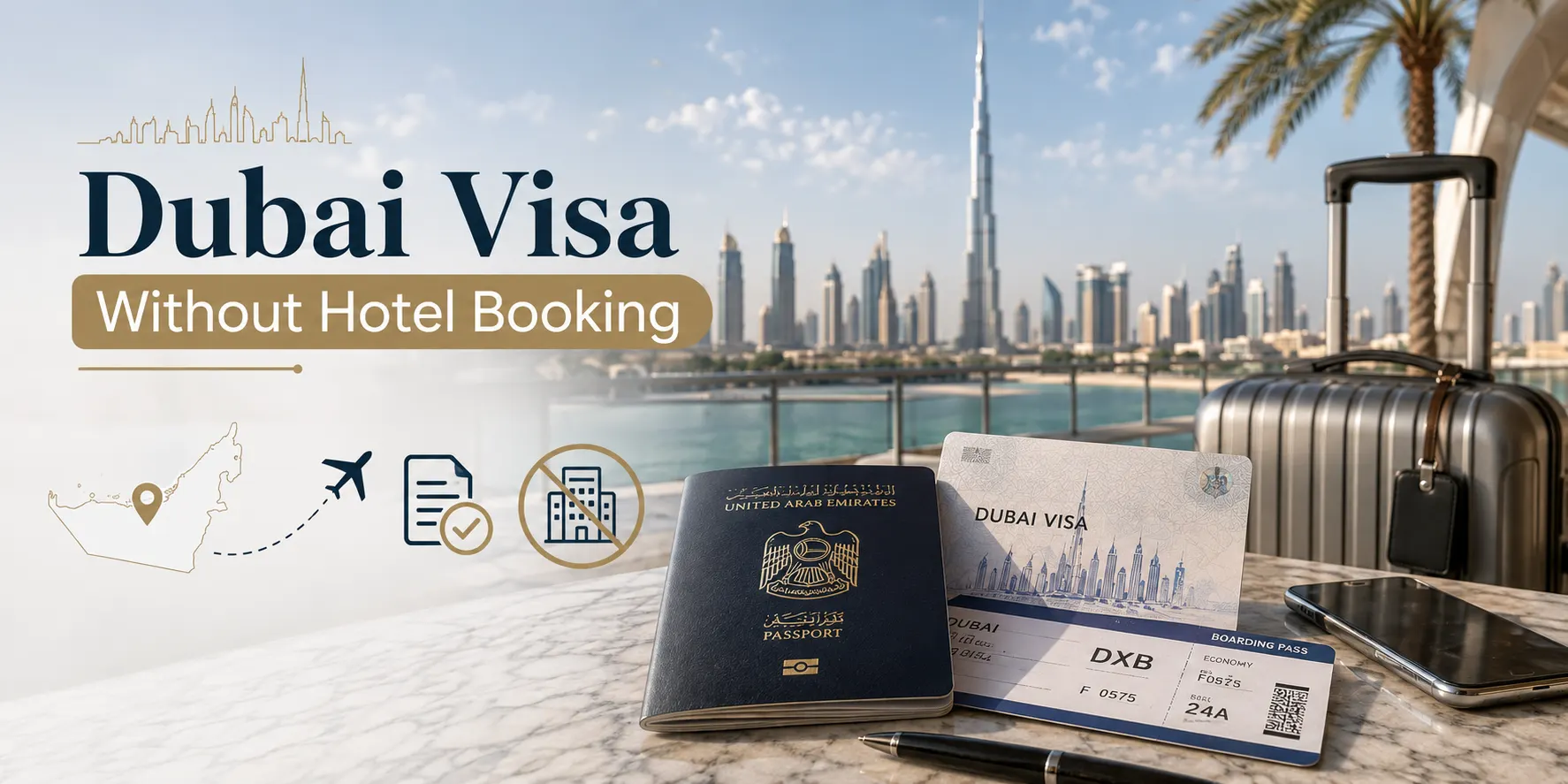
A Dubai visa without hotel booking is can work on some routes, but not on each route. The answer depends on the visa type and the channel that submits your visa form. Current GDRFA tourist visa service cards do not list a hotel booking as a core paper for each case for the standard 30-day and 60-day tourist visas.
That does not mean your place to stay never matters. A hotel, tourism company or a new approved visa channel can ask for stay details as part of its own workflow. The safest approach is to follow the checklist for the exact visa route you are using.
Quick answer: You can apply for some Dubai tourist visas without first sending a hotel booking. GDRFA's current standard tourist visa list focuses on passport, photo, onward travel and UAE-valid health health cover. Some hotel- or agency-arranged routes may still need a real booking.
Can You Apply for a Dubai Visa Without Hotel Booking?
Yes, on some routes. Current GDRFA service details for the standard one-entry tourist visa lists a own photo and passport copy as the main papers. Its rules also need a passport valid for at least six months, a ticket to continue the journey or leave the UAE, and health health cover valid in the UAE.
A hotel booking is not listed as a core paper for each case on that GDRFA service card. The same basic position appears on the GDRFA multi-entry tourist visa service.
But, the UAE UAE also explains that licensed hotels can arrange tourist visas for guests who maintain a booking with that hotel. This is why two guests can receive other paper requests even when both are travelling for tourism.
You can verify the standard rules on the GDRFA one-entry tourist visa service.
Is Hotel Booking Needed for a Dubai Visa Without Hotel Booking?
There is no single yes-or-no rule for each Dubai visa. The visa type and visa route decide what you must send.
| Visa / Route | Hotel Booking Position |
|---|---|
| 30-day GDRFA tourist visa | Not listed as a core paper on the current service card. |
| 60-day GDRFA tourist visa | Not listed as a core paper on the current service card. |
| 30/60-day multi-entry tourist visa | Not listed as a core paper on the current service card. |
| hotel visa tourist visa | A booking with the hotel handling the visa can be needed. |
| Five-year tourist visa | No hotel-booking line item on the GDRFA rules list. |
| Family/friend visit route | Uses its own family link and visitor-support rules. |
| Visa on arrival | No advance tourist visa form if your passport qualifies. |
The safest rule is simple: do not use a paper checklist from a new visa route and assume it applies to yours.
Why Visa Channels Ask for Different Papers
The confusion usually comes from mixing the UAE visa rules with the intake rules used by the visa company handling the visa form.
- border staff authority: GDRFA or ICP sets the visa rules.
- Tourism tour firm: an approved tourism business may collect extra supporting details.
- hotel visa route: the hotel may need an active booking because it is arranging the visa.
- Visa service: a service may ask for extra proof before it submits the file.
- Travel day: you should still carry genuine details of where you intend to stay.
An extra request from the visa channel does not by itself mean that paper is a UAE rule for each case. It means that the route you chose needs it.
GDRFA Rules for Standard 30-Day and 60-Day Tourist Visas
The GDRFA single-entry tourist service covers 30-day and 60-day visits. The UAE host for this tourism route must be a tour firm working in tourism.
The main listed papers are:
- One own photo.
- Passport copy.
- National ID card for listed people from Iraq, Pakistan, Iran and Afghanistan.
- Passport valid for at least six months.
- Onward or exit ticket.
- health health cover valid in the UAE.
Hotel booking is not included in this GDRFA core list. This is the most key fact for guests asking whether a standard Dubai visa without hotel booking is can work.
GDRFA currently lists an listed service time of 48 hours for this tourist visa service. That is an listed time, not a guaranteed approval promise.
What About Multi-Entry Tourist Visas?
GDRFA's 30-day and 60-day multi-entry tourist service uses the same main paper structure: photo, passport copy, and country ID ID papers where needed.
The current rules also need the passport-valid time, onward-travel and UAE health-health cover checks.
A hotel booking is not listed as a core line item on the GDRFA multi-entry service page either.
See our Dubai Visitor Visa Types guide if you are deciding between single and multiple entry.
Does the Five-Year Tourist Visa Need a Hotel Booking?
The five-year multi-entry tourist visa is a self-sponsored route. GDRFA says it does not need a guarantor or host in the UAE.
The current rules are built around:
- own photo.
- Passport valid for at least six months.
- Six-month bank record.
- Health health cover.
- Round-trip ticket.
A hotel booking is not listed in that GDRFA rule set. This makes the five-year visa a new example where a fixed hotel booking is not presented as a general visa form paper.
You can review the GDRFA five-year tourist visa service.
For stay limits, bank rules and fees, see our UAE 5-Year Multiple-Entry Tourist Visa Guide.
When Can a Hotel Booking Still Be Needed?
A hotel booking can still be needed when the visa is being arranged through a route that depends on the hotel or package service.
The UAE UAE states that licensed hotels in the UAE can arrange a tourist visa when the guest maintains a booking with that hotel. Travel agencies and tourism businesses can also use their own visa processs.
This is why “not listed by GDRFA” does not mean “no one can ask for it.”
The UAE UAE UAE tourist visa guidance explains the role of hotels and travel agencies.
Staying With Family Instead of a Hotel
You can stay with family in the UAE instead of using a hotel. This is one of the most common reasons people search for a Dubai visa without hotel booking. The key point is to split a private family stay from a formal relative-visit visa.
On a normal tourism-company tourist visa, your visa channel may simply ask for the address and contact details of the place where you will stay.
A formal relative or friend visit visa is a different type. It can involve proof of the family link, sponsor or host income rules, health cover and other route rules.
Do not copy the family-visit sponsor checklist into a normal tourist visa form.
Staying With Friends Instead of a Hotel
A friend can provide the place where you stay, but this does not create one same paper rule for each case.
If you are travelling on a standard tourist route, the visa channel may ask for the friend's address and contact details. If you are using a formal friend-visit type, a other set of rules can apply.
Current ICP rules also set minimum host-income thresholds for formal relative/friend visit cases. These rules depend on the family link type.
A friend's Emirates ID by itself is not a replacement for each case for a hotel booking.
What Stay Details Should You Keep Ready?
Even if the visa form does not ask for a hotel booking, keep genuine details of where you intend to stay.
- Full UAE address.
- Host or property contact number.
- Name of the host or hotel.
- Planned stay dates.
- Any genuine booking or hosting proof if your visa channel asks for it.
This helps keep your visa form, flight plan and travel-day details consistent.
What Can You Use Instead of a Hotel Booking?
There is no single other proof accepted on each route. The right paper depends on why proof of stay is being requested.
| Situation | can work Proof |
|---|---|
| Staying with family | Host address, contact details and any route proof of the family link. |
| Staying with a friend | Host address and contact details; extra proof if the formal visa route needs it. |
| Serviced apartment | A genuine confirmed booking showing guest, address and dates. |
| hotel visa route | The hotel booking needed by that hotel route. |
| Five-year tourist visa | Follow the UAE bank, health cover, passport and ticket rules. |
Ask the visa channel what it accepts before you upload another proof.
Can You Apply Before Finalising Your Stay?
Often, yes, when proof of stay is not part of the listed paper set for your route.
But if the visa company handling your visa form asks for stay details, provide details that genuinely reflects the trip you intend to take.
Do not enter a random address just to complete a field. If your plan is not final, ask whether you can provide the confirmed details later.
Should You Make a Refundable Hotel Booking?
A real refundable booking can be useful when your channel needs hotel proof but you still want flexibility.
Before using one, check:
- The guest name is correct.
- The stay dates are correct.
- The booking is active.
- The cancellation deadline is clear.
- The booking reflects a stay you could in fact use.
A refundable booking should be genuine, not a temporary fake created only to pass a paper check.
Should You Use a Dummy or Fake Hotel Booking?
No. Do not send fabricated, changed or knowingly false proof of stay. False details can create problems during visa review, airline paper checks or border staff review. Use a genuine booking, genuine host details or another paper accepted by your actual visa channel.
A fake booking is not a safe way to get a Dubai visa without hotel booking. It turns a simple place to stay question into a false-paper problem.
Hotel Booking vs Proof of Stay
These terms are related, but they are not the same.
- Hotel booking: a booking with a hotel.
- Proof of stay: broader proof of where you plan to stay.
- Host details: the address and contact details of the person hosting you.
- Proof of the family link: proof used when a formal family or relative route needs it.
- Travel itinerary: the wider plan linking flights and stay details.
This distinction is key because a route can ask for stay details without exactally requiring a hotel.
Dubai Visa Without Hotel Booking for Indian Passport Holders
Indian passport holders should start with the entry route they in fact qualify for. Some may qualify for a visa-on-arrival route under current UAE rules, while others need a pre-arranged tourist visa.
If you need a pre-arranged tourist visa, the same route-based hotel rule applies. A hotel booking is not a core paper for each case on the GDRFA 30/60-day tourist service, but your visa channel can still request stay details.
See our Dubai Visa for Indian Citizens and Dubai Visa on Arrival Guide before choosing the visa route.
Dubai Visa Without Hotel Booking for First-Time Applicants
If this is your first Dubai visa, do not start by booking a hotel only because an old blog says it is mandatory.
- Find the visa type.
- Find the visa channel.
- Check the latest UAE visa-paper list.
- Ask whether proof of stay is needed.
- If staying with a host, prepare genuine host details.
- Prepare your passport, ticket and health cover.
- send only genuine papers.
- Check the issued visa before travel.
Route first, papers second. This prevents most stay-proof mistakes.
Core Tourist Papers to Prepare
For the GDRFA standard tourist route, keep the following ready:
- Passport copy.
- own photo.
- At least six months of passport valid time.
- Ticket to continue the journey or leave the UAE.
- health health cover valid in the UAE.
- country ID ID paper where GDRFA lists one.
Do not add a six-month bank record to each standard tourist visa. That belongs to the five-year tourist visa route.
Common Stay-Proof Mistakes
- Sending a fake or changed booking.
- Using a cancelled booking as if it were active.
- Using the wrong guest name.
- Using stay dates that conflict with the trip.
- thinking each tourism company uses the same intake checklist.
- Using family-visit papers for a standard tourist visa.
- thinking a friend’s ID by itself replaces proof of stay.
- Using a five-year visa paper list for a 30-day tourist visa.
- Ignoring a paper request from the channel in fact handling the visa.
Most problems happen when people mix two other visa routes.
Which Dubai Visa Route Should You Check?
| Travel Plan | Route to Review |
|---|---|
| Short holiday | 30-Day one-entry Visa. |
| Longer holiday | 60-Day one-entry Visa. |
| Leave UAE and return | Compare Dubai Visitor Visa Types. |
| Frequent UAE trips | Five-Year Tourist Visa. |
| can work visa on arrival | Visa on Arrival Guide. |
| Transit stop | Dubai Transit Visa. |
Not sure whether your Dubai visa needs hotel proof?
Check the visa type first, then use the paper list for that exact route.
Dubai Visa Without Hotel Booking: Hotel or Host?
Ask one simple question. Where will you sleep in Dubai?
If the answer is a hotel, keep the booking. If the answer is a host's home, keep the host address. Use the real plan.
Do not make the trip look different from what it is.
If the Hotel Is Not Booked Yet
Your trip may still be in the early stage. That is normal.
Check the visa route first. See if a hotel booking is needed now. If it is not, you may be able to file the visa first.
Book the hotel when your plan is ready. Then save the live booking.
If the Visa Channel Asks Later
A visa channel may ask for one more file after you send the form. Read the request with care.
If it asks for a hotel booking, send a real one. If you will stay with a host, ask what proof it will take.
Reply with the exact file that was asked for.
If You Change the Place to Stay
Plans can change after the visa is filed. You may move to a new hotel. You may stay with kin for part of the trip.
Keep the new address. Keep the new phone number. Keep the new booking if there is one.
Your travel-day details should show the final plan.
If You Have No UAE Host
You do not need a host for each visa type. The five-year tourist visa is one clear example.
For a short tourist visa, the visa is handled through the approved tourism route. You can still stay in a hotel or another place that fits the rules.
Check the route before you assume a host is needed.
If You Have a UAE Host
A host can be useful when you plan to stay in a home. Keep the host name and phone number.
If the visa type has host rules, read them first. Some formal visit routes use income or kinship rules.
A host stay and a hotel stay are not the same visa proof.
Keep the File Easy to Read
Use clear scans. Use the same name on all files. Check the passport number.
Keep flight dates and stay dates in one note. This helps you spot a mismatch before you send the form.
Simple, clean files are easier to review.
One Rule to Remember
The key rule is not “book a hotel first.” The key rule is “follow your visa route.”
Check what that route asks for. Send real files. Keep the trip plan true.
That is the safest way to apply without an unneeded hotel booking.
Dubai Visa Without Hotel Booking: Simple Route Examples
Example 1: Standard 30-day tourist trip. You plan a short Dubai holiday and your visa is being handled through a standard tourism route. The current GDRFA core list does not show a hotel booking as a required paper. If your visa channel also does not ask for one, you can continue with the real papers that are required.
Example 2: Staying with family. You will stay at your brother's home in Dubai. Keep his full UAE address and phone number ready. If your visa channel asks for host proof, send the exact real paper it requests. Do not make a hotel booking simply to make the file look more complete.
Example 3: Hotel-arranged visa. A hotel is arranging the tourist visa for you. In this case, the hotel booking can be part of the route itself. A Dubai visa without hotel booking would not fit that channel because the hotel booking is tied to the visa service.
Example 4: Five-year tourist visa. You qualify for the self-sponsored five-year route. The core GDRFA list focuses on passport, photo, bank proof, health cover and round-trip ticket. A fixed hotel booking is not listed as the main visa form paper.
How to Keep Your Dubai Visa File Consistent
A strong visa file should tell one clear story. Your passport, flight dates, stay details and visa type should all match.
Use the same name spelling everywhere. Check that the passport number is correct. Keep the arrival and departure dates consistent with the trip you actually plan.
If you will stay with family for part of the trip and in a hotel for the rest, keep both sets of real details. A split stay is fine when it is genuine.
Consistency matters more than adding papers that your route does not ask for.
What If Your Visa Channel Says Hotel Proof Is Mandatory?
Follow the rule for that channel. A visa company can ask for an extra paper even when GDRFA does not list it as a core paper.
If the channel says a hotel booking is needed, ask whether a host address or another real stay paper can be accepted.
Do not argue with the live checklist and do not upload a fake booking. Either meet the route rule or use another visa route that legally fits your trip.
Can a Dubai Visa Without Hotel Booking Be Rejected?
Any visa can be refused. A missing hotel booking does not by itself decide the result.
The authority checks the whole file. Passport details, travel purpose and required papers can all matter.
No visa route guarantees approval. The goal is to submit the correct papers for the correct route, not to add unnecessary papers.
Dubai Visa Without Hotel Booking: Final Decision Steps
- Check the exact visa type.
- Check who is submitting the visa.
- Read the current GDRFA or ICP paper list for that route.
- Ask the visa channel whether separate hotel proof is required.
- If staying with family or friends, keep the real host details ready.
- If hotel proof is required, use a real booking.
- Never use a fake or altered booking.
- Keep flights, stay details and visa dates consistent.
A Dubai visa without hotel booking works only when the route allows it. The correct decision comes from the visa type and submission channel, not from a generic rule copied from another traveller.
Keep the file simple. Use real facts. Use clear scans. Check each date. Check each name.
Final Dubai Visa Stay Checklist
- Correct visa type selected.
- Visa channel identified.
- UAE visa-paper list checked.
- Hotel booking prepared only if your route asks for it.
- Host address and contact ready when staying with a host.
- Passport valid time checked.
- Return or onward ticket ready.
- UAE-valid health cover prepared.
- No fake or changed proof of stay.
- Final travel details kept consistent.
Can You Get a Dubai Visa Without Hotel Booking?
Yes, a Dubai visa without hotel booking is can work on several current routes. The standard GDRFA 30-day and 60-day tourist visa service does not list a hotel booking as a core rule for each case, and the five-year tourist visa also uses a different paper set.
But the visa route still matters. A hotel visa route or a new visa channel can ask for genuine proof of stay. Follow that request rather than thinking one rule applies to each guest.
Use real details, match the paper checklist to the visa route, and never use a fake booking.
Ready to apply for the correct Dubai visa?
Compare your stay length, entry type and paper rules before you send.
Last reviewed: 25 August 2026. Visa rules and visa review-channel paper rules can change.